


Base rate cut have to wait till next quarter
Banks keen to protect margins amid sluggish credit offtake
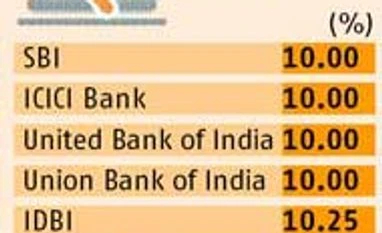)
Only two banks — Union Bank of India and United Bank of India — took a cue from the Reserve Bank of India (RBI)’s repo rate cut and reduced their base rates.
RBI reduced the repo rate by 25 basis points (bps) to 7.75 per cent on January 15. The two banks also reduced their base rate by 25 bps each.
Base rate is the benchmark lending rate to which all loan rates are linked.
RBI reduced the repo rate by 25 basis points (bps) to 7.75 per cent on January 15. The two banks also reduced their base rate by 25 bps each.
Base rate is the benchmark lending rate to which all loan rates are linked.
ALSO READ: Case for further interest rate cut tomorrow
Several banks, however, explored whether there was room for reduction in the base rate over the past fortnight in the asset liability committee. The answer was negative in all those reviews.
Several banks, however, explored whether there was room for reduction in the base rate over the past fortnight in the asset liability committee. The answer was negative in all those reviews.
While the cost of funds has not fallen to the extent that could translate into a lending rate cut, the rise in yield on advances has further acted as a hindrance for a lending rate reduction. For example, Bank of Baroda (BoB) and Union Bank of India, the two large lenders that have announced their October-December quarter earnings, reported a decline in yield on advances sequentially. While BoB’s domestic yield on advances dropped to 11.01 per cent in Q3, against 11.17 per cent in Q2, for Union Bank of India, the fall in domestic yield on funds was 13 bps to 9.21 per cent.
Both the banks have reported a fall in net interest margin (NIM) on a sequential basis in Q3. For BoB, NIM was 10 bps lower at 2.92 per cent, while for Union Bank of India, the fall was by three bps to 2.5 per cent. A report from Bank of America Merrill Lynch said NIM of more than three per cent gives scope for banks to cut lending rates. “Our bank analysts estimate 75 bps of deposit rate cuts will neutralise the NIM impact of 50 bps of lending rate cuts,” the report said.
Bankers said a base rate cut now would further squeeze their margins, at a time when credit growth is lowest in many years. As on January 9, bank loan growth on a year-on-year basis was 10.7 per cent, compared with 14.5 per cent in the corresponding period last year, which is lowest in more than 15 years, according to latest data released by RBI.
In the current financial year so far, loan growth was 6.6 per cent, against 9.7 per cent during the corresponding period last year. Bankers are looking at the grim possibility of single-digit growth in the current financial year.
“Where is the question of a base rate cut? You cut price, when there is demand, so that increase in volume offsets the loss in margin. That is not the case now,” said the chief executive of a state-run bank.

Don't miss the most important news and views of the day. Get them on our Telegram channel
First Published: Feb 03 2015 | 12:50 AM IST