


RBI's new rules fall short of making White Label ATMs viable
They have welcomed the permission to allow use of international credit and other cards but say it isn't enough to assure viability
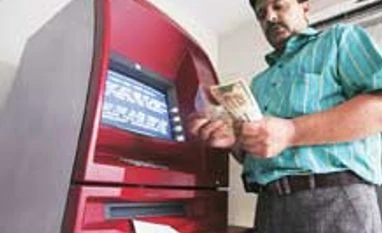)
The Reserve Bank of India’s latest effort to improve the scope and viability of white label automated teller machines (ATMs) might not be enough.
Last week, the banking regulator allowed usage of international credit, debit and prepaid cards in this regard. However, though entities in the segment have welcomed it, they believe it will not be enough to push the rollout of ATMs from the slow lane.
Unlike bank ATMS, white-label ATMs (WTA) are owned and operated by non-bank entities. Customers of any bank may use these, for a fee. Sanjeev Patel, chief executive, Tata Communications Payment Solutions, says RBI’s latest move would expand the host of services being provided by WLAs but not have a significant impact. “It will help us to an extent but things will improve for WLA players only if the interchange fee is hiked. The deployment of ATMs is not likely to pick up till this (happens),” he said.
Navroze Dastur, managing director of NCR, an ATM manufacturer, said the recent guidelines were a step in the right direction but will not have a big impact on profitability or viability of the entities involved. WLA operators and private banks have both been asking for an increase in the permitted interchange fee, currently Rs 15 a transaction. This has been recommended to be revised to Rs 16.50, plus service tax, making it Rs 18.48.
The first three transactions at other ATMs are free and after this, the bank can choose to pass on the cost to the consumer, from November. But by RBI order, banks cannot charge consumers more than Rs 20. Restricting the usage further at non-home banks ATMs in this manner will end by reducing the number of transactions, making break-even tougher for WLA operators. RBI has allowed banks to limit the number of free transactions at non-home bank ATMs to three from the earlier five in the metros. Entities in the segment believe they need 120-140 transactions on a daily basis for an ATM to break even. Those involved say costs have been going up due to higher rentals and the need to step up security.
RBI has now also allowed WLA operators to tie up with any commercial bank for cash supply at ATMs. At present, operators have to depend on their sponsor bank alone for cash supply arrangement. Again, entities in the segment believe it is important for public sector banks to tie up as sponsor banks. So far, it is mainly private sector banks that have tied up with WLAs. WLAs were introduced to increase the network of these machines in semi-urban and rural areas. Companies in this segment are mandated to open 67 per cent of their ATMs in rural locations (tier III-VI) and 33 per cent in urban ones (tier I and II cities).
Last week, the banking regulator allowed usage of international credit, debit and prepaid cards in this regard. However, though entities in the segment have welcomed it, they believe it will not be enough to push the rollout of ATMs from the slow lane.
Unlike bank ATMS, white-label ATMs (WTA) are owned and operated by non-bank entities. Customers of any bank may use these, for a fee. Sanjeev Patel, chief executive, Tata Communications Payment Solutions, says RBI’s latest move would expand the host of services being provided by WLAs but not have a significant impact. “It will help us to an extent but things will improve for WLA players only if the interchange fee is hiked. The deployment of ATMs is not likely to pick up till this (happens),” he said.
Navroze Dastur, managing director of NCR, an ATM manufacturer, said the recent guidelines were a step in the right direction but will not have a big impact on profitability or viability of the entities involved. WLA operators and private banks have both been asking for an increase in the permitted interchange fee, currently Rs 15 a transaction. This has been recommended to be revised to Rs 16.50, plus service tax, making it Rs 18.48.
The first three transactions at other ATMs are free and after this, the bank can choose to pass on the cost to the consumer, from November. But by RBI order, banks cannot charge consumers more than Rs 20. Restricting the usage further at non-home banks ATMs in this manner will end by reducing the number of transactions, making break-even tougher for WLA operators. RBI has allowed banks to limit the number of free transactions at non-home bank ATMs to three from the earlier five in the metros. Entities in the segment believe they need 120-140 transactions on a daily basis for an ATM to break even. Those involved say costs have been going up due to higher rentals and the need to step up security.
RBI has now also allowed WLA operators to tie up with any commercial bank for cash supply at ATMs. At present, operators have to depend on their sponsor bank alone for cash supply arrangement. Again, entities in the segment believe it is important for public sector banks to tie up as sponsor banks. So far, it is mainly private sector banks that have tied up with WLAs. WLAs were introduced to increase the network of these machines in semi-urban and rural areas. Companies in this segment are mandated to open 67 per cent of their ATMs in rural locations (tier III-VI) and 33 per cent in urban ones (tier I and II cities).

Don't miss the most important news and views of the day. Get them on our Telegram channel
First Published: Dec 22 2014 | 12:40 AM IST