


Billionaires chase 'spacex moment' for the holy grail of energy
Jeff Bezos, Bill Gates and Peter Thiel are funneling cash into nuclear fusion projects.
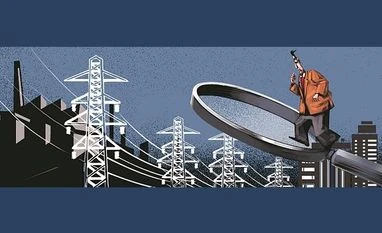 "Illustration by Ajay Mohanty")
premium
Illustration by Ajay Mohanty
Not long before he died, tech visionary Paul Allen traveled to the south of France for a personal tour of a 35-country quest to replicate the workings of the Sun. The goal is to one day produce clean, almost limitless energy by fusing atoms together rather than splitting them apart.
The Microsoft co-founder said he wanted to view the early stages of the International Thermonuclear Experimental Reactor in Cadarache firsthand, to witness preparations “for the birth of a star on Earth.”
Allen wasn’t just a bystander in the hunt for the holy grail of nuclear power. He was among a growing number of ultra-rich clean-energy advocates pouring money into startups that are rushing to produce the first commercially viable fusion reactor long before the $23 billion ITER program’s mid-century forecast. Jeff Bezos, Bill Gates and Peter Thiel are just three of the billionaires chasing what the late physicist Stephen Hawking called humankind’s most promising technology. Scientists have long known that fusion has the potential to revolutionise the energy industry, but development costs have been too high for all but a handful of governments and investors. Recent advances in exotic materials, 3D printing, machine learning and data processing are all changing that.
“It’s the SpaceX moment for fusion,” said Christofer Mowry, who runs the Bezos-backed General Fusion near Vancouver, Canada. He was referring to Elon Musk’s reusable-rocket maker. “If you care about climate change you have to care about the timescale and not just the ultimate solution. Governments aren’t working with the urgency needed.”
The Microsoft co-founder said he wanted to view the early stages of the International Thermonuclear Experimental Reactor in Cadarache firsthand, to witness preparations “for the birth of a star on Earth.”
Allen wasn’t just a bystander in the hunt for the holy grail of nuclear power. He was among a growing number of ultra-rich clean-energy advocates pouring money into startups that are rushing to produce the first commercially viable fusion reactor long before the $23 billion ITER program’s mid-century forecast. Jeff Bezos, Bill Gates and Peter Thiel are just three of the billionaires chasing what the late physicist Stephen Hawking called humankind’s most promising technology. Scientists have long known that fusion has the potential to revolutionise the energy industry, but development costs have been too high for all but a handful of governments and investors. Recent advances in exotic materials, 3D printing, machine learning and data processing are all changing that.
“It’s the SpaceX moment for fusion,” said Christofer Mowry, who runs the Bezos-backed General Fusion near Vancouver, Canada. He was referring to Elon Musk’s reusable-rocket maker. “If you care about climate change you have to care about the timescale and not just the ultimate solution. Governments aren’t working with the urgency needed.”