


Prepared to handle any stampede or disease at Haj: Saudi Arabia
Saudi Arabia said on Monday that over 1.735 million pilgrims have arrived from abroad for the ritual
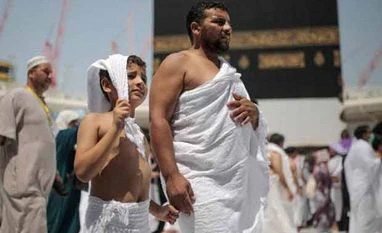 "A father and a son circle the Kaaba at Grand Mosque in Mecca, Saudi Arabia, on Tuesday, Sept 22, 2015 Picture by PTI")
premium
A father and a son circle the Kaaba at Grand Mosque in Mecca, Saudi Arabia, on Tuesday, Sept 22, 2015 <b>Picture by PTI</b>
Saudi health officials overseeing the haj pilgrimage later this week say they are prepared to handle any outbreak of disease or a stampede like the one that killed hundreds of worshippers two years ago.
Saudi Arabia said on Monday that over 1.735 million pilgrims have arrived from abroad for the ritual, a once-in-a-lifetime religious duty for every able-bodied Muslim who can afford the journey.
The world’s largest annual gathering of Muslims has in the past seen numerous deadly stampedes, fires and riots, with authorities having only limited ability to control the masses.
Saudi Arabia stakes its reputation on its guardianship of Islam’s holiest sites - Mecca and Medina - and organising haj, a role that Iranian authorities have challenged as part of a dispute over the handling of a crush in 2015.
That incident killed nearly 800 pilgrims, according to Riyadh, although counts by countries of repatriated bodies showed over 2,000 people may have died, more than 400 of them Iranians.
Hussein Ghanam, who oversees the health ministry’s haj operations, said the authorities are prepared in case of another stampede.
“There is an integrated fleet of ambulances, each of which is considered its own fully equipped intensive-care unit. The ambulances circulates on the roads between the tents,” he said.
Some 30,000 health workers will be on hand, and 5,000 hospital beds are available.
The Saudi Red Crescent is supporting the ministry with 350 ambulances and four medivac helicopters, director Mohammed bin Abdullah al-Qassim said. It has opened several new health centres this year and run simulations to practice emergency response.
“Thanks to God we have extra supplies plus special equipment and vehicles to deal with catastrophes directly and move them to the closest hospital,” Qassim told Reuters on Sunday.
Nearly 90,000 Iranians are expected to attend the haj this year for the first time since the 2015 crush.
DISEASE PREVENTION