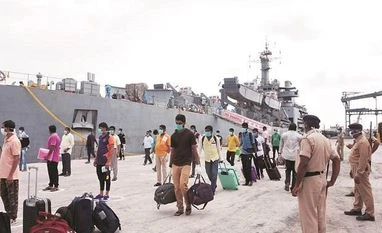
In the short run, this may appear to be less of an issue, given the comfortable current account position, but worrying signals for the future are embedded in these numbers. The biggest is the issue that has roiled the Indian economy for the past several years: Employment. Since the global financial crisis of 2008, the number of Indian workers travelling to West Asia has fallen from 762,484 to 321,721 in 2018, according to the Ministry of External Affairs. At least part of this has to do with falling wages, which have prompted skilled workers from Kerala and Tamil Nadu to search for jobs in India (since the wage differential has narrowed considerably) even as West Asian locals have moved up the skills value chain to occupy those jobs in their own countries. Many more Indians are expected to return on repatriation flights as West Asian corporations cut back their activities in the face of the Covid-19-related demand collapse. The impact on the state’s finances — Kerala accounts for a fifth of remittances — is, therefore, a matter of some concern.
But Kerala’s woes are part of a broader national crisis. Since 2009, it is the investment-poor states of Uttar Pradesh, Bihar, and West Bengal that have accounted for the bulk of the migration to West Asia. The first two states alone accounted for 145,454 workers in 2018 — mainly for the hard-scrabble blue-collar jobs that locals are loath to do. Many of them come from India’s poorest districts. In this context, the Kuwait government’s intention to reduce the migrant population from 70 to 30 per cent has potentially disastrous consequences for precisely this cohort of workers. As with most Gulf countries, including the Emirates, expatriates form a significant proportion of the population engaged in a variety of services and manufacturing and construction jobs.
In Kuwait, for instance, there are more than 900,000 Indians in its population of 4.8 million. Not surprisingly, the slowdown, not least in the oil and petrochem businesses, is prompting the sheikh to consider “redressing the population imbalance”. This is the kind of movement that could well find echoes among the regional dictators of West Asia. The repercussions of a slowdown in West Asian economies and the rise of nationalism there are likely to be felt precisely in those parts of India where employment opportunities are low and economic activities negligible. This is the impending crisis for which both the Centre and the states concerned need to prepare to avoid the law and order problems that rising unemployment inevitably brings.


 "migrant workers, lockdown")