


Reimagining GST for the post-Covid era
Revival of economic activity should overwhelm its agenda
 "GST, tax")
premium
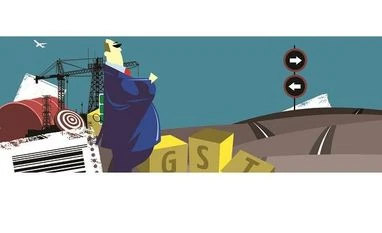
Illustration: Binay Sinha
There appears to be a common wish list for all stakeholders in the new economic paradigm—that the Goods and Services Tax (GST) Council reverse its role; from making recommendations on how to tax to transforming itself into an institution invigorating economic revival. For one, this wish list is clearly terra firma. The constitutional framework, with the enactment of a specific provision — Article 279A—has literally entrusted the entire policy space on indirect taxes to the GST Council, which brooks no limitations.
In the light of such a mandate, the expectations are high from the upcoming GST Council meeting. Without doubt, revival of economic activity should overwhelm its agenda. However, what exactly can the GST Council dwell upon? The answer perhaps lies in reimagining GST for the post-Covid era.
The Union government recently announced a host of measures, seeking to support industries and businesses to get back on their feet. With such liquidity and fiscal support and expectations of further indulgence by the government, there is no doubt that business entrepreneurs will pull out all the stops to make up for the losses on account of the lockdown. This takes care of the production wheels. The challenge that now remains to be addressed is on the demand side or consumption, and this is where the GST Council’s role assumes significance, given that GST is a consumption tax.
The challenge for the Council, which obviously is flooded with requests from industry for a fiscal stimulus similar to the one in 2008, lies in ensuring that it resists the temptation of addressing all problems in one go. Instead, policy-makers must look for an institutional response that cuts across the competing claims of stakeholders and helps in reviving economic activity and consumption across a diverse industrial segment. This requires intelligent categorisation of the business units that differentiates between the sectors on the basis of their priorities to frame impactful solutions. The reason is that a one-size-fits-all cut in rates across the board— as in 2008— will not be optimal, let alone aligned to the fiscal constraints.
In the light of such a mandate, the expectations are high from the upcoming GST Council meeting. Without doubt, revival of economic activity should overwhelm its agenda. However, what exactly can the GST Council dwell upon? The answer perhaps lies in reimagining GST for the post-Covid era.
The Union government recently announced a host of measures, seeking to support industries and businesses to get back on their feet. With such liquidity and fiscal support and expectations of further indulgence by the government, there is no doubt that business entrepreneurs will pull out all the stops to make up for the losses on account of the lockdown. This takes care of the production wheels. The challenge that now remains to be addressed is on the demand side or consumption, and this is where the GST Council’s role assumes significance, given that GST is a consumption tax.
The challenge for the Council, which obviously is flooded with requests from industry for a fiscal stimulus similar to the one in 2008, lies in ensuring that it resists the temptation of addressing all problems in one go. Instead, policy-makers must look for an institutional response that cuts across the competing claims of stakeholders and helps in reviving economic activity and consumption across a diverse industrial segment. This requires intelligent categorisation of the business units that differentiates between the sectors on the basis of their priorities to frame impactful solutions. The reason is that a one-size-fits-all cut in rates across the board— as in 2008— will not be optimal, let alone aligned to the fiscal constraints.
Illustration: Binay Sinha
Disclaimer: These are personal views of the writer. They do not necessarily reflect the opinion of www.business-standard.com or the Business Standard newspaper