Monday, February 02, 2026 | 09:25 AM ISTहिंदी में पढें
Business Standard
Notification Icon
userprofile IconSearch

The governor's role

Conflicts with state govts must be avoided
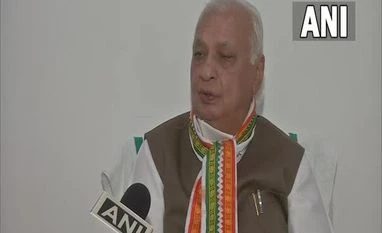
Arif Mohammad Khan, Governor, Kerala
premium

Arif Mohammad Khan, Governor, Kerala

Business Standard Editorial Comment
India’s political history has been rife with instances of appointed governors of states entering into strong disagreements and even open conflicts with the elected governments of the states they serve. Given that federalism and the relative powers of the Union and state governments have once again become major flashpoints in Indian politics, it should not be surprising that the headlines are being dominated by such disagreements, particularly in states that are run by political parties that are in opposition at the Centre. The most visible of such disagreements is between the veteran politician Arif Mohammad Khan, who is serving as governor of Kerala, and the Left Democratic Front government of the state. The immediate provocation appears to have been the appointment of vice-chancellors to universities in the state. Mr Khan is of the opinion that the governor should “exercise his mind” in the choice of university heads, and last month asked the vice-chancellors of nine local institutions to step down. The Kerala governor believes he has the law on his side. The state government sees Mr Khan’s actions as an unlawful and unconstitutional intrusion into the states’ rights. The atmosphere has not been improved by combative statements by local ministers and Mr Khan’s threat to dismiss individual state ministers if he felt they were impugning the dignity of the governor’s office.

This is not an isolated incident, and cannot be judged to be the fault of particular individuals or parties. Across the border, in Tamil Nadu, the bureaucrat-turned-politician-turned-governor R N Ravi has spoken in support of Mr Khan’s activism, saying that governors are “not rubber stamps”. Tamil Nadu is ruled by the Dravida Munnetra Kazhagam, one of the strongest supporters of federal principles. Its members of Parliament and those from some other friendly parties have sent a memorandum to the President, asking that Mr Ravi be removed. And a former leader of the Tamil Nadu Bharatiya Janata Party, Tamilisai Soundararajan, is locked in disputes with the Telangana government, the state where she has been appointed governor. State leaders have alleged that Ms Soundararajan is “delaying” signing files sent to her for approval.

It is hard to see objectively what the point of the governor’s position is. Historically, the governor’s role was determined by the requirements of India’s British overlords, who determined that “natives” could be given limited powers in the provinces as long as they were overseen and controlled by a British-appointed governor. In independent India, no such imperial pretensions should apply. Governors should now have as circumscribed a view of their political role as do Presidents. Yet such conflicts continually arise when there is a strong centralising force in power in New Delhi that attempts to control adversarial provincial politics. The position, role, and even the requirement for governors must be carefully re-examined in the context of today’s India, or they will serve only to worsen federal divides and not heal them.