


Concrete encroaches into Corbett Tiger Reserve
Resorts are mushrooming on the fringes of Corbett Tiger Reserve and wreaking havoc on the environment. Author writes about the need to pay heed to the warning signs
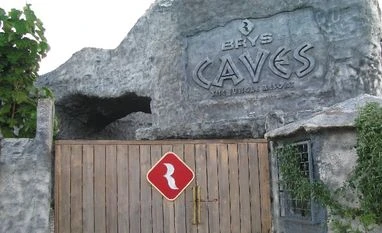)
The Las Vegas-style resorts at the Reserve
This summer, a semi-adult tiger was following an ancient animal corridor between the forest and the river and instead blundered into the laundry room of a resort on the banks of the Kosi in the Corbett Tiger Reserve. It had to be tranquilised and transported to safety.
A young male tiger in Garjia (on the outskirts of the park) became so used to receiving meat as bait from local resort owners that it began following tourist-bearing elephants, looking for food handouts. It was declared a maneater after it killed a woman and was relegated to captivity in the Nainital zoo.
The expansion of Dhikuli
Naturalists have noted that tigers in Corbett have begun to display what they call the ‘Ranthambore Effect’ — they have become so used to being seen by hundreds of tourists that they’ve lost their innate fear of man. “Till a decade ago, our guides would be happy if they had 40 tiger sightings in a season. Now tigers often walk alongside jeeps, unfazed by the camera clicks,” says Ritish Suri who runs Avisfera Adventures. Unplanned and unregulated tourism has, he believes, wreaked havoc on the fragile ecology of the country’s foremost national park and tiger reserve.
He should know. With his wife, Minakshi Pandey, he ran Camp Forktail Creek in Bhakrakot, striving to ensure that it minimally impacted its surroundings, with no electricity, mud huts and locally sourced food. Elephants and a variety of birds were frequent visitors at the camp. All this changed when, a few years ago, a Las Vegas-style resort came up next door, with a bar, disco, bright lights and 5-D theatre. “It was a painful decision, but we had to close down our camp because it lost its original character,” says Suri. A decade ago, Camp Forktail Creek was the only resort in the village. Today, there are six others.
Given that over 200,000 visitors arrive annually at Corbett, Bhakrakot hasn’t seen as much development as some of the other villages have. With over 150 vehicles carrying 600 tiger-crazy tourists roaming the jungle every day, resorts and lodges have come up all around the park, over 210 at last count. “Compare it to the mid-1990s when I first came to Corbett, when there were three,” says Suri. Along the 35-kilometer stretch of road from Ramnagar to Mohan, resorts now stand cheek-by-jowl on the banks of the Kosi.
A garbage dump in Dhikuli
The busiest of them is Dhikuli, with over 65 resorts and counting. “We’ve even got nicknames for some of them,” smirks Bachi Singh, a local naturalist. He points out the ‘Diwali’ resort which lights up like a Christmas tree every night, and the ‘wedding’ lodge which specialises in wild weddings. Escalating land prices (estimated at over Rs 2 crore per acre) have led to crowding, a decrease in the ratio between built-up area and open spaces in new resorts. “Consequently, we see many resorts here that have been built on a single acre, with over 20 rooms!” says Suri.
With hectic competition between resorts, they’re vying for clientele with outlandish decor, discos, lavish buffets, 5-D cinemas, and even tiger baiting — with scant regard for the jungle that is, or should be, their unique attraction. This has caused several negative consequences for the park. For starters, this has resulted in the narrowing of the Kosi wildlife corridor that connects Corbett to other forests in the Ramnagar Forest Division. “It’s one of the 10 most crucial wildlife corridors in Corbett, and most of it has been encroached upon,” says Singh, who recalls days when wild animals would freely cross the road separating the Kosi valley from the forest. Without these corridors allowing for free movement, the gene pool of endangered animal populations will slowly get isolated, impacting the prospects for the long-term survival of the species.
Pollution and over-use of local resources are also big concerns. The Institute of Hotel Management carried out a survey of Corbett resorts for the tourism ministry in 2011. Of the 94 resorts surveyed, 20 had swimming pools, though water is a scarce resource here; almost one-third offered airconditioned rooms, powered mostly with diesel generators; four had discotheques. Less than 20 per cent of the resorts used any form of solar energy and only 37.6 per cent segregated waste. Garbage dumps have sprung up by the roadside. “The magnitude of waste being generated has become huge,” says Pandey, project manager of the local chapter of Waste Warriors, an NGO that is working to clean up the forest and reduce the waste going into its landfills. “We train six villages (out of the 110 villages around Corbett) to segregate and compost their waste, and currently advise six resorts on how to maintain their sewage treatment plants and compost pits. The task ahead is gigantic…”
All these facts beg the question — why has Corbett, thought to have the only demographically viable population of tigers in north-western India with the “best chances of long-term survival”, come to such a sorry pass? “There’s a lack of guidelines for sustainable tourism in the jungle,” says Sumantha Ghosh, president of the Corbett-based Society for Mahseer Conservancy. “Land use patterns must be more clearly demarcated near forest areas.” The existing guidelines aren’t implemented by the forest department. There is no other way that 65 resorts could have come up so easily in Dhikuli. The lack of community participation has also been detrimental to Corbett’s ecology. Many new resorts have come up on land sold by villagers tempted by escalating land prices. Ownership of land by outsiders is on the up (from practically nil in the ’90s, to almost one-third at last count).
Perhaps the way forward is for the government to delineate eco-sensitive zones around tiger reserves and strictly implement rules governing them. It should not issue more clearances for resorts in the already crowded park area, especially not in animal corridors. The forest department must phase out all the rest houses in the core areas of the park, which is actually now a legal requirement as per the Wildlife (Protection) Amendment Act 2006, that allows for no concrete structures in core tiger habitats.
Head buzzing with all I’ve seen and heard, I retire to the verdant gardens of Jim’s Jungle Retreat, one of the few eco-sensitive resorts in the area. I think I hear jackals call, but it’s actually human revellers in the resort next door doing the bhangra. Early next morning, as the resort’s guide Balam Singh and I trace tiger pugmarks on the bed of the Dhela river, we reach a dead end when we find they’ve been obscured by human footprints. The message is clear: there’s a new king of the jungle, and everyone had better watch out.

Don't miss the most important news and views of the day. Get them on our Telegram channel
First Published: Nov 08 2014 | 12:24 AM IST