


<b>Newsmaker:</b> Ajay Tyagi, who is more balanced than bold
Ability to soft-pedal ideas may help Tyagi find common ground with the govt & financial institutions
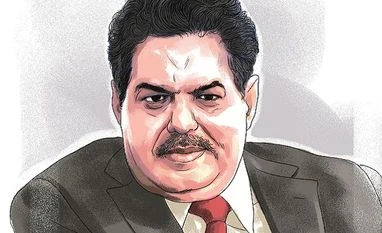 "Ajay Tyagi, Sebi")
premium
Illustration: Ajay Mohanty
Last Updated : Mar 03 2017 | 6:17 PM IST
Starting off a challenging assignment with the tenure itself making news can be disquieting for anyone. For Ajay Tyagi, this provided a taste of what may lie ahead for him as the chairman of Securities and Exchange Board of India, a job that puts him not just in the thick of things, but also under the glare of investors, companies and policymakers.
As the head of Sebi, Tyagi will be responsible for maintaining oversight over the country’s capital markets, stock exchanges, investment banks, as well as regulating foreign portfolio investors, rating agencies and intermediaries such as mutual funds and brokerages. “It is a big responsibility and I look forward to handling it,” Tyagi told reporters after the government announced his appointment earlier last month.
However, even before he took charge, his notification created ripples when the department of personnel and training clarified a week later that his tenure will be for three years. The earlier notification had said Tyagi’s term will be for a period not exceeding five years or till the age of 65.
Even this shortened tenure, though, will give Tyagi, 58, one more year of service as the superannuation age in the government is 60 years. It made sense for him to resign from the Indian Administrative Service two years earlier and accept the Sebi offer. He will continue to be eligible for the chairman’s post for another four years before he turns 65. An extension for him, though, will be at the discretion of the government.
Apart from Tyagi, many others, including Shaktikanta Das, were in the race for the high-profile job. As secretary in the department of economic affairs, Das was Tyagi’s boss and is four batches senior to him.
Some question Tyagi’s experience, given that his predecessor, UK Sinha, came to Sebi in 2011 after spending considerable time as chairman and managing director of UTI Asset Management Company, an offshoot of erstwhile Unit Trust of India, that ran into trouble after 2001 Ketan Parekh scam.
Tyagi may not have Sinha’s depth of experience, but as additional secretary in the department of economic affairs, he was the face of government policy for capital markets for two years, besides being director general of currency when note ban put a question mark on currency management. “He has a sense of maturity and is not given to extremes,” says a fellow IAS.
Incidentally, Tyagi has had brief exposures to the regulatory world twice; he was on the board of Reserve Bank of India for a short while and also worked in the Petroleum and Natural Gas Regulatory Board. More than a decade back in 2006, the unassuming officer of Himachal Pradesh cadre quietly set the rules for the city gas distribution business as secretary of the newly formed Petroleum and Natural Gas Regulatory Board. Earlier, as joint secretary in the ministry of petroleum and natural gas, Tyagi was involved in the framing of the PNGRB Act, which regulates the downstream oil and gas sector.
The Sebi assignment will be far more challenging. The capital market regulator is now involved with the tricky issue of commodity trading. Since September 2015, after the government repealed the Forward Contracts (Regulation) Act, 1952 and went in for the historic merger of Forward Markets Commission with Sebi, the regulator is directly responsible for the commodity exchanges. Just last month, Sebi allowed mutual funds to trade in commodity derivatives on exchanges, giving retail investors indirect exposure to commodities trading for the first time. The integration of Forward Markets Commission is still a work in progress. Besides, there is the unfinished agenda of his predecessor: listing of start-ups and real estate investment trusts.
A graduate in electrical engineering with post-graduate degrees in computer science and public administration, Tyagi is known to be soft-spoken, but a firm doer. A former colleague says it is his balance rather than boldness that stands out. Though not a media charmer, the soft peddling may help him get around vexed issues that regulators often face.