


Apple used China to make a profit; what China got in return is scarier
This is not just a story of China making Apple, but of Apple making China
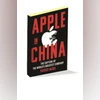 "APPLE IN CHINA: The Capture of the World's Greatest Company")
APPLE IN CHINA: The Capture of the World’s Greatest Company
Listen to This Article
By Hannah Beech APPLE IN CHINA: The Capture of the World’s Greatest Company
Author: Patrick McGee
Published: Scribner
Pages: 437 Price: $32
A little more than a decade ago, foreign journalists living in Beijing, including myself, met for a long chat with a top Chinese diplomat. Those were different days, when high-ranking Chinese officials were still meeting with members of the Western press corps. The diplomat whom we met had the latest iPhone in front of her on the table.Also Read

 "The Great Epinal Escape: Indian Prisoners of War in German Hands")
 "India-Africa: Building Synergies In Peace, Security And Development")
 "High Altitude Heroines: Four Early Explorers in the High Himalayas")
 "EMPTY VESSEL: The Story of the Global Economy in One Barge")
 "ON FAILING, Amit Chaudhuri")
I noticed the Apple gadget because at the time, Chinese state news media were unleashing invectives on the company for supposedly cheating Chinese consumers. (It wasn’t true.) There were rumours circulating that Chinese government officials were being told not to flaunt American status symbols.
The diplomat’s accoutrement proved that wrong.
At the time, one could make the argument that China’s economic modernisation was being accompanied by a parallel, if somewhat more laggardly, political reform. But the advent in 2012 of Xi Jinping has shattered those hopes. And, as Patrick McGee makes devastatingly clear in his smart and comprehensive Apple in China, the American company’s decision under Tim Cook to manufacture about 90 per cent of its products in China has created an existential vulnerability not just for Apple, but for the United States — nurturing the conditions for Chinese technology to outpace American innovation.
McGee, who was the lead Apple reporter for the Financial Times, takes what we instinctively know — “how Apple used China as a base from which to become the world’s most valuable company, and in doing so, bound its future inextricably to a ruthless authoritarian state” — and comes up with a startling conclusion, backed by meticulous reporting: “that China wouldn’t be China today without Apple.”
Apple says that it has trained more than 28 million workers in China since 2008, which McGee notes is larger than the entire labour force of California. The company’s annual investment in China — not even counting the value of hardware, “which would more than double the figure,” McGee writes — exceeds the total amount the Biden administration dedicated for a “once-in-a-generation” initiative to boost American computer chip production.
McGee has a journalist’s knack for developing scenes with a few curated details, and he organizes his narrative chronologically, starting with Apple’s origins as a renegade upstart under Steve Jobs. After Jobs’s firing and rehiring comes a corporate mind shift in which a vertically integrated firm falls for the allure of contract manufacturing, sending its engineers abroad to train low-paid workers in how to churn out ever more complicated electronics.
But China at the turn of the millennium was in the process of joining the World Trade Organisation, and its leaders were banking on an export-led economy that would learn from foreign investors. Starting in the 2000s the Taiwanese mega-supplier Foxconn constructed entire settlements for Chinese workers building Apple electronics. First up on the new assembly lines were iMacs that were produced by what became known as “China speed.”
Less than 15 years after Chinese workers began making Apple products en masse, Chinese consumers were buying them en masse, too. The iPhone in China signified success, an individualistic, American-accented flavour. By the mid-2010s, it was the United States that seemed behind in terms of integrating apps into daily life. In China, we were already living in the tech future.
Yet after Xi came to power, state media campaigns targeted Apple’s Western “arrogance.” Apple acquiesced to Beijing’s demands that it remove The New York Times app from its online store in China and keep Chinese user data in China rather than the United States.
In 2015, Apple was the largest corporate investor in China, to the tune of about $55 billion a year, according to internal documents McGee obtained for this book. At the same time, Xi laid out “Made in China 2025,” his blueprint for achieving technological self-sufficiency in the next decade, dependent on Apple being what McGee calls “a mass enabler of ‘Indigenous innovation.”
“As Apple taught the supply chain how to perfect multi-touch glass and make the thousand components within the iPhone,” he writes, “Apple’s suppliers took what they knew and offered it to homegrown companies led by Huawei, Xiaomi, Vivo and Oppo.” Today, some of these premium products come with specs that are increasingly ahead of American design, and have outsold Apple in many major markets.
China may have enabled Apple to become one of the most profitable companies in the world, but the exploitation goes both ways: This is not just a story of China making Apple, but of Apple making China. Given Xi’s authoritarian hold on power, what began as a feat of manufacturing has troubling consequences for the world.
The reviewer is a Times reporter based in Bangkok
©2025 The New York Times News Service
More From This Section
 "Book")
 "book")
 "Book")
 "THE UNDYING LIGHT: A Personal History of Independent India")
 "Book")
Topics : Book reading BOOK REVIEW Apple China BS Reads
Don't miss the most important news and views of the day. Get them on our Telegram channel
First Published: May 18 2025 | 11:47 PM IST