


Devils' Advocates: Is American foreign policy genuinely for sale?
Vogel traces the alarm over foreign lobbying to a well-known scandal from the 1930s in which some of America's top public relations men were charged
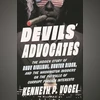 "DEVILS' ADVOCATES: The Hidden Story of Rudy Giuliani, Hunter Biden, and the Washington Insiders on the Payrolls of Corrupt Foreign Interests")
DEVILS’ ADVOCATES: The Hidden Story of Rudy Giuliani, Hunter Biden, and the Washington Insiders on the Payrolls of Corrupt Foreign Interests
Listen to This Article
DEVILS’ ADVOCATES: The Hidden Story of Rudy Giuliani, Hunter Biden, and the Washington Insiders on the Payrolls of Corrupt Foreign Interests
by Kenneth P. Vogel
Published by Morrow
390 pages $30
By David GreenbergAlso Read

 "Mother Mary Comes To Me")
 "1929: Inside the Greatest Crash in Wall Street History — and How It Shattered a Nation")
 "On the Margins of Protection")
 "The Dravidian Pathway: How the DMK redefined power and identity in South India")
 "Fly, Wild Swans: My Mother, Myself and China")
In 2016, Donald Trump promised to impose “a complete ban on foreign lobbyists raising money for American elections.” He didn’t. And, as headlines about the president’s accepting a $200 million airplane from Qatar and his daughter Tiffany’s outing on a Libyan oil mogul’s yacht suggest, the swamp that President Trump pledged to drain has become miasmatic. The watchdog group OpenSecrets estimates that foreign clients have spent more than $5 billion since 2016 to gain the favour of the US government and American institutions.
That estimate appears in Kenneth P Vogel’s Devils’ Advocates, a look at the world of foreign influence campaigns in the Trump and Biden years. An investigative journalist for The New York Times, Vogel has made covering lobbying his stock- in-trade. His painstakingly reported articles pulse with outrage at the mercenary cast of so much Washington deal-making.
Vogel traces the alarm over foreign lobbying to a well-known scandal from the 1930s in which some of America’s top public relations men were charged with operating on behalf of Nazi-aligned German commercial interests. That episode produced the 1938 Foreign Agents Registration Act, which requires agents for foreign entities to register with the Justice Department. Notably, the law didn’t actually bar foreign lobbying. So long as you told the government, the wheeling and dealing could go on.
During the 1970s, lobbying firms sprang up around Washington’s K Street. In 1980, while working for the presidential candidate Ronald Reagan, the 31-year-old Republican lawyer Paul Manafort founded a consultancy with Charles Black and Roger Stone from which they would not only help elect Republicans but then go on to ply those politicians on behalf of private clients.
Underscoring the short distance between the Reagan-era K Street boom and today’s Trumpian transactionalism, Manafort returned to the news in 2016 as an adviser to and, briefly, chair of Trump’s presidential campaign. Manafort’s hiring fuelled fears that Trump would, if elected, back Russia in its conflicts with Ukraine — and that he would license a culture of unchecked favour-trading. Investigated by the special counsel Robert Mueller in 2017 for his Russia connections, Manafort was charged with a slew of crimes and convicted on several counts. Trump pardoned him in the final days of his first term.
To bring clarity to this tangle, Vogel concentrates on three men. Hunter Biden, whose lavishly compensated post on the board of the Ukrainian energy company Burisma created headaches for his beleaguered father; and the former New York City mayor Rudolph Giuliani, who converted his 9/11 celebrity into lucrative foreign consulting gigs and a role as Trump’s fixer. The central character, however, is less well known: Robert Stryk, an Arizona-born college dropout and twice-failed political candidate who became an operator in Trump’s Washington almost by accident.
Among the many clients that Stryk takes on is Joseph Kabila, the brutally repressive president of the Democratic Republic of Congo.
In exchange for a peaceful transfer of power, Kabila wants US help in assuring that his preferred successor will prevail in Congo’s 2018 election, or at least that the new president won’t go after him.
Even as Vogel braids together Stryk’s narrative with those of Hunter Biden and Giuliani, he also weaves in various subplots — about someone’s work in China or Romania or Iceland. Most important, Vogel never establishes that American foreign policy is, as he asserts at the outset, “for sale.” Though he shows foreign players trying to influence US decisions, he almost always concedes that he doesn’t know whether lobbyists played any important role in the resulting policy. And Vogel never fully reckons with the extent to which decision makers take into account such imperatives as American economic interests, securityconcerns, regional balances of power and public opinion. No leader, however corrupt, disregards these considerations entirely.
Vogel has shone needed light on some bad actors and dubious endeavours, but ultimately his reports from the shadows leave the reader squinting to discern the big picture.
The reviewer has written John Lewis: A Life, a finalist for the 2025 Pulitzer Prize
©2025 The New York Times News Service
More From This Section
 "On the Brink of Belief: Queer Writing from South Asia")
 "SPLENDID LIBERATORS: Heroism, Betrayal, Resistance, and the Birth of American Empire")
 "a")
 "The Milk Tea Alliance: Inside Asia's Struggle Against Autocracy and Beijing")
 "The Last Bench")
Topics : Book Reviews books Literature
Don't miss the most important news and views of the day. Get them on our Telegram channel
First Published: Oct 19 2025 | 11:09 PM IST