


Tea party with a different flavour: Asian youth rebel against autocracies
How the type of tea preferred in Hong Kong, Thailand, and Burma, in contrast to the tea common in China, built a notional connection among students and youth in popular uprisings in the region
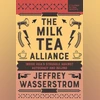 "The Milk Tea Alliance: Inside Asia's Struggle Against Autocracy and Beijing")
The Milk Tea Alliance: Inside Asia’s Struggle Against Autocracy and Beijing
Listen to This Article
The Milk Tea Alliance: Inside Asia’s Struggle Against Autocracy and Beijing
by Jeffrey Wasserstrom
Published by Columbia Global Reports
104 pages ₹1,971
In this concise work, historian Jeffery Wasserstrom focuses on protests across Hong Kong, Burma and Thailand between 2014 and 2024, a phase of major waves of student and youth protests across the world. “This book explores the sense of connection across geographical, cultural, and linguistic divides,” he writes.Also Read

 "38 LONDRES STREET: On Impunity, Pinochet in England, and a Nazi in Patagonia")
 "Supreme Court, SC")
 "107 DAYS")
 "Video culture in India")
 "Trial by Water")
Though there is no formal “Milk Tea Alliance”— the idea is rooted in the notion of the type of tea preferred in these regions, in opposition to the kind of tea common in China — the label builds a notional connection among students and youth participating in the uprisings. “The Milk Tea alliance is a loose, decentralised network of companions among hundreds or even thousands of activists,” Mr Wasserstrom explains. The alliance is built as groups across regions learn from and employ each other’s methods of protest. “They adopt tactics from one another and share tools and songs,” he adds.
The book focuses on three major activists: Agnes Chow from Hong Kong, Netiwit Chotiphatphaisal from Thailand and Ye Myint Win (Nickey Diamond) from Burma. Mr Wasserstrom writes that, “… the experiences of Chow, Netiwit, Diamond encapsulate the challenges faced by countless others within the movement.” All three of them share one major common idea, which is of hope, even after being persecuted and arrested.
For Netiwit, it’s a fight against the “military-capitalist-monarchical establishment” which he sees as an impediment in the development of Thailand and a challenge to a functioning democracy.
For Chow, it is the push from Beijing to control the way of life in Hong Kong and break the promise to the Basic Law, including the indoctrination in schools and control of the media.
For Diamond, it was the oppression under the military junta and the discrimination against the minorities and ethnicities in Burma. According to Diamond, “…Burma has become a place in which the military ran everything, operating as an elite class above all others. The only way for anyone to get ahead was to be a part of it or collaborate with it.” The oppression of the Rohingyas is also an important challenge.
The book explores how popular culture influences these movements too — such as incorporating the three-finger salute from the Hunger Games and references to Harry Potter as a way of protest. These also help them gain connections across the borders. “The use of the salute cast the authorities [whom] the youths challenged into the role of the tyrant,” Mr Wasserstrom writes.
But, as Mr Wasserstrom points out, the “activists do not engage extensively with the questions of governance post-revolution, instead maintaining a narrower focus on opposing authoritarianism and countering the global, bullying influence of the Chinese Communist Party.”
In that context, the book briefly touches on the idea of how China is playing a role in its neighbourhood — such as the Thai government’s recent decision to hand over Uyghurs’ seeking refuge to China. The Chinese government has been increasingly making inroads in the domestic politics of Burma. Diamond argues that China has been a “bad neighbour”. He draws similarities between “the way Beijing treated the Uyghurs and the way Burmese junta treated the Rohingyas”.
But a deeper discussion on Beijing’s role in these protests would perhaps have been warranted. It is increasingly apparent that a powerful China has managed to impact the domestic politics of its neighbours, especially Thailand and Burma. It is this new-found assertiveness that dictates China’s policies towards Hong Kong. But the author does not delve into this. Given the title of the book, one expected a little more discussion on China and its role.
In the last chapter titled “Beginnings,” Mr Wasserstrom reminisces on the role of Hibiya Park in Japan and its connection to Sun Yat-sen. Sun Yat-sen is different from today’s activist but he too did struggle against the Qing Dynasty and became the provisional president of the short-lived Republic of China in 1912. This is similar to most of the activists today who won political positions, but the victories have been short.
Such stories provide hope and underscore the idea that student/youth resistance movements have a long history and are interconnected. As for the long-term impact of these protests, the author injects a note of hope right at the start: “It is too soon to tell if historians of the future will see the ten-year period that began in 2014 and is ending in 2024 the way many now see the 1960s: as a period defined by dizzyingly wide array of struggles in which young people played central roles. This is, though, a very real possibility”.
The reviewer is associate professor, O P Jindal Global University
More From This Section
 "The Last Bench")
 "Winning with AI: Your Guide to AI Literacy")
 "Unsilenced: The Jail Diary of an Activist")
 "ITEC at 60: India's International Development Partnerships")
 "Ghost Nation: The Story of Taiwan and Its Struggle for Survival")
Topics : Book Reviews Book Literature
Don't miss the most important news and views of the day. Get them on our Telegram channel
First Published: Oct 08 2025 | 11:14 PM IST