


Wall Street's original sin: Sorkin revisits the greed and glamour of 1929
Over the course of more than 400 pages, tha author narrates a fable of greed, corruption and incompetence to shock the conscience
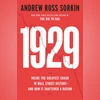 "1929: Inside the Greatest Crash in Wall Street History — and How It Shattered a Nation")
1929: Inside the Greatest Crash in Wall Street History — and How It Shattered a Nation
Listen to This Article
1929: Inside the Greatest Crash in Wall Street History — and How It Shattered a Nation
by Andrew Ross Sorkin
Published by
Viking
567 pages $35
Also Read

 "On the Margins of Protection")
 "The Dravidian Pathway: How the DMK redefined power and identity in South India")
 "Fly, Wild Swans: My Mother, Myself and China")
 "The Milk Tea Alliance: Inside Asia's Struggle Against Autocracy and Beijing")
 "Winning with AI: Your Guide to AI Literacy")
Review by Zachary D Carter
For nearly 80 years, the stock market crash of 1929 was rightly understood as a defining event of the 20th century — the catastrophe linking the Roaring Twenties to the Great Depression, and a key prompt for the American government’s transformation into a modern administrative colossus.
But the fall of Lehman Brothers in 2008 elevated the Great Crash of 1929 to the status of national myth. As the United States slipped into the Great Recession during the Obama years, 1929 became the ur-metaphor through which everything heady and horrible about American politics and economics could be understood.
So it’s appropriate that Andrew Ross Sorkin, a New York Times journalist and the author of a justly celebrated thriller on the 2008 crash, Too Big to Fail, has selected 1929 as the subject of his latest book. Eight years in the making, 1929 is a more ambitious project than Too Big to Fail, informed by the papers of various Wall Street titans from the past century, an unpublished memoir and previously undisclosed Federal Reserve Bank of New York deliberations, along with hundreds of books and newspaper articles.
Mr Sorkin informs readers early on that his book is as much a warning for our own time as it is a story about a bad day in October. Surveying the “market manias” in today’s crypto and artificial intelligence sectors, he writes that “each wave seduces us into thinking that we’ve learned from history, and, this time, we can’t be fooled. Then it happens again.”
This is big stuff, and Mr Sorkin ultimately does not deliver on his grandest ambitions. Nevertheless, there is a pulpy excitement in watching an author stretch his abilities, and if 1929 is not an intellectual monument, it does provide true-crime thrills that seem destined for prestige television adaptations (Mr Sorkin is also a co-creator of the Showtime series Billions).
Over the course of more than 400 pages, he narrates a fable of greed, corruption and incompetence to shock the conscience. We witness essentially every big player on Wall Street running outrageous pump-and-dump schemes — hyping a stock with fellow titans, watching its price spiral upward as the schemers sell to one another at deliberately inflated values, watching other speculators pile on to drive prices still higher until the operators sell out and leave the suckers holding the bag.
J P Morgan, the most prestigious banking firm on Wall Street then and now, is caught offering stocks to politicians at below-market rates as a routine business operation, with seemingly every prominent politician on the take. The president of the New York Stock Exchange, Richard Whitney, extols his employer as “a perfect institution” before Congress, while embezzling more than $1 million worth of securities to fund a life of country estate fox hunting.
Mr Sorkin’s cast of bankers and fund managers party with movie stars, schmooze with royalty, cheat on their wives, negotiate foreign policy treaties and variously go to prison, kill themselves and ally with the Fascist dictator Benito Mussolini.
It is exhilarating to watch these men rise and fall, and Mr Sorkin carries his readers along a current of astonishing detail conjured from the marginalia of his sources. It is impossible not to admire this dedication to craft, but readers can absorb only so many descriptions of elegant mansions and champagne yachts before feeling there is something prurient about so much high-definition exposure to extreme wealth.
When Mr Sorkin catches his breath, moreover, he is strangely sympathetic to what he acknowledges is a “gallery of rogues,” and even more strangely incurious about the political implications of his narrative.
“Other than the disgraced Richard Whitney and Albert Wiggin” — the chairman of Chase National Bank — “it is hard to make the case that any of the era’s other major financial figures did anything appreciably worse than most individuals would have done in their positions and circumstances,” Mr Sorkin claims.
Everybody makes mistakes, it’s true, but not everyone arranges sham stock sales with his wife to skimp on taxes while shielding his bank’s impossibly overleveraged position from market scrutiny. Not everybody treats the investing public like peasants who deserve to be pillaged, while bribing senators and simping for dictators.
Mr Sorkin’s half-hearted defence of the 1929 bankers is ultimately an indictment of the system he claims to love. There is no law of nature that irresistibly converts greed into progress over time. The terms of market fairness and exchange are inherently political rules, and it matters a great deal whether the capital development of the country is dependent on rank market manipulation and frenzied hyper-leveraged gambling. There are surely important lessons for our current moment in Mr Sorkin’s book; it is not clear he knows what they are.
The reviewer is the author of The Price of Peace: Money, Democracy and the Life of John Maynard Keynes. ©2025 The New York Times News Service
More From This Section
 "SPLENDID LIBERATORS: Heroism, Betrayal, Resistance, and the Birth of American Empire")
 "a")
 "The Last Bench")
 "38 LONDRES STREET: On Impunity, Pinochet in England, and a Nazi in Patagonia")
 "Unsilenced: The Jail Diary of an Activist")
Topics : Book Reviews books Literature
Don't miss the most important news and views of the day. Get them on our Telegram channel
First Published: Oct 15 2025 | 10:48 PM IST