


Natural allies in the Global South: A deep dive into India-Indonesia ties
Unlike the colonial endeavours of European powers, Indian influence in Indonesia was characterised by cultural and regional integration rather than political domination
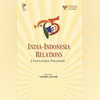 "India-Indonesia Relations: A Civilisational Partnership")
India-Indonesia Relations: A Civilisational Partnership
Listen to This Article
India-Indonesia Relations: A Civilisational Partnership
Author: Vinod Anand
Publisher: Pentagon Press
Pages: 142
Price: ₹750
Also Read

 "book")
 "Karma's Child")
 "book")
 "book")
 "The Green Book: An Observer's Notebook")
As Indonesian President Prabowo Subianto’s visit as chief guest at India’s Republic Day parade underlined, India shares deep-rooted cultural, economic and political ties with this populous south-east Asian neighbour. Given that India-Indonesia Relations: A Civilisational Partnership, edited by Vinod Anand of the Vivekananda International Foundation, adds considerable value and insight to the discourse on India-Indonesia relations. This slim volume explores the multi-dimensional facets of this relationship. The 12 chapters of the book have contributions from Vivekananda Foundation scholars, Indian and Indonesian diplomats, and academics. It is interesting to recall that President Sukarno of Indonesia was the chief guest of India when India celebrated its first Republic Day in 1950. The book is timely against the backdrop of the 75th anniversary of diplomatic relations between the two countries last year and ahead of the 70th anniversary of the historic Bandung conference in April this year.
India and Indonesia’s civilisational ties, maritime trade, political convergence in terms anti-imperialist and the anti-colonial struggle and strategic convergence suggest such a degree of commonality that it would be no exaggeration to say that if there is any country that can be considered India’s natural ally, it is Indonesia. In a short and pithy message, the Indonesian Ambassador to India Ina H Krishnamurthi says India and Indonesia today are the emerging drivers of the Asian Century, with the two countries key to regional stability and economic growth. The two countries demonstrate that democracy thrives in pluralistic societies as is evident in recent elections in India and Indonesia, she added.
In the chapter on “India and Indonesia: Torchbearers of the Bandung Spirit”, Indian ambassador to Indonesia Sandeep Chakravarty observes that the Bandung Conference of 1955 was arguably the most transformative and impactful of inter–national conferences of the era, perhaps even more than the San Francisco Conference of 1945 that led to the estab–lishment of the United Nations. As he argues, Bandung changed the face of the UN; in many ways the greater salience of the Global South today owes its origin to the Bandung conference. The concept of the Third World or the Global South emerged from Bandung, he points out. Turning to more recent times, he writes that it is not only a lexical coincidence that both India and Indonesia always sit next to each other at global diplomatic high tables. Intense diplomatic coordination was evident during Indonesia’s G20 presidency in 2022 and India’s presidency in 2023. At India’s request, Indonesia even agreed to host the G20 Summit in 2022, when it was India’s turn to do so.
In his chapter “Indonesia and India 75 years of diplomatic Relations: Time to Step out of the Diplomatic Crease” former Indian ambassador to Indonesia Gurjit Singh writes that the popularity of the Ramayana and Mahabharata in Indonesia and their adaptation into their own culture even after adopting a Muslim identity is unique. He quotes a letter that President Sukarno wrote to Prime Minister Jawaharlal Nehru in August 1946 saying, “Your country and your people are linked to us by ties of blood and culture, which dates back to the very beginning of history. The word ‘India’ must be a part of our life, for it forms the first two syllables of the name we have chosen for our land and race— the Indo in Indonesia.” Ambassador Singh also recalls the courageous efforts of the legendary politician and ace pilot, Biju Patnaik in airlifting the Indonesian Prime Minister Sjahrir, then under arrest by the Dutch army, to the Asian Relations Conference in New Delhi in April 1947 ahead of India’s independence. He, however, bemoans that the Asian Relations Conference finds no mention in the website of Indonesian Ministry of Foreign Affairs.
In the chapter “Commemorating 75 Years of Indonesia-India Relations: Shaping the Trajectory of Indonesia-India Relations” Rene L Pattiradjawane, a senior scholar from the Habibie Centre in Indonesia, writes that several inscriptions show that the first traces of Hindus were found in the western part of Java, as suggested in Ptolemy’s Geography. The early exchanges between Indonesia and India also laid the foundation for profound cultural and religious influence primarily through the spread of Hinduism and Buddhism. Temples such as Borobudur and Prambanan are monumental testaments to the historical connection between the two countries.
Dr Pattiradjawane observes that unlike the colonial endeavours of European powers, Indian influence in Indonesia was characterised by cultural and regional integration rather than political domination. The Indonesian scholar, however, does not mention the proselytising influence of the Chinese in the region. The author argues that as Indonesia and India navigate 21st century geopolitical complexities, their relationship will be pivotal to shaping the future of the Global South.
The reviewer is a former senior fellow of the Manohar Parrikar Institute for Defence Studies and Analyse and the Indian Council of Social Science Research. These views are personal
More From This Section
 "book")
 "book")
 "book")
 "Book")
 "Bill Gates")
Topics : BOOK REVIEW books Book reading
Don't miss the most important news and views of the day. Get them on our Telegram channel
First Published: Feb 17 2025 | 10:53 PM IST