


Eco Survey advises targeted congestion pricing in dense business districts
The Economic Survey 2025-26 backs congestion pricing and demand-based parking to cut traffic, emissions and productivity losses, citing global examples from Singapore and London
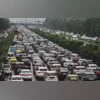 "Traffic jam, Traffic, Delhi Gurugram Expressway")
Congestion pricing is a transportation demand-management strategy in which drivers are charged a fee for using roads during peak periods of congestion
Listen to This Article
Targeted congestion pricing in dense business districts, combined with demand-based parking management, can reduce traffic, speed, and emissions as seen internationally, according to the Economic Survey 2025-26.
The survey highlighted the steps taken by Singapore and London authorities to tackle congestion.
The Economic Survey noted that there are several varying estimates of the loss in productivity across cities, resulting from traffic congestion.
A Centre for Science and Environment (CSE) report on Delhi's congestion troubles stated that an unskilled worker stands to lose between 7,200 and 19,600 per year due to congestion, it said.
Similarly, skilled and highly skilled workers can lose as much as 8,300-23,800 and 9,000-25,900 a year, respectively.
Also Read

 "Stock Market LIVE, January 29, 2026")
 "Nirmala Sitharaman")
 "Income Tax Bill, Income Tax")
 "MGNREGA, VB-G RAM G")
 "Ultra-processed food, junk food")
A working paper by the Institute for Social and Economic Change (ISEC) estimated the loss of productive hours due to the late arrivals caused by traffic congestion to be around 7.07 lakh hours in 2018 for Bengaluru city, translating to a monetary cost of around 11.7 billion.
A 2018 report by UberBCG estimated that costs associated with traffic congestion in the four metros of Delhi, Mumbai, Bengaluru, and Kolkata were USD 22 billion per year.
"Targeted congestion pricing in dense business districts, combined with demand-based parking management, can reduce traffic, raise speeds, and cut emissions, as seen internationally," the survey opined.
Congestion pricing is a transportation demand-management strategy in which drivers are charged a fee for using roads during peak periods of congestion.
Recent reforms, such as the Chennai Metropolitan Area Parking Policy (2025), whereby private vehicle use is disincentivised, treat parking as valuable real estate, and prioritise walking, cycling, and public transport, show that such demand-management tools are feasible complements to transit investment, it added.
Singapore Electronic Road Pricing (ERP) is a dynamic, electronic, congestion-pricing system that automatically charges vehicles when they pass under a toll gantry during peak periods. It is specifically designed to manage and reduce traffic congestion, and decades of data from Singapore show that it works very effectively, the survey stated.
The London Congestion Charge is a cordon-based, area licensing system where vehicles pay a daily fee to enter, leave, or move within a designated central London zone, it added.
The survey also suggested scaling up city bus fleets, accelerating e-bus adoption and mainstreaming of the last-mile and shared mobility as other elements, which could be used to curtail congestion in cities.
(Only the headline and picture of this report may have been reworked by the Business Standard staff; the rest of the content is auto-generated from a syndicated feed.)
More From This Section
 "Farmers, Farmer, agriculture, fertilizers")
 "Nirmala Sitharaman, Nirmala")
 "retirement homes, senior citizens")
 "Nirmala Sitharaman, Nirmala")
 "Prime Minister Narendra Modi, budget session parliament 2026")
Don't miss the most important news and views of the day. Get them on our Telegram channel
First Published: Jan 29 2026 | 3:18 PM IST