


Economic Survey bats for trust-based e-Way Bill system to ease logistics
The survey proposes policy designs relying on trust-based models, such as a "trusted dealer" framework, where taxpayers with strong compliance records face minimal physical checks
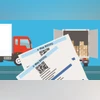 "E-way bill")
Economic Survey 2025–26 calls for a trust-based, tech-driven overhaul of the e-Way Bill system to cut logistics delays, lower costs, and make GST compliance more business-friendly.
Listen to This Article
Rather than being seen as an enforcement tool, eway bills can be reimagined as a facilitator of seamless logistics, emphasising trust-based compliance and advanced technology to minimise disruption in bona fide trade, the Economic Survey has suggested.
The bill is a mandatory electronic document to track the movement of goods valued above ₹50,000 under the goods and services tax (GST) regime.
The Survey proposes policy designs, relying on trust-based models such as a “trusted dealer” framework, in which taxpayers with strong compliance records face minimal physical checks. Businesses that comply with this enjoy greater certainty in movements of goods.
The Survey also recommends a wider adoption of technologies like eseals, electronic locking systems, and vehicle tracking integrated with eway bills for secure, end-to-end monitoring without routine road stoppages.
Highlighting the success of GST in abolishing physical inter-state checkposts from 2017, the Survey notes that the bill has been an effective digital substitute for tracking goods movements without reintroducing border barriers.
Also Read

 "Central Public Sector Enterprises, CPSEs")
 "stock market, BSE")
 "aggressive hybrid funds, mutual funds, equity, debt, retirement planning, long-term goals, investment strategy, portfolio stability, systematic withdrawal plans, moderate risk investors")
 "The Economic Survey for 2023-24, tabled in Parliament on Monday, asked the private sector to contribute to the creation of approximately eight million jobs annually until 2036. It also cautioned companies against being overly reliant on capital-inten")
 "Indian economy, manufacturing")
However, it points out that mobile-based checks at interior points can sometimes cause avoidable delays and compliance friction.
“The next wave of GST reforms could, therefore, focus on reimagining the e-Way Bill system as a facilitator of smooth logistics rather than only as a tool for enforcement and control, in line with the changing needs of businesses and supply chains,” the Survey states in its chapter on fiscal developments.
State governments, which play a key role in field-level enforcement, would be central to this transition by shifting to risk-based, system-generated alerts and limiting discretionary checks, it noted.
“Together, these reforms would amount to a significant deregulation of the logistics ecosystem, reducing costs and delays for trade while maintaining effective, non-intrusive oversight for tax administration,” the Survey added.
Abhishek Jain, head (indirect tax) and partner, KPMG, said: “The Survey has rightly highlighted the need to shift the eway bill system from enforcement-led checks to risk-based compliance. Frequent road inspections add friction for genuine businesses. A trust-driven, technology-backed framework can reduce logistics delays while preserving revenue safeguards, making GST administration more efficient and business-friendly.”
According to Abhishek A Rastogi, founder, Rastogi Chambers, the Survey’s proposal marks a necessary course correction in GST administration.
“It aligns with the constitutional promise of free trade and commerce across states ... If implemented with uniformity by states and backed by objective, risk-based parameters, this shift could lower transaction costs for compliant businesses while preserving the revenue interests of the exchequer through non-intrusive, data-driven oversight,” Rastogi added.
More From This Section
 "ai, artificial intelligence")
 "Stablecoins")
 "defence budget, national security")
 "India, India flag")
 "trading, markets")
Don't miss the most important news and views of the day. Get them on our Telegram channel
First Published: Jan 29 2026 | 6:23 PM IST