


Nvidia warns Trump's chip fee on China could trigger lawsuits, hit sales
Nvidia cautions that Trump's proposed 15% tariff on AI chip sales to China may lead to litigation, weaken US firms' competitiveness, and benefit foreign rivals
 "Nvidia")
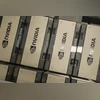
Nvidia warns Trump’s 15% China AI chip fee plan could trigger lawsuits, hurt competitiveness, and deepen risks in US-China tech tensions. | Image: Bloomberg


Listen to This Article
Nvidia Corp has cautioned investors about potential legal and competitive fallout from a Trump administration proposal to impose a 15 per cent commission on sales of artificial intelligence (AI) chips to China, even as the plan remains in early discussions.
In a filing with the US Securities and Exchange Commission (SEC), the company wrote: “Any request for a percentage of the revenue by the USG (United States government) may subject us to litigation, increase our costs, and harm our competitive position and benefit competitors that are not subject to such arrangements.”
White House’s 15 per cent China chip fee plan
Earlier this month, the White House floated a plan to allow Nvidia and rival Advanced Micro Devices Inc to resume shipments of AI processors to Chinese customers in exchange for paying the US government a 15 per cent commission on sales. No formal regulatory action has been taken on this yet.
Washington had blocked those sales in April before easing restrictions by granting new licences.
H20 sales hit by trade curbs
In April 2025, licensing requirements for Nvidia’s H20 chips, introduced under the Trump administration, forced the company to record a $4.5 billion charge in the first quarter of FY26 for excess inventory and purchase obligations after demand collapsed.
Also Read

 "global stocks")
 "artificial intelligence")
 "Nvidia")
 "Asian stcks, asian shares, share market")
Although the US government granted licences in August 2025 for certain H20 shipments to China, Nvidia said it has not shipped a single H20 under those approvals and has “not generated any revenue or shipped any H20 products under those licences”.
The company cautioned that it may be “effectively foreclosed” from China’s fast-growing data centre market if no workable solution emerges.
“Given the increasing strategic importance of AI and rising geopolitical tensions, the US government has changed and may again change the export control rules at any time,” the company said. “Further restrictions could materially and adversely impact our business, operating results, and financial condition.”
Rising scrutiny over AI
Regulators across multiple jurisdictions, including the US, European Union, UK, South Korea, Japan, and China, have intensified oversight of Nvidia’s role in the AI and graphics markets. The French Competition Authority has already collected information from Nvidia regarding competition in graphics processors and cloud service providers.
The company said it continues to receive “broad requests for information from competition regulators” covering GPU sales, supply allocation, partnerships in AI foundation models, and its business strategies. Nvidia expects such inquiries to continue, describing them as “expensive and burdensome” with the potential to strain relationships with customers and partners.
China, meanwhile, has also begun encouraging state-linked buyers to reduce reliance on US technology, further clouding Nvidia’s prospects.
Nvidia lowers growth forecast after Q2 earnings
Amid this, Nvidia, considered the world’s most valuable company, gave a forecast for the current quarter that fell short of some analysts’ bullish expectations. The company expects about $54 billion in sales for the period ending in October, compared with Wall Street estimates as high as $60 billion.
Nvidia left as much as $5 billion in potential China sales out of its forecast, citing geopolitical tensions. “We believe some of that revenue will come in over time, but can’t be certain of the amount or timing,” Chief Financial Officer Colette Kress said in an earnings call on Wednesday, as reported by Bloomberg.
Chief Executive Jensen Huang said the company is now looking to its next generation of chips, codenamed Blackwell, as a potential option for the Chinese market.
Meanwhile, Nvidia’s second-quarter revenue jumped 56 per cent to $46.7 billion but marked the smallest percentage increase in more than two years.
Nvidia’s shares closed nearly 1 per cent lower on Wall Street on Wednesday following the announcement.
More From This Section
 "Xiaomi")
 "air india express")
 "The aspirations of a young India and increased income levels have encouraged companies to consider mergers and acquisitions (M&A) to keep up with demand. In a world where consumer preferences change dramatically, M&As provide companies the means to r")
 "The much-anticipated provision of the deal value threshold (DVT) under the Competition Amendment Act 2023, notified on Monday, seeks to capture mergers and acquisitions (M&As) where the deal value exceeds Rs 2,000 crore or where the target company ha")
 "Ranju Alex")
Don't miss the most important news and views of the day. Get them on our Telegram channel
First Published: Aug 28 2025 | 10:15 AM IST