


Tata Motors demerger to give shareholders long-term returns: Chandrasekaran
Tata Motors chairman N Chandrasekaran has said that the demerger will enhance agility, boost EV focus, and integrate AI to deliver long-term value
 "N Chandrasekaran")
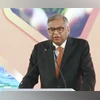
Tata Sons Chairman N Chandrasekaran noted that Tata Motors is also increasing the use of automation and artificial intelligence to boost operational agility and prepare its manufacturing systems for the future. | Photo: PTI
Listen to This Article
The proposed demerger of Tata Motors into two separate listed companies is expected to create strategic clarity and support long-term shareholder value, Tata Sons' chairman N Chandrasekaran said on Saturday.
In the company's 80th Integrated Annual Report for FY25, Chandrasekaran shared that the separation process – creating distinct entities for commercial vehicles and passenger vehicles (which includes electric vehicles and Jaguar Land Rover) – is moving forward as expected.
"The proposed demerger will bring greater strategic clarity and agility, enabling a more focused approach to execution and value creation, delivering superior experiences for customers, rewarding careers for employees, and long-term returns for shareholders," he said.
The demerger -- already approved by shareholders earlier this month -- is set to become effective in the second half of 2025. Shareholders will receive equivalent shares in both newly-listed companies.
Looking ahead to FY26
Commenting on the company’s future direction, Chandrasekaran said: "We step into FY26 with confidence in our strategy, strength in our execution, and belief in our people."
Also Read

 "tata, tata group")
 "TATA Altroz")
 "Tata Motors")
 "SUVs")
 "Tata motors")
He added that Tata Motors is keeping a close watch on global uncertainties, such as shifts in international trade and varying adoption rates of electric vehicles in different countries.
"We remain vigilant to worldwide volatility, including the impact of changes in global trade conditions and the varying degrees of adoption of electric vehicles across different markets and evolving technologies, to accelerate our production plans while delivering value to our customers," he said.
The company aims to maintain steady growth, improve customer satisfaction, and drive innovation in safer, cleaner, and more connected transport solutions.
Embracing AI and automation
Chandrasekaran noted that Tata Motors is also increasing the use of automation and artificial intelligence to boost operational agility and prepare its manufacturing systems for the future.
"As we grow, we are also embedding greater automation and AI into our operations, enhancing agility and efficiency while shaping a future-ready manufacturing ecosystem," he said.
He highlighted the significant opportunities AI and generative AI bring to every part of the business – from the design and manufacturing of vehicles to their performance on the road.
"AI in vehicles is improving safety, increasing fuel efficiency, and providing drivers with enhanced connectivity features. This is the new context in which we craft our strategies for the future," Chandrasekaran added.
Tata Motors demerger: Key details
Under the plan, Tata Motors will divide its commercial vehicles business, including all associated assets, staff, and investments, into a new entity named TMLCV. At the same time, the existing passenger vehicles business (TMPV) will be merged back into Tata Motors Limited (TML), which remains listed.
As per the agreed scheme, for every fully paid share of ₹2 held in TML, shareholders will get one fully paid share of ₹2 in TMLCV. This is referred to as the “Entitlement Ratio”.
Once the demerger is effective, both TMLCV and TML will be renamed, resulting in two independently listed companies.
The demerger and merger will occur at the same time, on what is termed the “Appointed Date”. The asset split between the two new companies is expected to be in a 60:40 ratio.
Tata Motors has said that the restructuring would allow both businesses to pursue their distinct goals more effectively, strengthen responsibility within each unit, and improve value for shareholders. The company also clarified that there would be no negative effects on employees, customers, creditors, or partners.
More From This Section
 "Supreme Court, SC")
 "pharma, drugs, medicine")
 "Donald Trump, US President")
 "Sun Pharma")
 "Praveen Neppalli Naga Global CTO of mobility and delivery, Uber")
Topics : Tata Motors N Chandrasekaran Electric Vehicles Jaguar Land Rover Passenger Vehicles shareholder value commercial vehicles Automobile
Don't miss the most important news and views of the day. Get them on our Telegram channel
First Published: May 24 2025 | 6:33 PM IST