


Modi's visit signals a new phase in India-Israel economic partnership
PM Modi's visit to Israel and ongoing FTA negotiations mark a shift from transactional trade to structured, execution-led economic collaboration between India and Israel
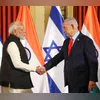 "Prime Minister (PM) Narendra Modi and his Israeli counterpart Benjamin Netanyahu in Jerusalem (Photo: X/@narendramodi)")
Prime Minister (PM) Narendra Modi and his Israeli counterpart Benjamin Netanyahu in Jerusalem (Photo: X/@narendramodi)
Listen to This Article
Prime Minister Narendra Modi's recent visit to Israel marked a pivotal moment in a partnership that has evolved into economic maturity. Built on high-level political trust, this relationship now drives structured business collaboration across key sectors.
Over the last decade, consistent leadership-level engagement has fostered stability that appeals to investors and corporate boards. Such continuity minimises risks and underscores enduring alignment. Few economic ties scale without this foundation — and India–Israel's bond has proven resilient amid Israel's security challenges since late 2023.
High-profile reciprocal visits highlight this depth. In 2025, Israel's Minister of Economy and Industry Nir Barkat brought over 60 companies to India, paired with a CEO forum for tangible deals. Just two months ago, India's Commerce Minister Piyush Goyal led a similar delegation to Israel. These were not mere formalities; they were targeted missions fostering direct industry matchmaking.
The first round of Free Trade Agreement (FTA) negotiations was held in New Delhi from February 23–26, 2026, building on the Terms of Reference signed last November. Covering goods, services, intellectual property rights and key sectors such as technology and defence, these talks aim to reduce barriers and boost market access ahead of PM Modi's trip.
Also Read

 "V Anantha Nageswaran, Chief Economic Advisor")
 "GDP, India GDP")
 "rupee, money, Indian rupee, finance, economy, currency")
 "PM Modi, Netanyahu")
 "Union Commerce and Industry Minister Piyush Goyal (centre), with US Secretary of Commerce Howard Lutnick (left) and US Ambassador to India Sergio Gor, in New Delhi on Thursday. (Photo: @PiyushGoyal/X)")
These visits, now amplified by the ongoing FTA talks, signal expectations for disciplined private sector action. The partnership's roots run deep — from decades-old diamond trade ties to defence collaborations. It now spans advanced manufacturing, cybersecurity, artificial intelligence, infrastructure, fintech and health-tech. The shift is clear: from diverse transactions to deep integration.
Bilateral civilian trade reached $3.63 billion in 2025, up from $3.50 billion in 2023. Israeli exports to India climbed to $2.07 billion, fuelled by demand in water technology, agritech, cybersecurity and fintech. Yet growth increasingly stems from joint ventures, on-ground pilots and India-centric production — not just imports.
Indian firms prioritise scalable, adaptable technology; Israeli innovators recognise the need for local alliances, regulatory compliance and sustained on-ground presence. Discussions have evolved from access to co-execution.
This dovetails with India's push for self-reliant manufacturing and infrastructure. Israel's strength in rapid research-to-market innovation pairs seamlessly with India's vast implementation scale and consumer base.
Entities such as Israel's TradeIL and its missions in Mumbai, Bengaluru and Delhi offer hands-on support including counterpart matching, pilot structuring, regulatory navigation and deal follow-through. In complex markets, such coordination converts intent into outcomes.
PM Modi's visit amplified alignment and urgency. But the next phase will be defined by execution: joint development programmes, localised manufacturing partnerships, technology validation at scale and collaborative expansion into third markets.
India and Israel have established trust. They have institutionalised dialogue. They have demonstrated reciprocal commitment through high-level economic missions at the ministerial and CEO level.
The task now is conversion — converting trust into projects, dialogue into production and alignment into sustained industrial collaboration.
The foundation is solid. The framework is in place. The moment to act is now. (The author is Head of Economic and Commercial Mission, Mumbai at Consulate General of Israel in Mumbai)
(Disclaimer: These are the personal opinions of the writer. They do not reflect the views of www.business-standard.com or the Business Standard newspaper)
(Disclaimer: These are the personal opinions of the writer. They do not reflect the views of www.business-standard.com or the Business Standard newspaper)
More From This Section

 "digital law, internet, mobile usage, internet users, smartphones")
 "Narendra Modi, Lula da Silva (Photo: X/@narendramodi)")
 "(From left) Mukesh Butani, managing partner, BMR Legal Advocates; Spandana Koona, associate, BMR Legal Advocates.")
 "ai, artificial intelligence")
Don't miss the most important news and views of the day. Get them on our Telegram channel
First Published: Mar 01 2026 | 11:00 AM IST