


Trade war narrows down to US-China, Chinese trade deflection a real worry
The fear of deflection of Chinese exports to third markets is giving a major scare to the policymakers in developing nations
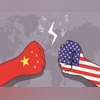 "US, China, US China trade war")
US President Trump’s action on trade policy has created major upheaval on trading landscape. | Representational
Listen to This Article
Ever since Donald Trump took charge on January 20 as 47th President of the US, raising import tariff has been his key weapon to reset international economic relation agenda. Starting with the release of “America First Trade Policy Memorandum” on the very first day of his second term, followed by series of announcements/actions on tariffs hike to finally pausing the implementation of reciprocal tariff (except for China) for 90 days, President Trump’s action on trade policy has created major upheaval on trading landscape. However, in the end or for the time being the trade-war appears to be narrowing down to US-China, more like a continuation of Trump1.0.
Two situations emerge
As the US’ tariff action narrows down to China, there are two likely scenarios emerging immediately. First, the rest of the World, particularly Asia sees a window of opportunity to expand their exports to the US, a major importing nation. Secondly, the disruption in US-China trade is expected to trigger significant trade diversion, raising concerns among many developing nations about increased competition from China. As per the latest WTO release, Chinese merchandise exports are projected to rise by 4 per cent to 9 per cent across all regions outside North America, as trade is redirected.
Lacks capacity to exploit the opportunity
According to US Census Bureau latest data, the US imported merchandise worth of US$4.2trillion in the year 2024. Out of this, China’s share is US$439bn, almost equivalent to India’s current total goods export. US imports from China are expected to fall sharply in sectors such as textiles, apparel, and electrical equipment, creating new export opportunities for other suppliers able to fill the gap.
However, as the data indicates no nation in developing Asia is coming even remotely close to China’s export prowess. Countries like India or some of the ASEAN nations can theoretically provide the cheap workforce and other framework for the production of labour-intensive goods, but matching the scale of Chinese manufacturing and generating enough export surplus to fill the potential space seems impossible in a short time-period.
Chinese export deflection a real worry
On the other hand, the fear of deflection of Chinese exports to third markets is giving a major scare to the policymakers in developing nations. The decoupling of trade between China and the US is not a new subject of deliberation as it was discussed during President Trump’s first term too. China now faces up to a 245 per cent tariff on exports to the US. This includes a 125 per cent reciprocal tariff, a 20 per cent tariff to address the fentanyl crisis, and Section 301 tariffs on specific goods, between 7.5 per cent and 100 per cent.
Also Read

 "china, china flag, Politburo")
 "Xi Jinping, Donald Trump")
 "us china")
 "Rupee, Indian Rupee")
 "Trade, Container, Economy")
As a result of this hefty US tariff on Chinese products, the latest Global Trade Outlook of WTO forecasts Chinese exports to the US to fall by 77 per cent in 2025. Simultaneously, the Chinese imports are expected to increase to every other market, with the rest of North America predicted to see growth of 25 per cent. South America is expected to see a 9 per cent increase in Chinese imports this year, while all other markets are projected to see import increases of between four to six percent.
Already, China is the top trading partner to more than 120 countries across the globe. Chinese exporters have stronger incentives to redirect products to third markets. Moreover, China is already sitting over huge overcapacity across sectors which includes internal combustion automobiles, iron and steel, cement, phone handsets, legacy semiconductor chips, solar panels, EVs and polymer.
India is vulnerable
India is one of the most vulnerable countries in the eventuality of targeted export deflection by China. Already, India’s merchandise trade deficit with China has touched nearly US$100bn in the financial year ending 2024-25. Since India is critically dependent on China for several products such as electric machinery & equipment, semiconductor chips, electronics & components, raising import duty further may not be a wise move. I understand Government is not contemplating this option but at the same time keeping a close watch on import. A committee of senior officials has been set-up to monitor imports.
China from its end has already started sending olive branch to India by offering to facilitate Indian export to its market to address the concerns of rising trade deficit. In return China expects India to provide a non-discriminatory business environment to their companies. Currently, all Chinese FDI have to mandatorily seek government approval. This is a smart move by Chinese government as investment is a key driver of trade. For instance, increase in Chinese investment in sectors like electronics, EVs would result in import of components from the home country. China’s cumulative FDI equity inflows into India stands at $2.5 billion, which is not a very high figure given the size of Chinese economy.
As regards, leveraging opportunity to fill the potential space vacated in the US market due to China facing near prohibitive tariff, India seems to be not in favour of following any targeted strategy. India has been one of the major target countries for President Trump because it enjoys a healthy trade surplus of US$35bn in merchandise. Any further increase in this trade surplus in the current sensitive scenario may not go down well with President Trump led US administration. In fact, Indian government has been urging industry to source more from USA so that its concern on India enjoying healthy trade surplus can be addressed to a certain extent.
Conclusion
Though President Trump has announced a temporary truce by pausing the implementation of reciprocal tariff, but still enough turbulence has been inflicted on the global trading landscape. At the beginning of 2025, the WTO Secretariat was optimistic about continued expansion of world trade in 2025 and 2026, with merchandise trade growing in line with world GDP and commercial services trade increasing at a faster pace. The latest Global Trade Outlook and Statistics report of WTO released on 16 April forecasts the volume of world merchandise trade to fall by 0.2 per cent in 2025. This could shrink even further, to -1.5 per cent in 2025, if the situation deteriorates.
Many countries have reached out to USA for tariff negotiation or trade deals in this 90-day period of pause on reciprocal tariff. India is one such country who took early lead when Hon’ble Prime Minister visited Washington in February, much before the announcement of reciprocal tariff on April 2nd, 2025. One of the major outcomes of this visit was the announcement by two leaders to launch the negotiation on Bilateral Trade Agreement. Though this hasn’t helped India to pre-empt US action on reciprocal tariff, but the formal trade talks have begun, which would be helpful.
(The author is the chairman of The Hi-Tech Gears)
(These are the personal opinions of the writer. They do not reflect the views of www.business-standard.com or the Business Standard newspaper)
More From This Section
 "Delhi metro")
 "IMF, International Monetary Fund")
 "Oil field")
 "PM Modi in Saudi Arabia")
 "Reserve Bank of India, RBI")
Topics : Donald Trump US China trade war Trump tariffs
Don't miss the most important news and views of the day. Get them on our Telegram channel
First Published: Apr 25 2025 | 3:53 PM IST