


India bets on EFTA, UK FTAs to offset US tariff hit on marine exports
Officials told a parliamentary panel that India's FTAs with EFTA and the UK will ease the impact of US tariffs on marine exports, while diversifying markets beyond America
 "EFTA")
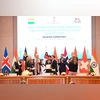
Officials highlighted the trade agreement between India and the four-member European Free Trade Association (EFTA), to be launched on October 1. | File Image
Listen to This Article
Top government officials on Monday told a parliamentary panel that India’s marine exports are losing ground in the US market because of the 50 per cent tariffs imposed by Washington. However, they expressed confidence that free trade agreements (FTAs) with other countries and regions would offset some of these losses.
Officials highlighted the trade agreement between India and the four-member European Free Trade Association (EFTA), to be launched on October 1, and the India–United Kingdom FTA, expected to be operationalised next year, as two deals that will cut tariffs and help diversify markets for India’s marine exports.
Officials from the Finance and Commerce ministries, including Special Secretary Rajesh Agarwal, briefed Parliament’s Public Accounts Committee (PAC) on the subject of ‘performance audit on Export Promotion Capital Goods (EPCG) Scheme’, as well as on the impact of US tariffs on Indian goods. The committee is chaired by Congress Lok Sabha member K C Venugopal.
Officials said the overall impact of US Section 232 tariffs on Indian industry is limited in the immediate term. India’s pharmaceutical exports to the US comprise mainly generic formulations, not patented drugs or branded generics, which would have borne a heavier tariff burden. They pointed out that the tariffs apply to all exporters worldwide except the European Union. China, India’s main competitor in generics, is also subject to the same tariff regime, which offsets any relative disadvantage.
India has engaged with the US to work towards a balanced bilateral trade agreement, officials told the panel. Persistently high tariffs, they cautioned, are detrimental in the long run as they erode competitiveness, slow export growth and complicate negotiations. They said New Delhi has conveyed its intent to safeguard sensitive domestic sectors such as agriculture while expanding opportunities for pharmaceuticals and other industries.
Also Read

 "Fish, Fish market, Sea food")
 "INS Shalki, Indian submarine, Indian Navy in Sri Lanka")
 "Karan Adani, Vizhinjam Port")
 "shrimp, prawn")
 "Keshav Reddy")
Responding to queries, including from PAC chairman Venugopal, officials admitted the situation is more challenging for marine exports, particularly fish and shrimp. The 50 per cent tariffs have made Indian exports uncompetitive compared to those from Ecuador, which enjoys far lower tariffs. Without a bilateral India-US trade deal, officials warned, exporters could lose significant market share.
While pursuing negotiations with the US, officials said New Delhi is simultaneously working to diversify export markets. The FTA with the four-member EFTA—Switzerland, Iceland, Norway and Liechtenstein—is one such step that could boost India’s marine exports.
Similarly, the India–UK FTA, signed during Prime Minister Narendra Modi’s visit to London earlier this year and expected to take effect early next year, will eliminate the 8 to 12 per cent duty on marine exports to the UK, unlocking access to the country’s £5-billion marine import basket, they said.
These FTAs, combined with efforts to expand into new markets in Europe, South America, Africa and West Asia, strengthen business-to-business ties and trade missions, forming part of a broader strategy to reduce dependence on the US, the officials added.
More From This Section
 "Ashwini Vaishnaw")
 "Rupee, dollar, rupee vs dollar")
 "Moodys")
 "Union Minister of State for Finance Pankaj Chaudhary speaks in the Rajya Sabha during the Monsoon Session of Parliament, in New Delhi on Frid")
 "Piyush Goyal, Piyush")
Don't miss the most important news and views of the day. Get them on our Telegram channel
First Published: Sep 29 2025 | 10:09 PM IST