


India-New Zealand FTA concludes: What the trade deal means for both nations
India and New Zealand have concluded a Free Trade Agreement after nine months of talks; the deal cuts tariffs, boosts trade, opens jobs and creates new visa routes for Indian professionals
 "Modi, Narendra Modi, Christopher Luxon")
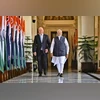
New Zealand Prime Minister Christopher Luxon and Prime Minister Narendra Modi. (Photo: PTI)
Listen to This Article
India and New Zealand have concluded negotiations on a long-awaited free trade agreement (FTA), marking a major step in strengthening economic ties between the two countries. The deal was finalised after nine months of intensive talks.
Prime Minister Narendra Modi spoke to New Zealand Prime Minister Christopher Luxon over the phone, and both leaders jointly announced the successful conclusion of the agreement.
The pact is expected to be signed within the next three months and is likely to come into force next year.
Why the India-New Zealand FTA matters for India
The India-New Zealand FTA, one of India’s fastest trade deals, aligns with the Viksit Bharat 2047 vision. Talks began on March 16, 2025, and concluded after five negotiation rounds, aiming to boost jobs, trade, investment, innovation and MSME growth.
Zero-duty access for all Indian exports
Under the deal, New Zealand will eliminate tariffs on 100 per cent of its tariff lines, giving duty-free access to all Indian exports. This is expected to benefit labour-intensive sectors such as textiles, apparel, leather, footwear, marine products, gems and jewellery, handicrafts, engineering goods and automobiles.
Also Read

 "ecommerce, e-commerce")
 "Assam Karbi Anglong protest")
 "health trends India 2025")
 "Delhi Air Pollution")
 "Doctors, prescriptions")
Big push for services, skilled jobs
India has secured New Zealand's market access in key sectors such as IT and IT-enabled services, professional services, education, finance, tourism, construction and other business services. This opens new avenues for Indian service providers and high-skilled employment.
New visa pathway for Indian professionals
A key highlight of the deal is a new Temporary Employment Entry Visa for Indian professionals. This allows up to 5,000 skilled Indian workers at any given time to work in New Zealand for up to three years.
The visa covers professions such as AYUSH practitioners, yoga instructors, Indian chefs and music teachers, along with high-demand sectors like IT, engineering, healthcare, education and construction.
Agriculture, pharma, investment gains for India
India and New Zealand will set up Agri-Technology Action Plans focused on kiwifruit, apples and honey. These plans aim to improve productivity, technology use, research collaboration, quality standards and value-chain development.
The cooperation includes Centres of Excellence, better planting material, training for growers and technical support for orchard management, post-harvest practices and food safety. Projects for apple growers and sustainable beekeeping are expected to raise farm incomes.
Easier access for medical devices
The agreement will help Indian pharmaceutical and medical device exporters by allowing faster regulatory approvals. New Zealand will accept GMP and GCP inspection reports from comparable regulators such as the US FDA, EMA and UK MHRA.
This move is expected to cut compliance costs, reduce repeated inspections and speed up market access.
Investment commitment of $20 billion
New Zealand has committed to facilitating investments worth $20 billion in India over the next 15 years. These investments are expected to support manufacturing, infrastructure, services, innovation and job creation under the Make in India programme.
The agreement includes commitments on Geographical Indications, with New Zealand agreeing to amend its laws to allow registration of Indian wines, spirits and other goods, similar to benefits already extended to the European Union.
What New Zealand gains from the FTA
For New Zealand, the agreement removes or reduces tariffs on 95 per cent of its exports -- among the highest levels secured under any Indian FTA. Nearly 57 per cent of exports will be duty-free from day one, rising to 82 per cent once the agreement is fully implemented. The remaining 13 per cent will see sharp tariff cuts.
This puts New Zealand exporters on an equal or better footing compared to competitors and opens access to India’s fast-growing middle class.
Key outcomes for New Zealand include immediate tariff elimination on sheep meat, wool, coal and over 95 per cent of forestry and wood exports. Most seafood exports, including mussels and salmon, will get duty-free access over seven years.
Tariffs on iron, steel and scrap aluminium will be phased out over 10 years or less. Most industrial products will see duty-free access over five to ten years.
Apples will get a 50 per cent tariff cut under a large quota, nearly double recent export levels. Kiwifruit will enjoy duty-free access within a quota almost four times the current exports, with tariffs halved outside the quota. Cherries, avocados, persimmons and blueberries will become duty-free over 10 years.
Wine tariffs will fall sharply from 150 per cent to 25 or 50 per cent over 10 years, along with MFN commitments. Tariffs on manuka honey will be reduced from 66 per cent to 16.5 per cent over five years.
The agreement also offers duty-free access for dairy ingredients meant for re-export from day one, bulk infant formula over seven years, and a 50 per cent tariff cut for high-value milk albumins within a New Zealand-specific quota.
More From This Section
 "LNG, NATURAL GAS, OIL SECTOR")
 "trade, ports")
 "fertilisers")
 "Train, Indian Railway")
 "Gurcharan Das, Economy")
Don't miss the most important news and views of the day. Get them on our Telegram channel
First Published: Dec 22 2025 | 1:00 PM IST