


India-Oman trade agreement opens the door to social security talks
In 2024, India's bilateral services trade with Oman stood at $863 million, with exports of $665 million and imports of $198 million, resulting in a surplus of $447 million for India
 "Modi, Oman")
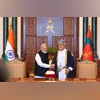
Both the countries signed a trade agreement, known as Comprehensive Economic Partnership Agreement (CEPA) on Thursday. | PHOTO: X @narendramodi
Listen to This Article
Apart from expanding bilateral trade, the trade agreement signed between India and Oman also includes a provision that will enable the two countries to engage in negotiations on social security matters.
Once concluded, a Social Security Agreement will ensure continuity of social security benefits on a reciprocal basis and avoid potential dual contributions for Indian workers and employers in the future.
Both the countries signed a trade agreement, known as Comprehensive Economic Partnership Agreement (CEPA) on Thursday.
The deal will come into effect within the next three months, with the completion of customs and the procedural related formalities in the two countries.
As a part of the trade pact, Oman has given assurance that Indian companies investing in the West Asian nation will be required to hire only a specific number of Omani nationals, while the rest of the workforce can be from India.
Also Read

 "Piyush Goyal, Oman")
 "Modi, Oman")
 "Modi, Narendra Modi")
 "Modi, Narendra Modi")
 "PM Modi")
“They have also given us an assurance that wherever Indians are investing in Oman… They will allow other than Omani residents ... 100 per cent Indian employees. So a little bit of employees will be Omanese, the rest can all be Indians,” Commerce and Industry Minister Piyush Goyal said on Friday.
“So, we (Indian firms) would not have to have diverse nationalities or take people from other nations. Our investments will provide jobs to our people. That is something which they have done for the first time, and this will be a permanent facility, even if they change their laws over there, this will remain entrenched in the FTA,” the minister said, adding that the binding commitment will result in more employment opportunities for India and Oman.
Under the pact, if Oman offers more liberal terms to any other SAARC countries including Bangladesh, Afghanistan, Pakistan, Nepal, regarding their Omanisation policy similar concessions will have to be extended to India as well. The policy aims to boost employment of its citizens in the private sector and replace foreign workers.
In 2024, India’s bilateral services trade with Oman stood at $863 million, with exports of $665 million and imports of $198 million, resulting in a surplus of $447 million for India. Oman’s total global services imports in 2024 were $12.52 billion, with India accounting for 5.31 per cent, indicating significant untapped potential for Indian service suppliers.
Commerce secretary Rajesh Agrawal said that despite being a relatively smaller market, it is still significant for India.
“It is a country that is two hours away from India. Trade is best done when it is nearshoring. That apart, there is tariff predictability with a trusted trade partner.”
Agrawal further said that the biggest gain is for the services sector.
“Despite (Oman) being a small economy, the services imports are high, nearly $13 billion. We are a service exporter in the world,” he said.
Under the trade deal, India has extended 100 per cent foreign direct investment (FDI) by Indian companies in major services sectors in Oman through commercial presence. This will open a wide avenue for India’s services industry to expand operations in the region.
In the case of merchandise trade, during the financial year 2025 (FY25), India exported goods worth $4.1 billion to the West Asian nation and imported shipments worth $6.6 billion leading to a trade deficit of $2.5 billion.
Under the trade deal, Oman has offered India zero-duty market access on 98 per cent of its tariff lines, covering over 99 per cent of India’s exports to Oman. India has offered tariff liberalisation on 77.79 per cent of its total tariff lines, which covers nearly 95 per cent of India’s imports from Oman by value.
More From This Section
 "Labour Secretary, Vandana Gurnani")
 "Direct tax, tax refunds, Income tax collection")
 "electric vehicle")
 "tax")
 "India, China, India China Trade, Trade")
Topics : Oman CEPA India trade policy
Don't miss the most important news and views of the day. Get them on our Telegram channel
First Published: Dec 19 2025 | 7:26 PM IST