


Frames per second: Trikal - When remembering becomes an act of resistance
As Goa marks its Liberation Day this month, efforts to incorporate the former Portuguese enclave into India's mainstream culture continue relentlessly
 "Trikal movie 1985")
Image: YouTube
Listen to This Article
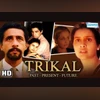
At a candle-lit dinner early in the Hindi film ‘Trikal’ (1985), directed by Shyam Benegal, Dr Simon Pereira (Keith Stevenson) describes Goa as a part of India. “Our country is a patchwork quilt,” he declares at the end of a heated argument with his fellow diners, “and the most beautiful patch of this quilt is Goa.” The dinner is being hosted at the sprawling colonial mansion of the Souza-Soares family in Lothavi, a village in north Goa, to mark the death of its patriarch, Ernesto. It is late 1961, days before the Indian army moves into Goa, liberating it from 461 years of Portuguese colonial rule.
Unlike Dr Pereira, not everyone at the dinner is keen to unite Goa with India. The village drunkard, Francis (Jayant Kriplani), suggests that Goa should belong to Goans and remain independent, like Switzerland. “Why do we need India?” he declares in a drunken slur. “The Goan escudo is worth twice the Indian rupee. We get potatoes from Holland, beef from Argentina…” Others, such as Señor Renato (Akash Khurana), who has settled in Lisbon with his wife, Dona Amelia (Sabira Merchant) and son Erasmo (Lucky Ali), claim that they are Portuguese citizens. Listening to their arguments, the recently widowed family matriarch Dona Maria Souza-Soares (Leela Naidu) declares: “No one knows the future… only the past is alive.”
Film scholar Arundhati Sethi, in a 2020 paper, argues that ‘Trikal’ “delves into the transitional and largely neglected phase of Goa’s decolonisation… [and] puts forth an alternative discourse of approaching national history.” It does do, argues Sethi, “by rerouting memory away from the high street of conventional history, utilising the critical prism of reflective nostalgia and allowing the shadows of marginality to spill over the entirety of the narrative.” Written by Benegal himself, the narrative utilises a story-within-the-story structure. It is narrated by Ruiz Pereira (Naseeruddin Shah), a native of Lothavi, who returns to the village after a quarter century, having lived in Mumbai, Portugal and Kampala.
Arriving at his village, Ruiz declares: “Memory is like a delicate vase of the Ming dynasty.” Couched within his narrative are other markers and narratives that continually remind the audience that they are watching recollections infused with surrealistic or even magical-realistic tones. Early in the film, the characters converse in Portuguese but switch to Hindi/Urdu. “So that we can understand them better,” says Ruiz. Their conversation is not natural, but tinged with formal phrasing, always keeping the audience aware that they are listening to translations. The dialogues for ‘Trikal’ were written by Benegal’s frequent collaborator, the writer Shama Zaidi.
Dona Maria listens to fado recordings on her gramophone, and a young Ruiz (Nikhil Bhagat) gets the village musicians to serenade her granddaughter, Anna (Sushma Prakash) — both aural markers of a fading Lusophonic culture. Every night, Dona Maria also conducts planchettes to summon the spirit of her dead husband, with the help of his illegitimate daughter, Milagrenia (Neena Gupta). The spirits that arrive, however, are of Vijay Singh Rane and Khushtoba Rane (both played by Kulbhushan Kharbanda), two men suspected of being anti-Portuguese rebels and killed by Dona Maria’s grandfather. “(W)e encounter a dialectical fabric of national identity dominated by unsettling intersections of past and present, home and abroad, memory and amnesia, power and oppression, romance and horror,” writes film scholar Jha.
Also Read

 "Mohan Yadav, Mohan, MP CM")
 "Val Kilmer; Hulk Hogan; and Giorgio Armani (Photo: Reuters)")
 "OTT")
 "Narendra Modi, PM Modi")
 "emraan hashmi, yami gautam, haq")
Towards the end of the film, news arrives at the Souza-Soares mansion that the Indian army has liberated Goa on 19 December 1961. The historical fact has been represented in diverse ways in popular Hindi cinema. In the 1969 film, ‘Saat Hindustani’, directed by Khwaja Ahmad Abbas, now more famous for being the debut of Amitabh Bachchan, Indian revolutionaries of different religions enter Goa to liberate it. Another film, again starring Bachchan, ‘Pukar’ (1983), directed by Ramesh Behl, is a typical Angry Young Man revenge drama, where the Liberation of Goa serves as a convenient backdrop for the action sequences. In both films, the Liberation is a deliberate act by Goans themselves or other Indians to reclaim the Portuguese colony for the mainland.
However, the facts on the grounds were not so easily filed away into the nationalist narrative. As historian Philip Bravo writes in an influential 1998 paper: “A mass nationalist movement that represented either the Portuguese or Indian position did not exist in Goa. …following the Indian ‘liberation’ of Goa and celebration throughout India, journalists noted an unusual lack of enthusiasm among Goans.” Bravo further argues that the failure of the nationalist rhetoric allows us to examine the relationship between history and nationalism. This complex relationship is the narrative and discursive space that ‘Trikal’ occupies.
Since at least 1980, when the Congress, led by former Prime Minister Indira Gandhi, won the election to Goa’s Legislative Assembly, the national government has employed various strategies to integrate the region’s unique heritage into the mainstream. American anthropologist Robert S. Newman, an authority on post-1961 Goa, writes in a 1984 paper that the recognition of Goa’s statehood and the adoption of Konkani as the state language were the final steps in the integration of the former Portuguese colony. Furthermore, in 1983, Goa hosted a retreat for the heads of Commonwealth nations, following a meeting in New Delhi, which led to a surge in tourism. Both these facts are mentioned in ‘Trikal’.
Similar efforts continue even now, led by the state. The Smart City developments in Panaji or the recent inauguration of a statue of Lord Ram by Prime Minister Narendra Modi are examples of such efforts. The activism by cow vigilantes to prevent the trade in beef ahead of Christmas last year is an example of attempts to incorporate the state into mainstream Hindutva. Goan writer Maria Aurora Cuoto, however, bemoans the loss of the state’s distinctive identity in her book, At Home in Two Worlds: Essays on Goa (2024): “The tragedy of Goa is that its distinctive history has now become its liability: it is seen to embody pre-industrial values where fun and frolic are the raison d’être of happy-go-lucky people. … How will we in Goa recover our space and homes?”
The film ‘Trikal’ dwells in the space where nostalgia becomes both archive and argument. Benegal does not indulge in a tidy, nation-building fable but lingers in the ambiguities between official narratives and political rhetoric. By filtering Goa’s decolonisation through Ruiz’s unreliable memory, the film foregrounds melancholic textures of a society on the cusp of erasure — its language, rituals, music and quotidian rhythms slowly slipping away. The film refuses any closure. In the end, Ruiz’s short homecoming makes him aware that he is now an outsider, maybe one of the tourists. Dona Maria had said that the past is alive. But it isn’t alive to be reclaimed; instead, it can disrupt the present, challenging the state-driven efforts to fold Goa seamlessly into the national mainstream. Remembering becomes an act of resistance.
Uttaran Das Gupta is an independent writer and journalist. The next Frames per Second column will be published on 3 January 2026
(Disclaimer: These are the personal opinions of the writer. They do not reflect the views of www.business-standard.com or the Business Standard newspaper)
More From This Section
 "Bigg boss 19 trophy")
 "Thamma OTT releases this week")
 "Dhurandhar box office collection")
 "Tere Ishq Mein")
 "Akhanda 2")
Topics : Frames per second Goa Hindi cinema Films Indian movies
Don't miss the most important news and views of the day. Get them on our Telegram channel
First Published: Dec 06 2025 | 12:07 PM IST