


Embraer CEO pledges to make India a manufacturing base for KC-390 aircraft
Francisco Gomes Neto pitched KC-390 Millennium as the "best" option for India, leveraging a wave of NATO acquisitions to position the plane as the new 'global benchmark' for tactical airlift
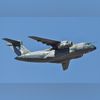 "KC-390 Millennium aircraft")
Photo: Wikimedia Commons
Listen to This Article
Brazilian aerospace giant Embraer on Sunday signalled its readiness to set up a major production hub for its KC-390 Millennium aircraft to support the broader Asia-Pacific market if it wins the Indian Air Force's contract for up to 80 transport planes.
In an exclusive interview to PTI, Embraer's President and CEO Francisco Gomes Neto pitched KC-390 Millennium as the "best" option for India, leveraging a wave of NATO acquisitions to position the plane as the new 'global benchmark' for tactical airlift.
By choosing our aircraft, the Indian Air Force will have an alignment with a rapidly expanding, interoperable alliance of modern air forces, he said as the force intensifies its hunt for a versatile tactical airlifter.
Describing the KC-390 as a much superior multi-mission workhorse, Neto said if awarded the Indian contract, the company will turn India into its primary production hub for aircraft to support the Asia-Pacific market.
The Embraer CEO said the company is eyeing to set up an exclusive regional MRO (Maintenance, Repair, and Overhaul) hub for KC-390 operators in India while looking at a long-term symbiotic relationship with the country in both defence and civilian aerospace sectors.
Also Read

 "Modi, Narendra Modi")
 "Rupee")
 "ATR bets on 2026 production ramp-up")
 "Hindustan Uniliver, HUL")
 "India AI Impact Summit 2026")
The top executive, highlighting the acquisition of KC-390 by several high-profile NATO member nations, including Sweden, the Netherlands and Portugal, projected the plane as a strategic counter to the legacy dominance of Lockheed Martin's C-130J.
Neto said the KC-390 Millennium is a better fit for the future needs of modern air forces as it is a new generation multi-mission transport and aerial refuelling aircraft.
"Our aircraft has been chosen by nine European countries. It's NATO's best choice. We believe that the KC-390 is very well positioned to address the Indian Air Force's requirement," Neto said.
The Embraer President and CEO was in New Delhi as part of Brazilian President Luiz InAcio Lula da Silva's delegation.
"We really believe that we are very well positioned for this contract, and our aircraft would be the best solution for India; not only for the Indian market, but maybe in the future, for the countries in the Asia Pacific region," he said.
In 2022, the Indian Air Force issued a Request for Information (RFI) to purchase medium transport aircraft (MTA) to replace its ageing fleet of Soviet-era AN-32 and IL-76 planes. The IAF plans to procure around 80 military transport aircraft and the multi-billion dollar procurement is likely to be cleared by the Defence Acquisition Council in the next couple of months.
Besides KC-390 Millennium, the other top contenders for the deal are Airbus Defence and Space's A-400M plane and Lockheed Martin's C-130 J Super Hercules. The IAF already operates 12 C-130 J Super Hercules.
In February 2024, Embraer announced a partnership with Mahindra to bid for the MTA programme.
Neto said the KC-390 is the most technologically advanced and versatile option for IAF and cited its load-carrying capability, diverse mission roles and jet-powered feature as against the rival platforms, and its latest digital avionics as well as low life-cycle costs.
Unlike the turboprop C-130 J Super Hercules, the KC-390 is jet-powered and it offers a 26-ton payload as against the 20 ton capability of C-130Js. The aircraft has a cruise speed of 470 knots and has the ability to fly faster while operating from unpaved or short runways.
"The aircraft is more than 50 per cent American equipment," Neto said, describing the plane as the "true" 21st-century airlifter that offers significant tactical heft.
Embraer has been emphasising that the KC-390 would provide India with a "stronger heft" in tactical airlift, bridging the gap between heavy lifters and smaller transport planes.
"The aircraft is quite prepared to operate from short and even unpaved runways. Compared to C-130Js, KC-390 is 25-30 per cent faster, and its operational cost will be less because it is a jet-powered aircraft as against the turboprop(C-130Js)," Neto said.
"It carries more loads, it is faster, it can go further. You can have less aircraft to do the same missions," he said.
Neto also noted that Embraer will try its best to ensure maximum indigenous content in the aircraft.
The Embraer President and CEO, delving into the significant upswing in India-Brazil ties, said it is the right time to go for the futuristic collaboration.
"We believe a project like the KC390 fits better to a long-term vision (for India-Brazil ties). It is a new product, and it is a choice between new and the other ones that were launched many years ago," he said.
"It fits very well. We can expand our production capacity, take advantage of existing demand in India, and use this additional capacity to serve other markets in the region. The production line in India will take care of the demand in the Asia Pacific," he said.
Embraer is also looking at the civilian aviation sector in India.
The Brazilian aerospace giant and Adani Defence and Aerospace exchanged an enhanced Memorandum of Understanding on Saturday to establish a Final Assembly Line (FAL) for the E175 regional jet for India's Regional Transport Aircraft (RTA) programme.
This advancement from the initial MoU signed in January 2026 represents a significant step forward and forms part of a broader roadmap to develop an integrated RTA ecosystem in India, the two companies said.
The industrial partnership will aim to establish an ecosystem for the E175.
Both companies are already working together to progress all aspects of the MoU, including opportunities in aircraft manufacturing, supply chain, aftermarket services and pilot training, and securing orders to support the proposed FAL, they said.
As one of the world's fastest-growing aviation markets in terms of passenger traffic, India is expected to require at least 500 aircraft in the 80 to 146 seat segment over the next 20 years.
(Only the headline and picture of this report may have been reworked by the Business Standard staff; the rest of the content is auto-generated from a syndicated feed.)
More From This Section
 "PM modi, Lula da silva, modi silva, AI summit")
 "Luiz Inacio Lula da Silva, Luiz Inacio")
 "India, US, India US")
 "Navy chief Admiral Dinesh Tripathi")
 "Brazilian President at Rajghat")
Don't miss the most important news and views of the day. Get them on our Telegram channel
First Published: Feb 22 2026 | 11:25 PM IST