


Trump paves way for sale of F-35 jets to India in billion-dollar arms deal
The announcement came after a high-profile meeting between Trump and Prime Minister Narendra Modi in Washington on Thursday
 "Modi, Narendra Modi, Donald Trump, Trump")
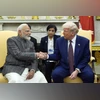
President Donald Trump meets with India's Prime Minister Narendra Modi in the Oval Office of the White House, Thursday, Feb. 13, 2025, in Washington. (Photo: PTI)


Listen to This Article
In a significant move that could reshape global military alliances, US President Donald Trump has announced plans to dramatically increase weapons sales to India this year. The proposed deal includes the cutting-edge F-35 stealth fighter jets, marking a major milestone in defence cooperation between the two nations.
The announcement came after a high-profile meeting between Donald Trump and Prime Minister Narendra Modi in Washington on Thursday. The two leaders discussed a wide range of issues, including trade, immigration, and national security—an area that took centre stage in their discussions.
“Starting this year, we’ll be increasing military sales to India by many billions of dollars,” Trump said at a joint news conference alongside PM Modi. “We’re also paving the way to ultimately provide India with the F-35 stealth fighters," he added.
Strengthening US-India ties
The growing defence partnership between the two countries is part of a broader strategy to counter emerging threats and maintain stability in the Indo-Pacific region. Trump emphasised the importance of working together on security matters, particularly “the threat of radical Islamic terrorism.”
READ: PM Modi, Trump launch ASIA to strengthen India-US military cooperation
Beyond defence, the discussions also covered a proposed trade deal that would see India importing more US oil and gas, aimed at narrowing the trade deficit between the two nations. India is already a key buyer of American defence equipment, having purchased more than $20 billion worth of US military hardware since 2008.
Also Read

 "Modi, Narendra Modi, Donald Trump, Trump")
 "Donald Trump meets PM Narendra Modi")
 "PM Modi with US President Donald Trump")
 "Donald Trump, Trump")
 "US-India, US-India flag, US India flag")
The runway to F-35s
The inclusion of the F-35 stealth fighter jets in the deal is a landmark development, given the aircraft’s elite status. Only a select group of nations—such as Israel, Japan, and Nato allies—have been granted access to the advanced combat jets.
However, Indian Foreign Secretary Vikram Misri later clarified that the F-35 deal is still at the proposal stage, with no formal process initiated yet. The White House and Lockheed Martin, the manufacturer of the F-35, have not provided official comments on the specifics of the agreement.
US foreign military sales, such as the F-35 program, operate as government-to-government transactions. The Pentagon serves as the official intermediary between US defence contractors and foreign buyers, ensuring that sensitive technology is transferred under strict guidelines.
READ: PM Narendra Modi-Donald Trump Bilateral Trade Negotiations
India’s military modernisation drive
New Delhi has been making large-scale investments to strengthen its military capabilities. Last year, India finalised a $3 billion purchase of 31 MQ-9B SeaGuardian and SkyGuardian drones after years of deliberations.
According to the US Congressional Research Service, India is projected to spend over $200 billion in the next decade on military modernisation. The acquisition of cutting-edge US weaponry aligns with India’s long-term strategy to enhance its air, land, and naval forces.
Geopolitical shift: Russia out, US in?
India has traditionally relied on Russia as its primary arms supplier. However, due to Moscow’s ongoing war with Ukraine and the subsequent international sanctions, New Delhi has been compelled to explore alternative sources for its defence needs.
The potential procurement of the F-35 could mark a major shift in India’s defence strategy, further solidifying its alignment with the United States. As tensions continue to simmer along India’s 3,488-kilometer (2,167-mile) border with China—especially after the deadly clashes in 2020—strengthening military ties with Washington could offer a strategic advantage.
A ‘special bond’ between Trump and PM Modi
Beyond defence and trade, Trump and PM Modi have developed a personal rapport, with the US president referring to Modi as a “much tougher negotiator” than himself. Modi, in return, called Trump a “friend” and even hinted at borrowing Trump’s famous campaign slogan, pledging to “Make India Great Again.”
The deepening relationship between the two leaders reflects the broader geopolitical realities of the 21st century. The US views India as a crucial counterweight to China’s rising influence, while India benefits from access to cutting-edge American technology to bolster its military capabilities.
Both nations are also part of the Quad alliance alongside Japan and Australia, a strategic grouping aimed at ensuring a free and open Indo-Pacific region.
[With agency inputs]
More From This Section
 "Modi, Narendra Modi, Donald Trump, Trump")
 "Modi Trump")
 "Modi, Narendra Modi")
 "PM Narendra Modi, PM Modi")
 "Donald Trump, Trump")
Topics : Donald Trump Narendra Modi US India relations F-35 fighter jet Military weapon BS Web Reports
Don't miss the most important news and views of the day. Get them on our Telegram channel
First Published: Feb 14 2025 | 1:29 PM IST