


Delhi's air quality remains 'very poor'; winter smog sets in, mercury sinks
Delhi-NCR records slight improvement in AQI but it may worsen as mercury dips under 10 degrees Celsius; Supreme Court urges long-term pollution plan
 "Smog, Delhi Pollution, Delhi Air Quality, Pollution")
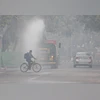
According to CPCB standards, an AQI between 401 and 500 falls in the ‘severe’ category, posing significant health risks (Photo: PTI)
Listen to This Article
Delhi’s air quality remained in the ‘very poor’ category on Tuesday, with the Air Quality Index (AQI) reading 341 at the Anand Vihar monitoring station, according to Central Pollution Control Board (CPCB) data. The reading showed a marginal improvement from Monday’s AQI, but pollution levels continued to remain a major concern across the region.
#WATCH | Delhi: Visuals from the Akshardham area this morning as a layer of toxic smog blankets the city. AQI (Air Quality Index) around the area is 381, categorised as 'Very Poor', as claimed by CPCB (Central Pollution Control Board). pic.twitter.com/Ns8LrwtlGS
— ANI (@ANI) November 18, 2025
The National Capital Region (NCR) reported alarming spikes, with Ghaziabad’s Vasundhara topping the charts at an AQI of 421. Greater Noida registered 402 at 8 am.
Also Read

 "Supreme Court, SC")
 "Stubble Burning, Stubble")
 "Smog, Delhi Pollution, Delhi Air Quality, Pollution")
 "Smog, Delhi Pollution, Delhi Air Quality, Pollution")
 "Smog, Delhi Pollution, Delhi Air Quality, Pollution")
According to CPCB standards, an AQI between 401 and 500 falls in the ‘severe’ category, posing significant health risks.
Temperatures fall sharply
Alongside deteriorating air quality, there was also a steady dip in temperature. The minimum temperature on Monday dropped to 8.7 degrees Celsius, which is 3.6 degrees below normal and the lowest November temperature recorded in the last three years, according to the India Meteorological Department (IMD). The last time the city experienced a lower minimum for the month was on November 29, 2022, when temperatures fell to 7.3 degrees Celsius.
The IMD has forecast further decline in temperatures in the coming days due to the possibility of light rain over the national capital.
Supreme Court calls for long-term policy
Amid the rising pollution levels, the Supreme Court on Monday told the Centre that a “perennial GRAP” approach cannot resolve Delhi’s long-standing air quality crisis. A Bench led by Chief Justice of India BR Gavai noted that the capital’s pollution “choke-hold” must be addressed through sustained and inclusive policymaking rather than seasonal or short-term measures.
The court observed that implementing harsh restrictions year-round could severely impact livelihoods, particularly those of migrant labourers and daily wage workers. It emphasised the need to involve all stakeholders to develop a long-term plan aimed at reducing pollution levels gradually.
Additional Solicitor General Aishwarya Bhati also cautioned against “knee-jerk” responses to pollution driven by factors such as stubble burning in neighbouring States, vehicular emissions, and construction dust.
More From This Section
 "Bhupender Yadav, Bhupender")
 "Earthquake")
 "Kurnool Bus Fire, Bus Fire, Fire, Bus Accident")
 "Modi, Narendra Modi")
 "Fire cracker")
Topics : Air Quality Index Delhi air quality air pollution Supreme Court Delhi weather IMD weather forecast BS Web Reports
Don't miss the most important news and views of the day. Get them on our Telegram channel
First Published: Nov 18 2025 | 9:39 AM IST