


Eminent management educationist Professor Joseph Philip passes away
In a career of sixty-five years that straddled both teaching and practice of management including institution building, he was arguably without peers
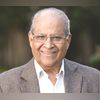 "Professor Joseph Philip")
Early in January, Philip was awarded the prestigious knighthood honour of Chevalier by the Pope for his exceptional services
Listen to This Article
Professor Joseph Philip held the undisputed position of doyen of Indian management education, as acclaimed by a leading national daily. In a career of sixty-five years that straddled both teaching and practice of management including institution building, he was arguably without peers. He also made a significant contribution to the evolution of Indian management education to where it is today, the provenance of the world’s largest crop of MBAs every year with its some three thousand business schools.
In the history of Indian management education, Philip belonged to the ranks of younger academics who had followed in the footsteps of Professors K T Chandy and Ravi Matthai, both pioneering helmsmen of the Indian Institutes of Management (IMMs). These latter had effectively surfed the first wave of the advent of MBA education in the country, originating from the government-commissioned George W Robbins report which had recommended the setting up of the autonomous IIMs, similar to the IITs, outside the domain of the University Grants Commission and funded directly by the central Ministry of Education. Parallel to this, and indeed preceding the IMM programmes, was XLRI under the leadership of Fr Quinn Enright and Prof E H McGrath. Philip was from the latter stream, bearing on his intellectual formation the imprint of McGrath and the institutional excellence of XLRI, the country’s premier private business school where he had joined after graduating in law from Kerala. At XLRI he shone with a rare brilliance as a student and later as a member of the faculty noted for his energetic will and considerable abilities, rising to the position of Dean at the age of twenty-eight. His first major contribution to Indian management, by now in the active throes of development and getting attuned to Indian needs, was made at this stage. It took the concrete form of an innovative approach to the design of the well-crafted post graduate course in business management at XLRI and in the systematic manner that he sustained the quality of XLRI’s famed academic programmes. Interspersed with a fulfilling year spent at Harvard, J. Philip’s tenure at XLRI would subsequently prepare him for his future role in the next line of leadership in Indian management education.
In the rapidly transforming India of the 1970s where the country’s management was being put through its paces in the burgeoning public sector, Philip made a conscious choice to deploy his academic prowess and teaching skills to train its business executives. Steel Authority of India (SAIL) was the next phase of his service to management education after XLRI. His tenure as the Principal of Steel Authority of India’s staff college in Ranchi from 1972 to 79 imparted a profound stimulus to HR development over the wide domain of the public sector of the Indian steel industry, besides enlarging the range of his own experience in public corporate management.
Never one to limit the scope of his endeavours when it came to management as a practical profession and art, Philip was also into corporate management in the private sector as Vice President of HR in the Oberoi Group of Hotels from 1980 to 84, a crucial phase of the company’s growth and expansion. As elsewhere on his career pathways in management, he proved to be once again a paradigm of executive effectiveness and innovative capability. For his own part, he viewed the role as a profoundly learning experience in any number of respects from the dynamics of the Indian family business to strategy, operations, marketing and public relations.
With so much ventured and won, when the government offered Philip the position of Director of IIM Bangalore in 1985, he was indeed a high-profile choice, but by all accounts, the best. But the role was beset with daunting challenges. Alternately the first or second among the IIMs, the Bangalore campus was at the time honeycombed with problems of all kinds testing its fibre as an institution of excellence, from academic drift and inertia to a militant trade union of the administrative staff that had become a law unto itself. To have turned the institution around and restored it to its established standards of discipline and reputation for high quality scholarship and learning in his six years as Director was an achievement with few parallels in the often-tumultuous history of Indian professional education.
Also Read

 "CAT result 2025")
 "CAT 2025 admit card")
 "NIRF Rankings 2025")
 "GATE 2026 registration and exam details")
 "Parliament, New Parliament, Lok sabha, Rajya sabha")
In the normal course, Philip’s widely acclaimed record at IIM, Bangalore would have been the finale of a versatile academic career, but he himself chose to write up one more chapter in his eventful life as a management educationist. It turned out to be the first such entrepreneurial venture in the country by a stalwart academic. In fulfilment of a promise, he had made to his highly gifted daughter Maria Philip who had died young, Philip set about founding a model management school of his own in Bangalore, Xavier Institute of Management & Entrepreneurship (XIME). Meagre as its initial capital was and derived mostly from his modest retirement benefits, the project had as its support only his idealism, leadership and energy, but of these it had in abundance. Founded in 1991, it grew, strengthened and spread in reach with two other campuses in Kochi and Chennai in later years, as if illustrating the psalm in the life and career of this devout Christian, “the just prospers in all that he does, being like a tree planted by streams of water and yielding its fruit in its season”.
Today, Philip’s XIME is a business school which turns out some six hundred postgraduates in business administration every year and can boast of over four thousand alumni making their mark in business, industry or enterprises in India and across the world.
Beyond his own school, service to the cause and ecumene of Indian management education was an article of faith with him, as attested by his vigorous role and ground- breaking initiatives as the founder of the Indian Management Schools Association, Association of Indian Autonomous Business Schools and Association of BRICS Business Schools.
Till his last days, he held on to his metier as a teacher bringing a forceful presence into the classroom through his enthralling lectures on management theories and practice. More an accomplished professor of practice, but given to thinking in structures, he was too judicious to express his scepticism about excessive management theorising, but there was no mistaking that his abiding sources of
inspiration were praxis-based thought leaders like Peter Drucker and Jim Collins. Philip’s last and most recent venture as an institution builder was a model residential school in his native Kerala, Xavier International School, which he conceptualised and brought on stream in 2024. The project was up and running in less than two years thanks to his characteristic leadership drive and attention to faultless execution. He called it his “project”, “a labour of love for Kerala” and designed through its generous investment to impart to its students the finest foundational knowledge and skills for today’s world along with the values and graces of a liberal education.
Early in January, Philip was awarded the prestigious knighthood honour of Chevalier by the Pope for his exceptional services.
In his passing, Philip will be widely mourned by the large numbers of his former students, associates and members of the management education fraternity across the country and abroad.
The author is a former Indian envoy to several countries and currently the Chairman of XIME, Kochi.
(Disclaimer: These are the personal opinions of the writer. They do not reflect the views of www.business-standard.com or the Business Standard newspaper)
More From This Section
 "Rekha Gupta, Delhi CM")
 "Protest, AI Summit Protest, AI Summit, India AI Impact Summit 2026")
 "Yogi Adityanath, yogi, UP CM")
 "excise duty, tax")
 "NIA, National Investigation Agency")
Don't miss the most important news and views of the day. Get them on our Telegram channel
First Published: Feb 21 2026 | 4:13 PM IST