


Kharge writes to Modi, demands all-party meet before caste census
In his letter to the PM, Congress chief Mallikarjun Kharge calls for an all-party meeting, suggests Telangana model for caste survey and asks for constitutional safeguards for state quotas
 "Mallikarjun Kharge, Kharge, Mallikarjun")
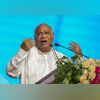
Kharge suggested that caste information has to be collected not for counting purposes but for achieving larger goals.(Photo:PTI)
Listen to This Article
Congress President Mallikarjun Kharge on Monday wrote to Prime Minister Narendra Modi, urging him to convene an all-party meeting before implementing the caste census across the country.
In his letter, Kharge criticised the government for announcing the caste census without providing any details. He offered three specific suggestions for the government’s consideration.
“You have now announced (the caste census), without providing any details, that the next census (that was actually due in 2021) will include caste as a separate category as well. I have three suggestions for your consideration,” he wrote.
Kharge stressed that caste data should not be collected merely for enumeration but to advance the goal of social justice. He urged the Centre to adopt the model used by Telangana for its caste survey.
“The recently conducted Telangana caste survey was designed and implemented with such goals in mind. The Union Home Ministry must draw upon the Telangana model — both the methodology adopted for finalising the questionnaire and the final set of questions asked,” he stated.
Also Read

 "rahul gandhi, kharge")
 "Mallikarjun KhargeMallikarjun Kharge, Kharge, Mallikarjun")
 "Mallikarjun Kharge, Kharge, Mallikarjun")
 "Mallikarjun Kharge, Sonia Gandhi, Rahul Gandhi")
 "mallikarjun kharge, rahul gandhi")
Congress president Mallikarjun Kharge (@kharge) writes to PM Narendra Modi after the government's caste census decision, requests him to have a dialogue with all political parties soon on the issue.#CasteCensus pic.twitter.com/mkmBVpXPSg
— Press Trust of India (@PTI_News) May 6, 2025
He also called for the inclusion of state-level reservation laws in the Ninth Schedule of the Constitution. “Only the Tamil Nadu reservation law has been protected in the Ninth Schedule of our Constitution since August 1994. Laws of other states should also be included in the Ninth Schedule,” Kharge wrote.
Additionally, he urged the government to implement Article 15(5) of the Constitution, which allows for reservations for Scheduled Castes (SCs), Scheduled Tribes (STs) and Other Backward Classes (OBCs), including in private educational institutions.
Kharge pointed out that he had earlier written to the Prime Minister on 16 April 2023, reiterating the Congress party’s demand for an updated caste census, but never received a response.
“Regrettably, I never received any reply to this letter. Unfortunately, your party leaders and yourself went on to attack the INC and its leadership for raising this legitimate demand — which you today acknowledge is in the interest of deeper social justice and empowerment,” he added.
Concluding the letter, Kharge criticised the government for bypassing consensus-building. “I would request you to have a dialogue with all political parties soon on the issue of the caste census,” he said. WATCH: Explained: Centre gives nod to caste census; what it really means
Background: Cabinet clears caste census inclusion
On 30 April, the Cabinet Committee on Political Affairs, headed by PM Modi, approved the inclusion of caste-related data in the upcoming national census. The move marked a policy shift, as the Bharatiya Janata Party (BJP) had previously opposed caste-based enumeration. Opposition leaders, especially Rahul Gandhi, had long demanded such a survey.
Explainer: What is a census?
A census is a countrywide survey conducted to determine the population count and gather key demographic data. In India, this exercise is held every 10 years. The first census was carried out in 1872 during British rule.
Since Independence, the Registrar General and Census Commissioner under the Ministry of Home Affairs has been responsible for conducting the census. The last census took place in 2011. The 2021 census was postponed due to the Covid-19 pandemic.
What is a caste census?
A caste census is more specific than a general census. Alongside basic demographic data, it gathers information about individuals’ caste identities.
Such data helps the government understand how various caste groups are distributed and performing across the country — economically, socially and educationally.
It also provides insights into how effective past welfare policies have been and whether certain communities are still marginalised.
Since 1951, population groups have broadly been classified into SC, ST, OBC, and the General category — largely based on social and educational criteria. READ MORE
More From This Section
 "Blackout, power cut, Power blackout")
 "Supreme Court")
 "Nayab Singh Saini, Nayab Singh, Nayab")
 "Yogi Adityanath, yogi, UP CM")
 "Shah Rukh Khan, met gala 2025")
Topics : Narendra Modi mallikarjun kharge Prime Minister's officers Caste politics caste census pilot projects caste in india Scheduled Castes
Don't miss the most important news and views of the day. Get them on our Telegram channel
First Published: May 06 2025 | 12:57 PM IST