


Deepam row: Madras HC upholds order allowing lamp lighting on hilltop
The bench directed that the lamp can be lit after consulting ASI, and the number of people allowed on the hilltop can also be decided in line with it
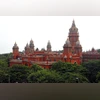 "Chennai High court, Madras High Court, Madras HC")
The court added that the district administration should have used the issue to bring communities together instead of creating suspicion.| Image: Wikimedia Commons
Listen to This Article
The Madras High Court’s Madurai bench on Tuesday upheld an earlier order allowing a traditional lamp to be lit on a stone pillar at the top of Thiruparankundram hills near a dargah, Live Law reported. The court rejected the pleas filed by the Tamil Nadu police and the dargah against the order.
According to the report, a division bench said the earlier ruling was valid and was not barred by past court cases, as the issue had not been decided earlier.
What did the court say?
While hearing the case, the bench said, "Ridiculous and hard to believe the fear of the mighty State that by allowing representatives of devasthanam to light a lamp at the stone pillar on a particular day in a year will cause disturbance to public peace."
"Of course, it may happen only if such a disturbance is sponsored by the state itself. We pray no state should stoop to that level to achieve their political agenda," it added.
Need to consult ASI: Court
The court also noted that Thiruparankundram hill is a protected site and any activity must follow rules under the Archaeological Survey of India (ASI). The bench directed that the lamp can be lit after consulting ASI, and the number of people allowed can also be decided in line with it.
Also Read

 "Canada Flag")
 "knee pain, joint pain")
 "brain eating amoeba")
 "World Immunisation Day, child vaccination")
 "UK immigrants")
The court added that the district administration should have used the issue to bring communities together instead of creating suspicion.
What is the case about?
The case concerns lighting the Karthigai Deepam, a traditional lamp, at an ancient stone pillar known as Deepathoon located on Thiruparankundram hills in Madurai. Devotees of the Arulmigu Subramania Swamy Temple had approached the court seeking permission to light the lamp at the site. Earlier, a single judge had ordered the temple authorities to light the lamp on Karthigai Deepam day.
Tamil Nadu police, the dargah management and the Waqf Board opposed the previous order. They argued that lighting the lamp could lead to law and order problems, as the pillar is located near a dargah. Some authorities also claimed that the pillar did not have any link to the Karthigai Deepam tradition.
The dargah said the land had been given to the Muslim community in 1920 and that the court order affected their rights. Government officials also argued that the court should not interfere with long-standing customs.
More From This Section
 "Republic Day Parade")
 "DK Shivakumar, Shivakumar")
 "Suresh Kalmadi, Suresh Kalmadi death, Suresh Kalmadi news, Suresh Kalmadi commonwealth games, Who was Suresh Kalmadi, Suresh Kalmadi commonwealth scam amount, Suresh Kalmadi cwg, CWG 2010 scandal, commonwealth games scam")
 "Noida Pollution, Pollution, Smog")
 "Suresh Kalmadi")
Topics : Madras HC Tamil Nadu BS Web Reports Muslims Hindus
Don't miss the most important news and views of the day. Get them on our Telegram channel
First Published: Jan 06 2026 | 11:58 AM IST