


PM Modi's degree row: Delhi HC gives DU 3 weeks to object to appeal delay
The appellants before the division bench are RTI activist Neeraj, Aam Aadmi Party leader Sanjay Singh, and advocate Mohd Irshad
 "Delhi High Court")
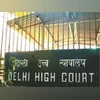
Delhi High Court (File Photo)
Listen to This Article
The Delhi High Court on Tuesday granted three weeks' time to Delhi University for filing its objection to the delay in appeals against an order refusing disclosure of details of Prime Minister Narendra Modi's bachelor's degree.
Appearing for the university, Solicitor General Tushar Mehta argued that "there was nothing in the matter" and it was "only to sensationalise". He sought time to file a reply on the aspect of delay in filing the appeals challenging the single judge's order passed in August 2025, as well as on merit.
"As prayed, three weeks' time is granted to file an objection to the application seeking condonation of delay," said a bench of Chief Justice D K Upadhyaya and Justice Tejas Karia and listed the matter for hearing on April 27.
The senior counsel, appearing for an appellant, said objections to the delay had not been filed even after two-and-a-half months of the court permitting Delhi University (DU) to do so. He added that it was a "small" delay of 15 to 45 days, and the court could condone it.
He also pressed for the issuance of a formal notice in the matter if DU wanted to respond to the main appeals. "Notice can only be issued to sensationalise something," SG Mehta said. Appeals have been filed challenging a single judge's order, which had set aside a Central Information Commission (CIC) decision directing disclosure of Prime Minister Modi's degree.
Also Read

 "trade talk, US India")
 "modi, Seychelles prez, Seychelles")
 "Om Birla, Om, Birla")
 "Prime Minister of Mauritius with PM Modi.")
 "Delhi High Court")
The appellants before the division bench are RTI activist Neeraj, Aam Aadmi Party leader Sanjay Singh, and advocate Mohd Irshad.
On August 25, 2025, the single judge had set aside the CIC order, saying that only because PM Modi was holding a public office, it did not render all his "personal information" to public disclosure.
It had ruled out any "implicit public interest" in the information sought, and said the RTI Act was enacted to promote transparency in government functioning and "not to provide fodder for sensationalism".
Following an RTI application by one Neeraj, the CIC on December 21, 2016, allowed inspection of records of all students who cleared the BA exam in 1978 -- the year Prime Minister Modi also passed it.
The single judge had passed the combined order in six petitions, including the one filed by the Delhi University, challenging the CIC by which the university was directed to disclose the details related to Prime Minister Modi's bachelor's degree.
The university's counsel had sought the CIC order to be set aside, but said the varsity had no objection to showing its records to the court. The single judge had opined that the educational qualifications were not in the nature of any statutory requirement for holding any public office or discharging official responsibilities.
The situation might have been different, had educational qualifications been a prerequisite for eligibility to a specific public office, the judge had said, calling the CIC's approach "thoroughly misconceived".
The high court had also set aside the CIC order, which directed the CBSE to provide copies of Class 10 and 12 records of former Union minister Smriti Irani.
(Only the headline and picture of this report may have been reworked by the Business Standard staff; the rest of the content is auto-generated from a syndicated feed.)
More From This Section
 "SC, Supreme Court")
 "Sunetra Pawar")
 "Nityanand Rai")
 "Himanta Biswa Sarma, Himanta Biswa, Himanta")
 "Siddaramaiah, Karnataka CM")
Don't miss the most important news and views of the day. Get them on our Telegram channel
First Published: Feb 10 2026 | 3:48 PM IST