


Tamil Nadu CM announces $1 million for deciphering Indus Valley script
Tamil Nadu Chief Minister, M.K. Stalin, has announced a reward of $1 million for researchers who decode ancient script of the Indus Valley Civilisation
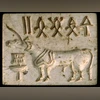 "Indus Valley script")
Indus Valley script (Image source: Wikimedia Commons)
Listen to This Article
Are you done with questions on how to become a millionaire and are yet to find the right answer? Well, I have a solution for you.
Solve a riddle and earn a handsome cash prize of $1 million. Sounds interesting, right? But there’s a catch.
Over 5,300 years ago, the Indus Valley civilization emerged from an area currently located in present-day northwest India and Pakistan.
The residents, mostly farmers and traders, lived in cities of baked bricks which makes it one of the earliest urban civilisations.
To understand more about the civilisation, excavation is being done at more than 2000 sites and a wealth of artefacts are also being discovered.
Also Read

 "Sambhal ASI survey")
 "John Nicholson")
 "Zafar Ali, Sambhal violence, Sambhal, UP Violence")
 "Jagannath, Jagannathji Mandir, Rath Yatra")
 "Iraq flagIraq flag")
However, until scholars successfully decode the script used by these people, their language, culture, religion, and the history of the civilization's rise and fall will remain unknown, keeping the site shrouded in mystery.
Indus Valley’s signs and symbols
The Indus Valley script is made up of signs and symbols found on items such as stone seals and small tablets. These objects are small in size, so the messages are known for being very short.
The average is about five signs or symbols on top of a central animal motif and an object next to it and the longest one has 35 symbols.
In the available materials, researchers discovered around 68 symbols and without a bilingual artefact, such as the world-famous Rosetta Stone, decoding these signs and symbols seems impossible.
Researchers are using machine learning and hoping that the latest technology will play a vital role in decoding the thousands of years-long mysteries.
Nisha Yadav, a researcher at the Mumbai-based Tata Institute of Fundamental Research says, “We still don't know whether the signs are complete words or part of words or part of sentences.”
“Our understanding is that the script is structured and there is an underlying logic in the writing,” she added.
$1 million reward prize
To fuel enthusiasm among researchers, Tamil Nadu Chief Minister, M.K. Stalin announced cash rewards of $1 million for anyone able to decipher the script.
During a three-day conference in Chennai marking the centenary year of the Indus Valley Civilisation (IVC), Mr Stalin said, “We have not been able to clearly understand the writing system of the once flourishing Indus Valley.”
“The riddle hasn’t been answered for the past 100 years despite several efforts by archaeologists and experts. I announce a cash prize of $1 million to individuals or organisations that decipher the script to the satisfaction of archaeological experts,” Stalin added.
This is not about historical scholarship, but a cultural war over India's ancient past.
Different political parties have different opinions and views on ancient history. For example, Stalin and his party believe that the Dravidians of southern India are the country's indigenous people, whereas the Aryans of northern India are considered invaders from Europe.
According to the Hindu nationalist's conception of the past, the Indus script is very much related to Sanskrit, which is a classical language of India.
However, the Tamil Nadu CM and some other people believe that the script most likely had Tamil roots, which is another classical language of India. If true, it would cement the claim that Dravidians are the original inhabitants of India.
The script has remained undeciphered despite extensive efforts. Archaeologists, technology experts, and linguists worldwide have been striving for years to decode it, Mr. Stalin stated while announcing the $1 million prize.
Indian history cannot be written without the Tamil language: Stalin
During his speech, the chief minister also mentioned that Indian history cannot be written without Tamil Nadu or Tamil language, which is the same statement he used when the DMK government was formed back in 2021 while building the state's archaeological expedition.
Stalin also mentioned that the government made efforts to ensure the right place for Tamil Nadu in the country's history.
“There were bulls in the Indus Valley. Bulls are Dravidian symbols. Bulls are spread from Indus Valley to Alanganallur (a village near Madurai famous for Jallikattu). Ancient Tamil literature has rich references to bull-taming sport and one of the IVC seals has impressions of a man trying to tame a bull,” he added.
Accoring to the Tamil Nadu CM, the discovery by Marshall was the turning point in India’s archaeological history. He has changed the language spoken by the inhabitants of IVC which could be Dravidian.
The two main cities of IVC, Harappa and Mohenjodaro, were discovered from 1902 to 1928 when Marshall was the director general of the Archaeological Survey of India. In September last year, Stalin also announced that Marshall's life-size statue would be installed in Tamil Nadu.
More From This Section
 "Supreme Court, SC")
 "GST relief on health insurance: Council likely to take up 4 options")
 "Eknath Shinde, Eknath")
 "Mumbai Local trains")
 "Winter, Prayagraj Winter, Cold")
Topics : M K Stalin archeology Tamil Nadu Mohenjo Daro
Don't miss the most important news and views of the day. Get them on our Telegram channel
First Published: Feb 04 2025 | 12:27 PM IST