


Who was Ganesh Uike, Maoist leader with ₹1.1 crore bounty killed in Odisha
A central committee member of CPI (Maoist) with a ₹1.1 crore bounty, Ganesh Uike was among six rebels killed in an encounter in Odisha's Kandhamal district in a major blow to Maoist leadership
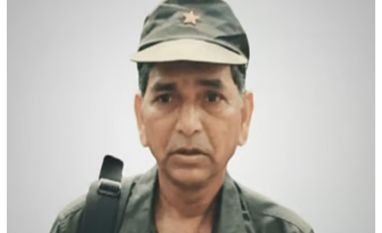 "Ganesh Uike")
Top Maoist leader Ganesh Uike was killed in recent encounter in Odisha | Image credit: X
Listen to This Article
Top Maoist leader Ganesh Uike, carrying a bounty of ₹1.1 crore, was among six rebels killed in an exchange of fire with security forces in Odisha’s Kandhamal district on Thursday. Also known as Paka Hanumanthu, Uike was a senior commander of the banned CPI (Maoist) with nearly four decades of involvement in insurgent operations targeting security personnel and civilians.
Aged 69, Uike was a central committee member of CPI (Maoist) and served as the outfit’s Odisha in-charge. Known for repeatedly evading arrest, he frequently changed aliases and appearances, often moving disguised as a swamiji through towns and dense forest routes. Despite sustained pressure from multiple state police forces, he remained on most-wanted lists across Maoist-affected regions until he was tracked down this week.
Early life and entry into insurgency
Born in Pullemla village in Telangana’s Nalgonda district, Uike studied locally and later enrolled for a BSc degree, which he left unfinished. He went underground in 1982 amid violent campus politics and steadily rose through Maoist ranks, according to The Times of India.
Over the years, he emerged as an organiser and military commander in the West Bastar region of southern Chhattisgarh, holding key positions such as divisional committee secretary and overseeing the south sub-zonal bureau.
Profile and operating style
Police records described Uike as having a black tattoo between the eyebrows and wearing spectacles for long sight. He was fluent in Telugu, Hindi, Gondi and English. He typically moved with two armed guards carrying .303 rifles, while his own AK-47 and equipment were carried by aides.
Also Read

 "Red Square")
 "long Covid, hidden infections link")
 "Donald Trump, Trump")
 "fact check, menopause")
 "Driver")
Known for his physical endurance, Uike could walk for hours without rest and often slipped into towns disguised as a swamiji to avoid detection.
Major attacks linked to Uike
Ganesh Uike was implicated by security agencies in several high-profile Maoist attacks, among them being the May 2013 Jhiram Ghati ambush in Chhattisgarh’s Sukma district. The assault on a convoy of Congress functionaries claimed 27 lives instantly and left 34 others wounded, marking one of the deadliest Maoist strikes in the region. The attack placed Uike firmly on the most-wanted lists of multiple Maoist-hit states.
Uike's role in Odisha
Uike took charge of Maoist operations in Odisha in October, following the killing of the previous state in-charge Modem Balakrishna in Chhattisgarh’s Gariaband district.
Over the past year, he focused on rebuilding the organisation along the Kalahandi–Rayagada–Kandhamal–Boudh–Nayagarh corridor. He had visited Kandhamal around 10 days ago and convened a meeting in the Kotagarh area in February to reorganise local squads in an attempt to revive Maoist influence.
How the latest operation unfolded
Thursday’s operation followed the December 22 surrender of 22 Maoists from Chhattisgarh in Odisha’s Malkangiri district. Acting on specific intelligence inputs, security forces launched a coordinated anti-Naxal operation in Kandhamal’s forested region. Two Maoists, including an area committee member, were killed on Wednesday. Uike was neutralised hours later, becoming the first Maoist commander and central committee member killed in Odisha.
Uike had shown no inclination to surrender and had recently criticised a senior colleague for laying down arms, insisting that the insurgency would continue despite setbacks, reported The Times of India, citing sources. His killing has left the organisation without a clear leadership figure in Odisha.
Union Home Minister Amit Shah hailed the operation as a significant milestone in the government’s push to eliminate Naxalism, reiterating the target of ending the insurgency nationwide by March 2026.
More From This Section
 "Delhi High Court")
 "doomscrolling anxiety, social media stress")
 "Himanta Biswa Sarma, Himanta Biswa, Himanta")
 "Modi, Narendra Modi")
 "Manjinder Singh Sirsa")
Topics : Odisha naxalism Maoists Maoists encounter BS Web Reports
Don't miss the most important news and views of the day. Get them on our Telegram channel
First Published: Dec 26 2025 | 12:21 PM IST