


Who was Madhav Gadgil, the ecologist behind Western Ghats conservation?
Renowned ecologist Madhav Gadgil, who chaired the Western Ghats panel and championed community-led conservation, passed away at 83, leaving a lasting legacy in Indian environmentalism
 "Madhav Gadgil")
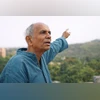
Renowned ecologist Madhav Gadgil died in Pune | Image: X@NasirHussainINC
Listen to This Article
Renowned ecologist Madhav Gadgil died in Pune late Wednesday night after a brief illness at the age of 83. Widely regarded as one of the architects of modern Indian environmentalism, Gadgil consistently argued that environmental protection must be grounded in scientific rigour, social justice and community participation.
Best known for chairing the Western Ghats Ecology Expert Panel (WGEEP) , Gadgil championed a conservation model that placed local communities at the heart of ecological protection and sustainable resource management.
Early life and pioneering academic work
Born on May 24, 1942, Madhav Gadgil founded the Centre for Ecological Sciences at the Indian Institute of Science (IISc), Bengaluru, in 1983. Under his leadership, the centre evolved into one of India’s foremost institutions for research in ecology, conservation biology and environmental policy.
One of Gadgil’s most significant contributions was helping establish India’s first biosphere reserve, the Nilgiri Biosphere Reserve in 1986, according to a report by The Indian Express.
As part of this effort, Gadgil undertook extensive ecological surveys across three Western Ghats states. He trekked through forests, interacted closely with local communities and even lived among forest dwellers in sacred groves, gaining deep insights into traditional ecological knowledge.
Also Read

 "pinaka rocket launcher")
 "Donald Trump, Trump")
 "immigiration in US, ICE murder, bullet strike")
 "waist to height ratio")
 "us china, us-china, us flag, china flag")
The Gadgil Commission and the Western Ghats
In 2010, Gadgil chaired the Western Ghats Ecology Expert Panel (WGEEP), constituted by the Ministry of Environment and Forests and later known as the Gadgil Commission. The panel’s 2011 report, widely referred to as the 'Gadgil Report', identified the entire Western Ghat, as an ecologically sensitive area.
The panel studied the impact of population pressure, climate change and developmental activities on the fragile ecosystem. It recommended strict environmental safeguards, including stringent controls on mining, quarrying, large dams and polluting industries.
While the report was praised by scientists and environmentalists for its depth and precautionary approach, it triggered intense political and public debate. Several state governments opposed the recommendations, arguing they would hinder economic growth.
Architect of India’s biodiversity framework
Gadgil was a key architect of the Biological Diversity Act, 2002, which created a legal framework for biodiversity conservation and equitable benefit-sharing.
He also pioneered the concept of People’s Biodiversity Registers, empowering local self-governing bodies such as gram panchayats to document, protect and manage traditional ecological knowledge and biological resources.
In addition, Gadgil contributed to the implementation of the Forest Rights Act and served as a member of the Scientific Advisory Council to the Prime Minister of India, advising on environmental and ecological policy.
National and international recognition
Over the course of his career, Gadgil received numerous awards and recognitions in India and abroad, including:
- Padma Shri in 1981
- Padma Bhushan in 2006
- Tyler Prize for Environmental Achievement in 2015
- Volvo Environment Prize
In 2024, Gadgil was named a laureate of the United Nations Environment Programme’s Champions of the Earth award, the UN’s highest environmental honour.
More From This Section
 "Rajendra Vishwanath Arlekar, Kerala Governor")
 "Congress BJP flags")
 "Police, Delhi Police")
 "Madhav Gadgil")
 "Police Commemoration Day")
Don't miss the most important news and views of the day. Get them on our Telegram channel
First Published: Jan 08 2026 | 11:49 AM IST