


Average apartment loading grows in top cities amid demand for amenities
The loading factor grows to 40 per cent in Q1CY25, from 31 per cent in 2019
 "Housing, Houses, Apartments, residential building")
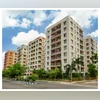
Among the top seven cities, Bengaluru saw the highest percentage increase in average loading, from 30 per cent in 2019 to 41 per cent in Q1 CY25 | Photo: Shutterstock
Listen to This Article
Amid rising demand for state-of-the-art amenities within housing projects, the loading factor has grown to 40 per cent in the first quarter of the 2025 calendar year (Q1CY25) from 31 per cent in 2019 across the top Indian cities, according to research by Anarock.
In residential apartments, the average loading factor is the difference between the super-built-up area and the carpet area. This means that the homebuyers are paying 40 per cent of their total homebuying money for the common areas like elevators, lobbies, clubhouses, staircases, terraces, gyms, and other amenities in Q1CY25, against 31 per cent in 2019.
Dr Prashant Thakur, regional director & head - Research & Advisory, Anarock Group, said, “While Rera now requires developers to mention the total carpet area provided to homebuyers, no law currently limits the loading factor in projects. Q1 2025 readings show that 60 per cent of the total space within their apartment homebuyers in the top seven cities pay for is now liveable space, and the remaining 40 per cent is common areas - elevators, lobbies, staircases, clubhouses, amenities, terraces, and so on. The average loading percentage was 31 per cent back in 2019.”
Among the top seven cities, Bengaluru has seen the highest percentile jump in average loading over the last seven years, from 30 per cent in 2019 to 41 per cent in Q1CY25. In 2022, this dovetails with the increasingly higher saturation of modern amenities that developers now include to cater to the higher lifestyle ask in the IT hub, the report noted.
Also Read

 "India's real estate sector, significantly buoyed by a robust economy, has emerged as a pivotal player in the country's development. With an 18 per cent share in national employment, real estate is the largest employment generator after agriculture. C")
 "real estate, luxury homes")
 "Office, Office space")
 "Mall, shopping centre, Shopping mall")
The Mumbai metropolitan region (MMR) continued to see the highest loading among the top seven cities, with a 43 per cent loading factor in Q1CY25, from 33 per cent in 2019.
Chennai, on the other hand, witnessed the least average loading factor, which stood at 36 per cent in Q1CY25 against 30 per cent in 2019, aligning with a city-specific demand profile where homebuyers prefer to pay more for usable space within their homes rather than for common areas.
“In the past, a loading of 30 per cent or less was thought to be typical. Today, higher amenity loading has become the norm across most projects, partly because homebuyers are no longer satisfied with basic lifestyle amenities - they expect fitness centres, clubhouses, park-like gardens, and grand lobbies. Collectively, these features may improve comfort, community liveability, and also resale value. However, homebuyers effectively lose on actual usable space within their apartments,” Thankur added.
Essential infrastructure in modern housing projects now typically includes more lifts with bigger passenger capacities, amplified utility areas, and fire escapes that meet regulatory safety protocols. In high-density urban developments, optimising space for both private and shared use is crucial for a better living experience and long-term value, making some level of extra loading an inescapable fact of life.
“In most cases, buyers across cities, except in Maharashtra, are unaware of how much they pay towards the overall usable space within their apartment. Respective state Reras should ideally enforce provisions wherein each project clearly mentions how much buyers are paying for the total usable space within the apartment, and for the amenities,” said Thakur.
More From This Section
 "Musk's satellite venture Starlink may still take time to enter India orbit")
 "Ram Kollareddy, Chief Executive Officer, Midwest Ltd.")
 "Companies last financial year (FY25) paid more as dividend to shareholders despite muted growth in revenue and earnings. The combined dividend payout by India's top listed companies was up 10.8 per cent year-on-year (Y-o-Y) to a record high of aroun")
 "India china, India, China")
 "FMCG")
Topics : Anarock Residential projects homebuyers
Don't miss the most important news and views of the day. Get them on our Telegram channel
First Published: Jun 09 2025 | 1:44 PM IST