


Cabinet approves 4 new semiconductor projects with ₹4,600 crore investment
Four semiconductor units in Odisha, Andhra Pradesh, and Punjab, plus Lucknow Metro's Phase-1B, aim to create jobs, expand connectivity, and boost India's manufacturing base
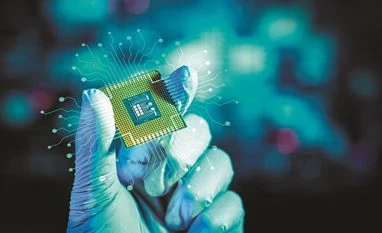 "semiconductors chipmakers")
Two factories will be built in Odisha, while Andhra Pradesh and Punjab will get one each.
Listen to This Article
The Union Cabinet on Tuesday approved four additional semiconductor manufacturing projects under the India Semiconductor Mission (ISM). Two of these factories will be built in Odisha, while Andhra Pradesh and Punjab will get one each.
With these approvals, a total of 10 semiconductor projects worth around ₹1.60 trillion are now set to be developed across six states. These projects aim to boost domestic chip production, strengthen India’s electronics manufacturing ecosystem, and create thousands of jobs.
The newly approved projects come from SiCSem, Continental Device India Pvt. Ltd (CDIL), 3D Glass Solutions Inc., and Advanced System in Package (ASIP) Technologies. Together, they will involve an investment of about ₹4,600 crore and create direct employment for 2,034 skilled professionals, along with many indirect jobs.
Project locations
• Odisha will host two projects — SiCSem and 3D Glass Solutions
• Punjab will see CDIL’s facility expansion
Also Read

 "Qualcomm")
 "Lip-Bu Tan, Intel CEO")
 "apple, apple logo")
 "Donald Trump")
 "Donald Trump")
• Andhra Pradesh will house ASIP’s manufacturing unit
SiCSem in Odisha: First compound fab in India
SiCSem, in collaboration with Clas-SiC Wafer Fab Ltd, UK, will set up the country’s first commercial compound semiconductor fab in Bhubaneswar’s Info Valley. This facility will produce Silicon Carbide (SiC) devices used in missiles, defence systems, electric vehicles, railways, fast chargers, solar inverters, and more. It will have an annual capacity of 60,000 wafers and 96 million packaged units.
3D Glass Solutions Inc. will set up a high-tech facility in Odisha for advanced semiconductor packaging and embedded glass substrates. This will bring world-leading packaging technology to India, with an annual capacity of 69,600 glass panel substrates, 50 million assembled units, and 13,200 advanced modules.
The products will be used in defence, AI, high-performance computing, automotive, photonics, and communication systems.
ASIP in Andhra Pradesh
ASIP Technologies, partnering with APACT Co. Ltd, South Korea, will build a plant with an annual output of 96 million units for applications in mobile phones, set-top boxes, and automobiles.
CDIL in Punjab
CDIL will expand its Mohali facility to produce high-power semiconductor devices like MOSFETs, IGBTs, Schottky diodes, and transistors. The expansion will have a capacity of 158.38 million units annually, supporting EVs, renewable energy, industrial systems, and telecom infrastructure.
These projects will strengthen India’s chip design ecosystem, which is already supported by government-backed infrastructure at 278 academic institutions and 72 startups.
Cabinet approves Lucknow Metro Phase-1B
The Cabinet also cleared Phase-1B of the Lucknow Metro Rail Project, an 11.165 km corridor with 12 stations (seven underground and five elevated). Once complete, Lucknow will have a 34 km metro network.
Phase-1B will link key areas like Aminabad, Chowk, King George’s Medical University, and major heritage sites. It aims to cut traffic congestion, reduce pollution, and boost tourism and local business.
The project is expected to:
• Reduce road congestion in densely populated areas
• Lower carbon emissions
• Improve travel times to airports, railway stations, and bus depots
• Provide better access to jobs, healthcare, and education
More From This Section
 "lab-grown diamonds")
 "medicine, Drugs")
 "The steel ministry has urged the Ministry of Finance to double the basic Customs duty on imported finished steel products to 15 per cent from the current 7.5 per cent in the upcoming Union Budget for 2025–26, people aware of the matter said.")
 "Centre may raise purchase price of cane ethanol by up to Rs 3 per litre")
 "information technology, IT Sector, IT Service")
Don't miss the most important news and views of the day. Get them on our Telegram channel
First Published: Aug 12 2025 | 4:09 PM IST