


China's grip on critical mineral refining continues, says WEF report
WEF says efforts to diversify critical mineral refining away from China are falling short, leaving supply chains exposed as demand rises from EVs, data centres and power grids
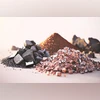 "rare earth magnet, magnet")
China has recently tightened export controls on REEs, prompting countries globally to accelerate efforts to diversify supply chains for strategic minerals.
Listen to This Article
Global efforts to reduce dependence on China for critical mineral refining continue to fall short even as new mines develop outside the country, according to a new report by the World Economic Forum (WEF). The trend highlights supply chain risks for India’s plans to scale up electric vehicles (EVs), artificial intelligence-led data centres and power grid infrastructure.
Why are diversification efforts still falling short?
While India has a significant refining presence in bulk metals such as aluminium, iron, zinc and lead, it remains marginal in the refining of critical minerals including lithium, rare earths and graphite, even as it prepares for rapid acceleration in EV adoption and data centre investments.
According to the report, global efforts to diversify critical mineral supply chains away from China are failing, leaving supply chains exposed just as demand from EVs, data centres and power grids surges for strategic minerals.
How concentrated is global refining capacity?
Also Read

 "Vladimir Putin, Putin")
 "Sanae Takaichi, Japan PM")
 "India, China, India China Trade, Trade")
 "Rare earth minerals")
 "China's Foreign Ministry spokesperson Lin Jian")
The report notes that the share of global mineral refining controlled by the top three countries rose from about 82 per cent in 2020 to 86 per cent in 2024, underscoring that diversification strategies have not weakened China’s dominance at the processing stage.
The findings show that China retains a refining presence in all 19 critical minerals analysed in the report and controls more than 75 per cent of global refining capacity in several minerals, including rare earth elements (REEs), gallium, graphite, magnesium and germanium.
What is India doing to secure critical mineral supplies?
China has recently tightened export controls on REEs, prompting countries globally to accelerate efforts to diversify supply chains for strategic minerals. India, meanwhile, has launched the National Critical Mineral Mission to secure supplies through domestic and overseas exploration of critical mineral blocks. The government has also earmarked Rs 500 crore for critical mineral processing parks under the scheme to boost refining and downstream processing.
What is the immediate bottleneck in the value chain?
Beyond mining and refining, power grid infrastructure has emerged as the immediate bottleneck, the report notes. Shortages of transformers, cables and electrical steel, all dependent on critical minerals, are slowing EV charging rollouts, renewable energy integration and data centre connections. Transformer prices have risen 50 to 80 per cent over the past three years, while delivery timelines have stretched to 18–36 months.
Why are EVs, data centres and power grids competing for the same minerals?
A central finding of the report is the growing competition among EVs, data centres and power grids for the same minerals. Copper, aluminium, rare earths and electrical steel are now in simultaneous demand across sectors. As a result, rapid growth in one segment is increasingly tightening supply and raising costs for others.
Data centres are emerging as a new source of strain. Global data centre capacity is expected to triple by 2035, accounting for 8 to 10 per cent of growth in electricity demand. This expansion is driving demand for grid upgrades, transformers and niche minerals such as gallium and germanium, where refining capacity remains highly concentrated and alternatives are limited.
What does the supply outlook suggest for the next decade?
The report notes that the supply outlook offers little near-term relief. Current operating mines are projected to meet only 35 to 45 per cent of global demand for lithium and graphite by 2035. Even if all announced projects are completed on schedule, large gaps will persist, underscoring that mineral shortages are likely to shape the pace and cost of EV, AI and power grid expansion in the years ahead.
More From This Section
 "small businesses")
 "Coal mine, Coal")
 "hospitality, hotels")
 "Housing")
 "steel")
Topics : World Economic Forum mineral sector China
Don't miss the most important news and views of the day. Get them on our Telegram channel
First Published: Dec 26 2025 | 7:10 PM IST