


Construction costs surge 40% since 2019; experts call for GST reforms
Construction costs in India's affordable housing sector have surged 40% since 2019, squeezing developer margins. Experts suggest GST reforms could ease costs and protect housing affordability
 "construction")
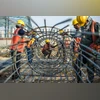
Commenting on the scenario, Harvinder Singh Sikka, Chairman of Sikka Group, said that even a marginal correction at this stage could ease the burden on developers and eventually pass some benefit to homebuyers | Credit: Bloomberg
Listen to This Article
Construction costs in India’s affordable housing sector have surged nearly 40 per cent between 2019 and 2024, according to Prashant Thakur, Executive Director & Head of Research & Advisory at Anarock Group. This surge in cost inflation is squeezing margins for developers and threatening buyer affordability, with industry players now pinning hopes on GST reforms to soften the blow.
Anarock highlighted that in just three years, construction costs rose by 27.3 per cent. In October 2021, the average cost for Grade A projects in Tier I cities was around Rs 2,200 per square foot, which had increased to approximately Rs 2,800 per square foot by October 2024.
Driven by a mix of micro- and macroeconomic factors, construction costs have surged in recent years, added Thakur.
“Cement prices declined 15 per cent and steel just 1 per cent over the past year, yet both rose 30–57 per cent over five years. Copper climbed 19 per cent in a year and 91 per cent since 2019, while aluminium showed similar trends. Labour costs soared 25 per cent in a year and 150 per cent since 2019, with rising expenses of approvals, logistics due to hiked fuel prices, compliance, and overhead costs. Additionally, city-specific variations further added to the escalation.”
Big cities like Mumbai, Delhi, and Bengaluru have higher construction costs due to more expensive property and labour, and greater demand for skilled workers. In contrast, tier-2 and tier-3 cities, where land and materials are cheaper and more accessible, generally face lower construction costs.
Also Read

 "Nitin Gadkari, Nitin, Gadkari")
 "Ahead of the first offshore mineral auctions, the central government has introduced royalty rates for construction sand, polymetallic nodules, and overburden or waste—key minerals to be extracted through offshore mining. The royalty rate for dolomite")
 "Tata Steel")
 "real estate technology India, BIM construction India, 3D printing real estate, modular construction India, Mivan shuttering, green building India, construction tech capex, Signature Global, Rustomjee, Anarock")
 "cement, cement sector")
The report mentioned that developers usually pass on rising input costs, partly or fully, to buyers, with 5–6 per cent of cost increases directly reflected in housing prices. In affordable housing, even a hike of Rs 500–800 per square foot can price out buyers, while smaller developers with thin margins struggle to absorb increases, often delaying launches or cutting amenities.
Tariffs on steel, aluminium, cement, equipment, and imported finishes from China, the US, and Europe could raise construction costs by 1.5–2.5 per cent at a 25 per cent duty and over 5 per cent at 50 per cent. Conversely, proposed GST cuts on cement and inputs may ease costs, reducing housing prices by 2–4 per cent.
Commenting on the scenario, Harvinder Singh Sikka, Chairman of Sikka Group, said that even a marginal correction at this stage could ease the burden on developers and eventually pass some benefit to homebuyers.
“Over the last few years, construction costs have escalated sharply, with steel, cement, and other raw material prices. This has added significant pressure on affordable housing projects. The recent proposal on GST reduction will bring rates of construction material like cement from 28 per cent to 18 per cent, likely bringing 2–4 per cent cost relief,” said Sikka.
“The single biggest challenge for affordable and mid-segment housing today is the spiralling construction cost. Rising raw material prices, coupled with import tariffs, have pushed back several project launches. The government’s proposed GST rationalisation would be a step in the right direction, as it helps restore balance in the cost structure. With these reforms, we expect affordability to be safeguarded and demand for budget housing to sustain in the coming months,” he added.
Yash Miglani, MD of Migsun Group, said, “The single biggest challenge for affordable and mid-segment housing today is the spiralling construction cost. Rising raw material prices, coupled with import tariffs, have pushed back several project launches. The government’s proposed GST rationalisation would be a step in the right direction, as it helps restore balance in the cost structure. With these reforms, we expect affordability to be safeguarded and demand for budget housing to sustain in the coming months.”
Dhaval Ajmera, Director of Corporate Affairs at Ajmera Group, said the revised GST reforms are a welcome policy move and could benefit both homebuyers and developers.
“Especially, essential raw materials for construction like cement go a long way in reducing the final cost of the product. This benefit ultimately boosts developers’ confidence, and the benefits get passed down to the end-buyers, enabling some relief in the overall pricing dynamics,” added Ajmera.
More From This Section
 "Kumar, Chief Executive Officer of the Express Industry Council of India")
 "ONGC, crude oil")
 "Representative Picture")
 "algorithm, artificial intelligence, Technology, data security")
 "Compass")
Topics : GST News Construction housing
Don't miss the most important news and views of the day. Get them on our Telegram channel
First Published: Aug 19 2025 | 6:53 PM IST