


Govt may fine carmakers missing fuel efficiency targets under new rules
The government reportedly plans to fine carmakers that do not meet fuel efficiency rules; Bureau of Energy Efficiency (BEE) will check compliance
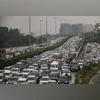 "Traffic jam, Traffic, Delhi Gurugram Expressway")
The new draft rules would formalise enforcement and help route penalties into the Central Energy Conservation Fund (CECF). (Photo/PTI)
Listen to This Article
The government has reportedly introduced draft rules to penalise carmakers that fail to meet India’s fuel efficiency and emissions targets. The move aims to close a legal gap despite the Energy Conservation (Amendment) Act, 2022 already allowing for penalties.
According to a report by The Economic Times, the Ministry of Power has released the Energy Conservation (Compliance Enforcement) Rules, 2025. The draft grants authority to the Bureau of Energy Efficiency (BEE) to track compliance with Corporate Average Fuel Efficiency (CAFE) norms and forward violations to state electricity regulatory commissions (SERCs) for penalty decisions.
Why it matters
India’s automotive sector is under rising scrutiny to cut emissions. Eight major carmakers reportedly breached fuel consumption and emission limits in 2022-23, which could lead to ₹7,300 crore in fines. The new draft rules would formalise enforcement and help route penalties into the Central Energy Conservation Fund (CECF), with up to 90 per cent allocated to states based on local sales.
This policy shift could also intensify the push for cleaner production and faster adoption of energy-efficient technologies across the sector.
Also Read

 "Traffic jam, Traffic, Delhi Gurugram Expressway")
 "Donald Trump,Trump")
 "Emission norms, Carbon tax, Climate Change, energy sector")
 "Cop29, fossil fuel, climate change, pollution, 2024 global carbon project data for fossil fuel emissions")
 "Greenhouse gas emissions")
Carmakers push back
Auto companies, however, argue that the stricter fuel efficiency norms came into effect only on January 1, 2023, and that the current enforcement drive unfairly includes vehicles sold earlier in the 2022–23 financial year.
Kia, Renault, and Mahindra & Mahindra are among the companies identified by government data for exceeding the prescribed threshold of 4.78 litres per 100 km and 113 grams of carbon dioxide per km.
BEE’s new powers under the draft rules
If finalised, the rules will empower BEE to:
• Monitor fuel efficiency compliance of each car model
• Evaluate the degree of violations
• Forward cases to relevant SERCs for penalty decisions
• Deposit fines into the CECF
• Enable a revenue-sharing model with states based on sales geography
Cleaner supply chains could cut emissions by 87%
A recent study by the Council on Energy, Environment and Water (CEEW) found that India’s auto industry could slash emissions by up to 87 per cent by 2050 through the use of green electricity and low-carbon steel.
Major manufacturers such as Tata Motors, Mahindra & Mahindra, TVS Motors, and BMW are already aligned with international climate frameworks like the Science-Based Targets initiative. The report found that 83 per cent of the sector’s emissions stem from upstream processes like steel and rubber manufacturing.
Small alliances could unlock $66 bn annually for climate action
Another international study from the Potsdam Institute for Climate Impact Research (PIK) showed that a group of fossil fuel-importing countries could raise $66 billion every year to support climate efforts in developing nations, news agency PTI reported.
This could be achieved without extra cost to consumers by imposing joint taxes on fossil fuel imports. If extended to cover emissions from global shipping and aviation, the annual fund could grow to $200 billion.
More From This Section
 "Britannia Industries")
 "Mobile phone, smartphone")
 "Insolvency and Bankruptcy Board of India, IBBI")
 "real estate, realty firms")
 "Supreme Court, SC")
Don't miss the most important news and views of the day. Get them on our Telegram channel
First Published: Aug 07 2025 | 9:36 AM IST