


Regulatory reforms can lift spice market to $13 bn by 2034: Icrier
An ICRIER policy brief says India's spices market could expand to nearly $13 billion by 2034 if regulatory gaps, testing inconsistencies and supply chain issues are addressed
 "spices")
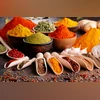
The paper advocated streamlining regulation by creating a single nodal agency to oversee the entire spices supply chain from farm to retail. (Photo: Shutterstock)
Listen to This Article
The domestic food spice market has the potential to grow from about $5.15 billion in 2025 to over $13 billion by 2034 if stakeholders address key regulatory gaps and confront issues related to standardisation, implementation, testing and monitoring, particularly in the conventional spices supply chain, according to an Icrier policy brief released on Wednesday.
Titled “Streamlining the Indian Spices Market: Issues and Way Forward” and authored by Arpita Mukherjee, Eshana Mukherjee and Samriddhi Dube, the brief noted that while spices are available in various forms for food, whole and ground single spices account for 63 per cent of the market. Further, it said 60-80 per cent of the overall spices market remains in the informal sector.
It said that although the government has taken several steps to formalise the sector and strengthen food safety standards, concerns over food safety persist. It also noted that micro, small and medium enterprises (MSMEs) continue to struggle to scale up into the formal branded segment.
According to the brief, the formal spices sector is growing below its potential due to several structural issues that are preventing MSMEs from transitioning to the organised market.
Among the key regulatory gaps, it pointed out that while India produces around 75 varieties of spices, the Food Safety and Standards Authority of India (FSSAI) has prescribed standards for only 45. Standards for spices such as kokum and vanilla are yet to be notified, leading to variations in quality. With the wide diversity of spices, quality characteristics have become an important differentiator, it added.
Also Read

 "FSSAI")
 "Over 140K guarantees worth ₹1.55 trillion issued under ECLGS 5.0: Govt")
 "Kartavya Bhavan, Finance ministry")
 "food safety, FSSAI, food inspection,quality food, food quality, food")
 "Piyush Goyal, Piyush")
The brief also highlighted inconsistencies between standards notified by the FSSAI and the Bureau of Indian Standards (BIS), which at times overlap or conflict. It recommended aligning domestic standards with the United Nations’ Codex Alimentarius.
Responding to the recommendation, an FSSAI representative present at the launch said the authority is working closely with Codex to align its standards with global benchmarks.
The brief further noted that the absence of uniform testing procedures across laboratories run by different agencies raises compliance costs by an estimated ₹25,000-30,000 per sample.
It also flagged health and safety concerns at the farm level, including excessive use of pesticides and insecticides, which fall outside the FSSAI’s regulatory ambit as its standards apply only from the post-production stage.
Poor post-harvest storage and processing practices are also contributing to product contamination, while a fragmented supply chain and limited farm-level traceability continue to hamper the sector, it said.
To address these issues, the brief recommended that a single nodal agency monitor the entire spice supply chain from farm to retail. It also suggested that the FSSAI work with state governments to establish and uniformly enforce farm-level food safety standards, and collaborate more closely with industry bodies to identify spices that require variety-specific standards.
It also called for uniform testing parameters across all spice testing laboratories to minimise variations in results and reduce compliance costs.
More From This Section
 "While ethanol production capacity has rapidly expanded to around 19-19.9 billion litres per year, demand for E20 blended fuel is estimated at only about 11 billion litres in the current ethanol year that began last November")
 "Energy Storage")
 "West Asia, crude oil supply, LNG, Energy")
 "Semaglutide, GLP 1, fat loss drug")
Topics : Spices export MSMEs food product Food safety
Don't miss the most important news and views of the day. Get them on our Telegram channel
First Published: Jul 08 2026 | 5:03 PM IST