


Minecraft 2.0: AI-driven exploration reshaping India's hunt for rare earths
India is transforming how its hunts for copper, lithium, rare earths and more, using AI to shave years off exploration timelines and reshaping the push for critical mineral security
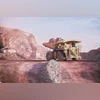 "mining minerals mines")
Across government agencies, research institutions, and private explorers, artificial intelligence (AI) and machine learning (ML) are beginning to reshape how India searches for critical minerals such as copper, nickel, rare earth elements (REEs), gra
Listen to This Article
For more than a century, India’s mineral exploration system has been built on manual surveys, fragmented datasets, and the intuition of individual geologists. That structure is now being fundamentally dismantled and rewritten.
Across government agencies, research institutions, and private explorers, artificial intelligence (AI) and machine learning (ML) are beginning to reshape how India searches for critical minerals such as copper, nickel, rare earth elements (REEs), graphite, lithium and cobalt, all of which underpin clean energy, electronics, and electric vehicle supply chains.
The shift towards modern technologies like AI and ML is likely to significantly reduce the time and cost involved in exploration of critical mineral blocks, a much-needed change for a country heavily dependent on imports for these minerals. Currently, China commands 70-95 per cent of the supply chain for several of them. The only way for India to reduce that dependence is to sharply accelerate domestic discovery, a move that experts say cannot happen without integrating AI into exploration projects.
China’s recent tightening of rare earth exports, a move that rattled global technology and clean energy supply chains, has been a wake-up call for countries seeking to diversify sources of critical minerals. India launched the National Critical Mineral Mission in January 2025 with the objective of exploring 1,200 critical mineral blocks domestically before putting them up for mining auction for both private and public sectors.
India has also identified hundreds of millions of tonnes of critical mineral resources, according to the Geological Survey of India (GSI), the state-owned body tasked with mineral exploration research. However, identification of critical mineral deposits must confirm the quality and quantity of these deposits through advanced levels of exploration, an exercise that is both time- and money-consuming. This is where AI could be most useful according to experts and industry participants.
Also Read

 "Donald Trump, Trump")
 "Hindustan Copper Ltd")
 "NYT")
 "Ujjivan Small Finance Bank news, Ujjivan SFB stock price today, Ujjivan SFB share target 2025, Ujjivan bank universal license update, Small finance banks in India 2025, Best small finance bank stocks India, Universal banking license India, RBI univer")
 "aviation, flight, fog")
“Since high grade, non-bulk mineral deposits, especially that of critical minerals, having surface manifestation have nearly been explored, exploration is to now focus more and more on low grade ores and deep seated and concealed deposits and mineral exploration is becoming more knowledge and technology driven, predictive rather than purely evidence based investigation,” says Siladitya Sengupta, deputy director general (Policy Support System, Planning & Monitoring) at GSI.
Why the shift matters: From scattered data to AI-integrated exploration
The GSI has also begun to systematically incorporate AI/ML tools into its exploration workflows, marking the first formal acknowledgment by India’s largest geoscience body that AI will now sit at the centre of mineral discovery.
“GSI has initiated application of AI and ML in mineral exploration by processing massive volumes of geospatial data that includes geological, geochemical and geophysical data, enabling faster identification of potential subsurface mineral-bearing zones in greenfield and brownfield areas,” said Sengupta.
GSI has already conducted the 'IndiaAI Hackathon on Mineral Targeting', a competition for researchers on AI-based mineral mapping, and is currently incorporating the best submitted models. More importantly, it has launched the National Geoscience Data Repository (NGDR), a digital portal that hosts more than 15,000 legacy exploration reports, and is in the process of building a Data Processing, Integration and Interpretation Centre (DPIIC) under the Digital India Corporation, which it says will be the 'analytical backbone' of future AI-enabled exploration.
Additionally, all field data is being captured digitally, with geological and geochemical information uploaded in real time. “All our field officers now use digital field data acquisition devices, ensuring that geological information is uploaded in real time for faster geographic information system (GIS)-based analysis," said Sengupta. The underlying goal is to integrate scattered datasets from GSI, Mineral Exploration and Consultancy Limited (MECL), state agencies, and the private sector into a single AI-ready national repository.
The scientific push: How AI cuts exploration timelines
Much of this technological shift has been driven by India’s research community and startups which have spent years attempting to integrate multiple datasets for faster discovery. At the centre of this work is Professor Partha Pratim Mandal of the Indian Institute of Technology (Indian School of Mines) Dhanbad, who is also the first prize winner of the IndiaAI Hackathon on Mineral Targeting. His research offers some of the first empirical evidence of how AI can drastically shorten exploration cycles.
His team has applied AI/ML tools to over 70,000 sq km of mineral belts across Jharkhand, southern Rajasthan, Karnataka and Andhra Pradesh.
One case study stands out. In southern Rajasthan, Mandal’s group integrated 14,000 sq km of geological, geophysical and geochemical datasets and produced mineral prospectivity maps in six months. “Without AI, the same process would have taken three to four years before targeted exploration could even begin,” he says. By collapsing the timeline, AI also cuts costs. “An approximate 50 per cent reduction in exploration cost is obvious when the project duration drops by more than half,” he added.
The technology goes far beyond simple GIS overlays. Mandal’s team uses ensemble machine-learning methods and convolutional neural networks (CNNs) that can handle hundreds of variables simultaneously allowing the system to detect patterns and “signatures” of mineralisation that humans often miss. Their in-house Large Language Model (LLM) tool, named 'Naini', has scanned decades of GSI reports and identified overlooked references to REEs, copper, and gold occurrences. Mandal’s group is now incubating CricSM AI, a startup that plans to commercialise these models for both public and private sector miners.
Private AI explorers: Global-scale models, Indian constraints
A parallel ecosystem is emerging in the private sector, where startups are attempting to build Indian counterparts to global players like Bill Gates- and Jeff Bezos-backed KoBold Metals which uses AI and ML in critical mineral exploration overseas. One such company is Neurons AI which claims that AI can eliminate some of exploration’s most persistent inefficiencies.
“Before AI, geological data was in diaries, PDFs, in people’s heads, completely siloed. None of it talked to each other,” said Channamallikarjun B Patil, chief executive officer of Neurons AI. “AI only becomes useful when these heterogeneous datasets are integrated.”
The company claims that its product 'Earthscience AI' predicts mineral anomaly zones, optimises drilling strategies, and identifies where not to drill, often the most expensive part of exploration. Critical minerals are particularly challenging because they occur deep underground. “These deposits are often 800 metres to 1.5 km below. Without AI, you’re drilling blindly,” he points out.
Industry response: Miners start to plug in
Large miners are now beginning to adopt AI-driven exploration techniques. Hindustan Zinc, one of India’s largest base-metal producers, said it has modernised both exploration and operations. “Hindustan Zinc has embedded digital and automation technologies across the value chain,” CEO Arun Misra says. The company’s exploration arm has built a cloud-based Web GIS repository to integrate historical and current datasets. Drone magnetic surveys at Zawar, Rampura Agucha and Kayad have generated new drilling targets.
On the operational side, Hindustan Zinc has deployed AI-based predictive maintenance, tele-remote drilling, and computer-vision-enabled monitoring systems, and is collaborating with startups through its Vedanta Spark programme. Misra sees the government’s digitisation efforts as a major enabler: “As geoscience digitisation progresses–via NGDR and other platforms–standardised machine-readable datasets will help the private sector discover critical minerals more rapidly.”
The global context: A race defined by data
Globally, mineral discovery is increasingly being led by AI-first companies. KoBold Metals, for example, uses ML algorithms to identify nickel and cobalt deposits and has raised nearly a billion dollars. The race is no longer just geological, it is data-driven.
India’s edge, paradoxically, lies in its legacy institutions. GSI possesses nearly two centuries of geological data, far more than most countries, but much of it has been locked in analog formats. The current AI push seeks to unlock that archive and fuse it with modern datasets.
Several challenges remain in the process, though. AI-geology talent is scarce, datasets are still uneven, and the exploration sector has only recently opened to private players. But the direction is clear. Exploration, once dependent on the experience of individual geologists, is moving toward integrated, predictive and globally benchmarked systems.
What emerges from the work of GSI, IIT-ISM and private AI explorers is a national transition: India is no longer just collecting data. It is learning to read it, integrate it, and finally use it as experts believe that India has explored only a small fraction of what lies underneath. Whether AI is the tool that can give the country the speed and accuracy it needs to unlock its own mineral potential now seems to be a rhetorical question.
More From This Section
 "Shopping, mall, sale, shops, restaurants, retailers, brands, customers, buyers, people, consumers")
 "semiconductor, chip")
 "SBI, State Bank Of India")
 "Photo - Shri Manoj Mittal, Chairman and Managing Director, SIDBI")
 "Blinkit")
Don't miss the most important news and views of the day. Get them on our Telegram channel
First Published: Nov 25 2025 | 8:43 PM IST