


Parliamentary panel urges inter-ministry coordination on critical minerals
The government has taken several policy reforms to boost mineral production in the country and make India self-reliant in the mineral sector
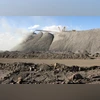 "Rare earth mineral mining in Inner Mongolia, China. In April, China stopped almost all shipments of critical minerals that are needed for cars, jet fighters and other technologies. | Image Credit: Reuters")
Representational image from Reuters.
Listen to This Article
A parliamentary panel has stressed the need for seamless coordination among ministries to bolster the country's self-reliance in critical minerals like lithium, graphite, cobalt, and rare earth that are vital for a technology-driven future global economy.
In its report, the Committee noted that the "Atmanirbhar Bharat" initiative, with its strong emphasis on self-reliance, holds immense potential to secure a sustainable supply chain of these minerals and enhance the country's industrial competitiveness.
However, it cautioned that without effective coordination, these efforts may fall short.
"The Committee...suggest that alongside the Ministry of Mines, which is leading these efforts, all ministries concerned, State governments and agencies should work in close alignment to ensure that the country remains competitive in the critical mineral sector," the Standing Committee on Coal, Mines and Steel has said in a report.
The committee recommended that the mines ministry, which is spearheading the drive, should work in close alignment with all concerned ministries, state governments, and agencies to ensure the nation remains competitive in the critical minerals sector.
Also Read

 "Delhi Police")
 "packaged drinking water, packaged water, water, drinking water")
 "Amit Shah, Home Minister")
 "SC, Supreme Court")
 "BPOs, BPO industry")
The panel said that the critical minerals are important for the development and national security of the country, but their supply remains vulnerable due to factors like limited availability and concentration in specific regions.
These resources have significant usage in many sectors, including electronics, telecommunications, transport defence and energy, and self-reliance in the mineral sector including critical minerals is vital for the country's economic growth and technological development.
The future global economy will be driven by technologies that depend on minerals such as lithium, graphite, cobalt, and rare earth elements, it said.
The government has taken several policy reforms to boost mineral production in the country and make India self-reliant in the mineral sector.
"In this regard, the committee appreciate that the Government has identified 30 critical minerals, with 24 included in Part D of Schedule I of Mines and Minerals Development and Regulation Act, 1957 (MMDR Act, 1957), which means that the Central Government now has the exclusive authority to auction mining leases and composite licenses for these specific minerals." In addition, several other policy initiatives have been taken up by the ministry to promote 'ease of doing business', it said.
(Only the headline and picture of this report may have been reworked by the Business Standard staff; the rest of the content is auto-generated from a syndicated feed.)
More From This Section
 "jobs")
 "telecom, TRAI")
 "Rice, Rice exports")
 "Dehradun")
 "Industry, IIP")
Don't miss the most important news and views of the day. Get them on our Telegram channel
First Published: Dec 30 2025 | 4:30 PM IST