


₹5 trillion power transmission projects under bidding and execution
Projects worth ₹5 lakh crore are underway to strengthen transmission capacity as India targets 500 GW non-fossil capacity, amid challenges such as right-of-way and supply constraints
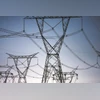 "power, energy")
There are various challenges in building transmission infrastructure, which include right-of-way (RoW) issues leading to delays and manufacturing of high voltage direct current (HVDC) systems
Listen to This Article
Power transmission projects worth around ₹5 trillion are currently either being bid out or executed on the ground across states in the country, a senior official from the power ministry informed. This assumes significance as transmission issues recently emerged as a key bottleneck for expanding renewable energy projects and planning for the massive jump in future power demand.
“To achieve 500 Gigawatt (Gw) installed capacity of non-fossil sources by 2030, the transmission system is already in the pipeline. As on date, the costs of the transmission projects that are under bidding and implementation are reaching ₹5 trillion,” said D Saibaba, additional secretary, Ministry of Power.
Speaking at an industry event, Saibaba said transmission projects worth ₹1 trillion passed through the National Committee on Transmission (NCT) stage in FY 26, while transmission works worth ₹1.47 trillion moved past the Special Purpose Vehicle (SPV) stage.
“Our objective is to build a next-generation, intelligent, integrated and interoperable national grid infrastructure. The focus is on creating a grid that can seamlessly integrate renewable energy and storage, and cater to emerging demand zones such as green hydrogen and data centre hubs,” he said.
Considering the challenges associated with renewable energy evacuation, Central Electricity Authority (CEA) has prepared a transmission system plan for integrating over 900 Gw of non-fossil fuel-based capacity by 2035-36. According to the plan 140,000 circuit kilometre (ckm) of transmission lines and 830,000 megavolt-ampere (MVA) of substation capacity are planned through 2036 at a cost of ₹7.9 trillion.
However, there are various challenges in building transmission infrastructure that includes right-of-way (RoW) issues leading to delays and manufacturing of high-voltage, direct current (HVDC) systems. Saibaba said a dedicated division within CEA, responsible for monitoring these RoW issues, is working to resolve them. “Close coordination among government agencies is underway to address RoW challenges, which have been contributing to project delays,” he said.
CEA chairman Ghanshyam Prasad, who was also speaking at the same event, said the Indian industry must work on domestic production of equipment and strengthen supply chain through backward integration. “The next priority is achieving energy security through self-reliance. This includes strengthening domestic manufacturing and increasing local content across projects,” he said.
More From This Section

 "Machine tools")
 "Artificial intelligence, AI")
 "gavel")
 "information technology, IT Sector, IT Service")
 "fisheries, fish")
Topics : Power Transmission renewable energy CEA
Don't miss the most important news and views of the day. Get them on our Telegram channel
First Published: Apr 12 2026 | 6:52 PM IST