


Cheque bounce appeals: SC questions blanket deposit exemption for directors
A Bench of Justice Aravind Kumar and Justice NV Anjaria said that such people cannot be given a blanket exemption from making the deposit
 "SC, Supreme Court")
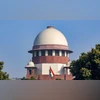
Supreme Court questions rulings exempting directors from deposit in cheque bounce cases, says Section 148 NI Act must apply case by case; refers issue to larger bench. (Photo:PTI)
Listen to This Article
The Supreme Court on Thursday questioned two earlier rulings which held that a company’s director or authorised signatory, if convicted in a cheque bounce case, cannot be asked to deposit money under Section 148 of the Negotiable Instruments (NI) Act while seeking suspension of sentence.
When hearing an appeal against a conviction under Section 138 (cheque bounce), Section 148 empowers an appellate court to order the accused (appellant) to deposit a minimum of 20 per cent of the fine or compensation awarded by the trial court, as a condition for suspending the sentence, to provide interim relief to the complainant. This deposit must typically be made within 60 days, with a possible 30-day extension.
A bench of Justices Aravind Kumar and N V Anjaria said such persons cannot be given a blanket exemption from making the deposit. Whether the requirement should apply must depend on the facts of each case, the top court observed.
However, since the earlier rulings were delivered by benches of equal strength, the court did not overturn them. Instead, it referred the issue to a larger bench for a final and authoritative decision.
Recently, Justice B V Nagarathna expressed displeasure regarding the practice of Supreme Court benches passing orders that seemingly overrule previous decisions of coordinate benches, leading to potential legal uncertainty.
Also Read

 "SC, Supreme Court")
 "Supreme Court, SC")
 "Supreme Court")
On Thursday, the court expressed its disagreement with two 2024 judgements which had held that a company’s authorised signatory is not the “drawer” of the cheque and, therefore, s/he cannot be directed to make a deposit under Sections 143A or 148 of the NI Act.
The present case arose from an appeal filed by Bharat Mittal, a former director of Ispat Private Ltd, challenging the Rajasthan High Court’s refusal to exempt him from making a deposit under Section 148. Explaining the issue, the court said it had to decide whether an appellate court can order such a deposit against a convicted director or authorised signatory, or whether the requirement applies only to the company as the legal drawer of the cheque.
The bench noted that under Sections 138 and 141 of the Act, a person in charge of a company’s affairs is vicariously liable for a dishonoured cheque. Such a person, it said, effectively acts as the drawer on behalf of the company. It also pointed out that exemption from deposit under Section 148 is meant to be granted only in exceptional cases.
The court warned that if the earlier interpretation is followed, directors or persons controlling a company could avoid the deposit requirement on technical grounds even when the company itself cannot be prosecuted. This, it said, would defeat the purpose of Sections 143A and 148, which are meant to provide relief to complainants during the pendency of appeals.
Concluding that directors cannot be automatically exempted from making the deposit, the bench said the question must be decided case by case. The matter has now been placed before the Chief Justice of India for the constitution of a larger bench.
More From This Section
 "Vodafone Idea (Vi)")
 "oil, crude oil, oil pipeline,")
 "mining, mining industry")
 "S Krishnan, secretary of the Ministry of Electronics and Information Technology (Meity)")
 "Electricity, Energy")
Topics : Supreme Court Cheque bounce
Don't miss the most important news and views of the day. Get them on our Telegram channel
First Published: Dec 18 2025 | 8:00 PM IST