


Supreme Court pulls up states, discoms; sets April 2028 dues deadline
A regulatory asset is an intangible asset created by electricity discoms to account for the gap between the price at which they purchase power and the price at which they sell it to customers
 "Supreme Court, SC")
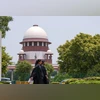
Regulatory commissions must undertake joint and collaborative efforts with other authorities to enable access to electricity across urban and rural areas and improve affordability through tariff rationalisation, the court said. (Photo:PTI)
Listen to This Article
The Supreme Court ordered on Tuesday that electricity distribution companies must liquidate all their pending “regulatory assets” by April 1, 2028. A two-judge apex court Bench comprising Justices P S Narasimha and Sandeep Mehta also held that fresh regulatory assets created by distribution companies (discoms) should be liquidated within three years of their creation.
“Regulatory commissions must provide the trajectory and road map for liquidation of the existing regulatory asset, which will include a provision for dealing with carrying costs. Regulatory commissions must also undertake strict and intensive audits of the circumstances in which the discoms have continued without recovery of the regulatory asset,” the apex court said in its judgment.
A regulatory asset is an intangible asset created by electricity discoms to account for the gap between the price at which they purchase power and the price at which they sell it to customers, due to discounts or electricity bill waivers provided by the respective state governments.
For accounting purposes, discoms treat regulatory assets as receivables from state governments over a future period. This portion of the revenue requirement is not included while determining the electricity tariff for that particular year.
The top court was hearing pleas and appeals filed by BSES Rajdhani Power (BRPL), BSES Yamuna Power (BYPL), and Tata Power Delhi Distribution, which had challenged the Delhi Electricity Regulatory Commission’s (DERC’s) tariff-setting practices. The regulatory asset burden across the three Delhi discoms stood at a staggering ₹27,200 crore, including carrying costs, until 2020–21.
Also Read

 "Supreme Court, SC")
 "Insolvency and Bankruptcy Board of India, IBBI")
 "Supreme Court, SC")
 "Elections, voting, Lok Sabha elections")
 "Rahul Gandhi, Rahul, Congress leader")
Regulatory commissions must undertake joint and collaborative efforts with other authorities to enable access to electricity across urban and rural areas and improve affordability through tariff rationalisation, the court said.
“The statutory authorities must work in cohesion towards a common goal of ensuring supply of electricity across regions and terrains, and cheaper and affordable...,” the court said.
Regulatory asset not statutory, but permissible
The Bench also clarified that while the creation of regulatory assets is not a statutory mandate under the Electricity Act, 2003, it is a recognised regulatory mechanism designed to prevent sudden tariff shocks to consumers. However, it must be exercised sparingly and in strict compliance with the principles laid down under the Electricity Act, the National Tariff Policy of 2006 and 2016, and Rule 23 of the Electricity (Amendment) Rules, 2024, the court said.
“Electricity is a public good,” the court observed, adding that regulatory commissions must balance consumer interests with the financial viability of power discoms. “A disproportionate increase and long-pending regulatory assets depict a ‘regulatory failure’. It has serious consequences for all stakeholders, and the ultimate burden falls on the consumer,” the court observed.
Court faults DERC for delay, inaction
The court found that DERC failed to comply with multiple statutory guidelines requiring that regulatory assets be created only in exceptional circumstances and recovered within three to seven years. The Commission’s road map, submitted in 2014 and promising liquidation of the assets by 2020-21, was never implemented, the court said.
Instead, the quantum of regulatory assets kept ballooning, driven by delayed true-ups, unrealistic tariff assumptions, unpaid government subsidies, and rising power purchase costs, the apex court observed.
“This creeping regulatory inaction has undermined investor confidence and the commercial viability of the distribution sector,” the court noted, adding that such prolonged revenue gaps go against the very objective of private sector participation envisioned under the Electricity Act.
Other directions issued
The Supreme Court also said that DERC should ensure that no further regulatory assets are created, except in extraordinary and clearly defined circumstances. It also asked the electricity regulatory commission to use mechanisms such as the deficit recovery surcharge, fuel adjustment charges, tariff rationalisation, and government subsidies to recover the gap between the amount paid by users and the amount owed to the discoms.
Any surplus revenues should first be adjusted against existing regulatory assets, the court said.
The court also reminded state governments of their constitutional obligation to ensure equitable electricity access. If states wish to grant subsidies, they must do so upfront and through budgetary allocations — not by forcing distribution companies to bear the burden, the court said.
The two-judge Bench further stressed that the Electricity (Amendment) Rules, 2024, particularly Rule 23, must now form the baseline for all regulatory commissions in handling tariff gaps. The court, however, clarified that it was not adjudicating individual liabilities or recoveries in this judgment.
Appeals by BRPL and BYPL against earlier orders of the Appellate Tribunal for Electricity (Aptel) remain pending and will be heard separately. However, the court reiterated that orders of the Aptel must be implemented unless stayed.
More From This Section
 "WhatsApp")
 "cyber fraud security bank")
 "Gujarat Energy Transmission Company, Power Sector, ipo, investment, public-private partnership")
 "hospitality, hotels")
 "real estate, realty firms")
Don't miss the most important news and views of the day. Get them on our Telegram channel
First Published: Aug 06 2025 | 10:04 PM IST