


Telcos raise concern over Digital Bharat Nidhi fund diversion to R&D
Telecom operators urge the government to stop using DBN funds for R&D at IITs and demand clarity, equitable access, and industry participation under DBN Rules 2024
 "Telecom")
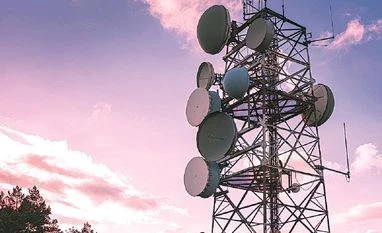
Telcos oppose DBN fund diversion to R&D, cite transparency, mandate gaps | File Photo
Listen to This Article
India’s telecom operators have raised objection to the government’s move to divert a portion of the Digital Bharat Nidhi (DBN) towards research and development (R&D) activities, arguing that it deviates from the fund’s original mandate and lack of transparency in allocation.
In a letter addressed to Telecom Secretary Neeraj Mittal, as seen by The Economic Times, operators flagged concerns over using DBN resources, which are funded primarily through levies on telecom and internet service providers, for R&D initiatives undertaken by public sector entities and academic institutions, including the Indian Institutes of Technology (IITs).
What is the Digital Bharat Nidhi?
The Digital Bharat Nidhi (DBN), formerly known as the Universal Service Obligation Fund, is a government-administered pool aimed at financing telecom infrastructure in underserved rural and remote areas. The fund is maintained through a 5 per cent levy on adjusted gross revenue (AGR) from telecom and internet service providers (ISPs). As of December 2023, the DBN corpus stood at ₹86,356 crore.
OTT disproportionately gain from R&D: Telcos
Telecom operators have raised concerns over the government’s move to allocate 5 per cent of the DBN corpus to research and development (R&D). The argument of the telecom companies is that the contributor base remains limited to telcos and ISPs, while over-the-top (OTT) platforms, key beneficiaries of broadband expansion, are excluded from making contributions.
The Cellular Operators Association of India (COAI), representing the major telecom players, argued that while R&D is valuable, it falls outside the scope of DBN’s original objectives. They highlighted that private telecom firms are being required to support activities that do not necessarily yield direct benefits to them.
Also Read

 "There is a general agreement in India, almost a consensus, that the country needs to undertake greater research & development (R&D) to progress faster and more effectively. While this is the objective, most also agree that India's expenditure on R&D")
 "Research and development, Industrial production, manufacturing")
 "Multi Cap Funds")
 "Nithin Kamath")
 "data centre, data security, data")
Telecom cos criticise lack of transparency
Operators also criticised the non-transparent allocation process, pointing out that most of the DBN’s R&D funds have gone to a handful of institutions like the IITs without open or competitive bidding. They stressed that these premier institutions make up a small fraction of India’s engineering education ecosystem and already receive significant public funding, reportedly around ₹8,000 crore in FY22.
In their letter, telcos urged the government to ensure equitable access to R&D funding across a broader range of qualified institutions, rather than focusing funding on a select few. They also demanded that intellectual property generated through DBN-funded research be shared transparently with contributing telecom firms and not retained as proprietary assets by the research bodies.
They also called for the selection of implementing agencies to be governed strictly under the DBN Rules, 2024, and insisted on industry representation in the decision-making process.
More From This Section
 "Cement")
 "Office, Office space")
 "Mukesh Ambani")
 "cement, cement sector")
 "SuSim mukul Datta (1936-2025)")
Don't miss the most important news and views of the day. Get them on our Telegram channel
First Published: Jul 07 2025 | 1:11 PM IST