


PVC price pressure dents earnings; Nuvama says 'Hold' Astral, Supreme Ind
A sharper-than-expected decline in PVC prices following the lack of anti-dumping duty (ADD) and the withdrawal of BIS norms has further worsened the operating environment
 "Pipes")
Listen to This Article
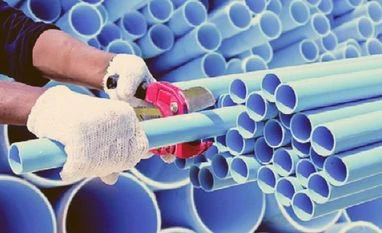
Pressure from falling PVC prices, intensifying competition and weak demand is set to weigh on the earnings of plastic pipe manufacturers over the next few quarters, according to Nuvama Institutional Equities, which has cut earnings estimates and target multiples across the sector while maintaining a cautious stance. The brokerage said the key risks it had highlighted more than six months ago, including capacity additions by plastic pipe players, pressure on PVC prices and rising consolidation, are now playing out more prominently than anticipated. A sharper-than-expected decline in PVC prices following the lack of anti-dumping duty (ADD) and the withdrawal of BIS norms has further worsened the operating environment.
Ratings and earnings cuts
Nuvama’s analysts noted that the least earnings cuts are for Astral and Finolex, followed by Supreme, while Apollo and Prince are likely to face more pressure given recent capacity additions that would drag profits as they struggle to compete in the price war led by Supreme and Astral.
The brokerage has retained a "Hold" rating on Astral with a trimmed target price of ₹1,412 (earlier ₹1,547) at 45x Q3FY28E earnings. Supreme Industries has been downgraded to "Hold" with a revised target price of ₹3,529 (earlier ₹4,356) at 35x Q3FY28E. Finolex Industries remains rated "Reduce" with a target price of ₹175 (earlier ₹179) at 16x Q3FY28E, while Prince Pipes stays at "Reduce" with a target price of ₹208 (earlier ₹239) at 18x Q3FY28E. Apollo Pipes has been downgraded to "Reduce" with a sharply cut target price of ₹198 (earlier ₹330) at 20x Q3FY28E.
“We reckon the least EPS cuts for Astral and Finolex followed by Supreme, whereas Apollo and Prince are likely to face more pressure given recent capacity additions would drag profits as they struggle to compete against the price war by Supreme and Astral,” Nuvama analysts said in the report.
BIS withdrawal and missed ADD deadline trigger price correction
The brokerage notes that two anticipated developments for the PVC industry, the ADD decision due between November 14 and 17 and BIS norms earlier scheduled for December 2025, did not materialise. Instead, the government has “completely withdrawn BIS on PVC resin,” which has opened the market to significantly higher imports, particularly from China. With the ADD deadline also passing without action, PVC prices fell by “₹3 per kg from 15 November,” taking the cumulative fall to “₹6 per kg since the beginning of the quarter,” a period of less than one and a half months.
Also Read

 "Hindalco")
 "Urja Global share price")
 "stocks to watch today, nov 21")
 "Stock market rally, bull trading, Sensex, nifty")
 "Man Industries share price")
According to the report, imports are currently landing at “₹61 to 62 per kg,” while RIL is selling at “₹66 to 67 per kg,” indicating that another “₹3 to 4 per kg” decline may take place soon. Nuvama attributed the sustained weakness to poor demand, the lack of ADD, withdrawal of BIS (QCO), increased supply from pre-ADD imports and subdued global construction activity.
Short-term pain expected
Nuvama warns that the sharp fall in PVC prices will lead to “inventory losses due to a 10 to 15 per cent price fall quarter-on-quarter,” lower volumes as the channel hesitates to restock in a declining-price environment, weak demand caused by an extended monsoon and muted infrastructure spending, and an intensified price war that will dent EBITDA per tonne across the industry.
The analysts pointed out that demand weakness is not limited to India. “Even European PVC players are demanding ADD on PVC imports” due to a surge in low-priced shipments from South Korea, China and Taiwan, as they too are under profitability pressure.
Consolidation a long-term positive
Despite near-term challenges, Nuvama sees consolidation as a long-term positive. The steep fall in PVC prices and heightened competitive intensity are causing a “washout for many small companies,” strengthening the position of leaders such as Astral and Supreme. The brokerage adds that while the immediate impact of the price fall is painful, lower PVC prices could eventually support healthier demand once stability returns.
The analysts believe that PVC prices are likely to remain under pressure in the near term. A recovery, they said, will depend on price stabilisation, a revival in demand from the construction and infrastructure sectors, and greater clarity on future trade protection measures.
More From This Section
 "Stock Market LIVE, November 21, 2025")
 "Nuvama on paints sector")
 "Gold, jewellery")
 "Mahindra BE 6")
 "Asian stcks, asian shares, share market")
Topics : Buzzing stocks Stocks in focus Astral Poly Technik Industry Report Prince Pipes And Fittings share market
Don't miss the most important news and views of the day. Get them on our Telegram channel
First Published: Nov 21 2025 | 9:37 AM IST