


Staying disciplined as Warren Buffett is incredibly tough: Raamdeo Agrawal
Warren Buffet has realised that 'buy and hold till death' may not always be the best strategy while investing. We now see that he's more open to selling, when needed, Agrawal said.
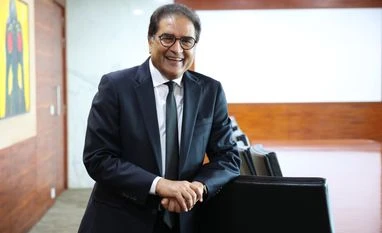 "RAAMDEO AGRAWAL, chairman & co-founder at Motilal Oswal Financial Services")
RAAMDEO AGRAWAL, chairman & co-founder at Motilal Oswal Financial Services
Listen to This Article
RAAMDEO AGRAWAL, chairman & co-founder at Motilal Oswal Financial Services believes that the only concern for the Indian markets is India's geopolitical situation with Pakistan. Agrawal, who has been a regular at Warren Buffet’s shareholder meetings in Omaha, also shared his experience of attending these meetings over the years in a telephonic conversation with Puneet Wadhwa. Edited excerpts:
What’s your current outlook on the Indian markets?
I think India is fundamentally in good shape. The only concern for the markets is the situation with Pakistan given the geopolitical issues. One challenge is that corporate earnings are not growing very rapidly. But overall, I believe that Indian markets are positioned to do well, depending on how fast earnings growth picks up.
You've just returned from Omaha after attending Warren Buffett’s annual shareholder meet. How long have you been attending them, and what’s the experience been over the years?
I started attending them in 1995. So over the last 30 years, I’ve been to at least 25 of those meetings. When I started going in 1995-96, it was a very small event—just around 4,000 attendees. We were among the early birds. Over the years, the scale has grown. Last year, there were around 40,000 people; and this year, I believe there were around 45,000.
Also Read

 "Stock Market, Market, Crash, Funds, up, Stock, Lost, decline, statistic, Crisis, Capital, BSE, NSE")
 "Raamdeo Agarwal, chairman and co-founder, Motilal Oswal Financial Services")
 "Raamdeo Agrawal, motilal oswal")
 "Business travel, Travel")
 "Starlink, SATELLITE")
There was a belief that this could be Buffett’s last meeting, which pushed the attendance even higher. Even areas of the hall that usually remain empty—especially the back rows—were completely packed. I estimate there were 3,000–4,000 more people than usual.
Has the format of the meeting changed now?
The basic format has remained mostly the same. The audience has always been inquisitive, including young investors and people from all over the world. The types of questions remain quite consistent—mostly about investing philosophy, company decisions, and behavioral aspects. As Berkshire enters new areas like infrastructure or tech (e.g., Apple), new topics come up, but the core themes remain.
How deeply is Charlie Munger missed?
Very much. He was bold and fearless—often politically incorrect, much like Donald Trump. He brought color to the conversations. Now with just Buffett, things are more cautious and conservative. Buffett is careful with his words and far more measured.
Have you noticed any changes in Buffett’s investing style over the years?
Yes, at some point, he realised that ‘buy and hold till death’ may not always be the best strategy while investing. We now see that he’s more open to selling, when needed.
In the Indian context, do you think Buffett’s investing style is still relevant as most investors chase quick returns rather than staying put for the long term?
Warren Buffet’s investing style is very difficult to replicate here. His money is permanent capital—balance sheet money. He doesn’t have to deal with redemptions or external pressures like we do in India, where most public funds are open-ended.
Second, while proprietary investors like us can try to follow his style, staying as disciplined as Warren Buffett over decades is incredibly tough. Third, the scale at which he operates—buying 100 per cent of very large companies—is hard to match. His principles are highly valuable, but copying his exact approach is challenging.
What have been your key takeaways as a fund manager and audience to Warren Buffet’s shareholder meetings?
I’d highlight three major lessons. First is understanding the quality of businesses. There are outstanding businesses (like Nestle, Hindustan Unilever, and Asian Paints), which are consumer-facing, have strong pricing power, and generate massive free cash flows. Then there are good businesses with 20–25 per cent return on equity (RoE). And finally, there are bad businesses that either lose money or don’t generate enough return to justify investment—even if they’re profitable on paper.
The second is recognising good management. Great companies are run by management teams that have competence, passion, and—most importantly—integrity. These three traits are crucial. The third takeaway is that valuation matters. Even when one finds a great business with great management, paying the right price is critical. Over time, listening to Buffett helps refine one’s understanding of valuation sophistication.
More From This Section
 "Dabur")
 "Market, BSE, NSE, NIfty, Stock Market, investment")

 "BSE, NSE, Stock Market")
 "Dividend stocks")
Topics : Warren Buffett Raamdeo Agrawal Motilal Oswal Financial Services Motilal Oswal Securities Warren Buffett's Berkshire Hathaway Apple Warren Buffett Warren Buffet letter to investor Berkshire Hathway Warren Buffett Operation Sindoor The Smart Investor Charlie Munger
Don't miss the most important news and views of the day. Get them on our Telegram channel
First Published: May 08 2025 | 10:04 AM IST