


Investor awareness becomes more important than ever: Ananth Narayan G
Outgoing Sebi member Ananth Narayan reflects on his tenure, calls for greater practitioner participation in regulation, and explains the fine balance between reform and overreach
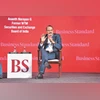 "Ananth Narayan G, Former Whole-Time Member, Securities and Exchange Board of India (Sebi) (Photo: Kamlesh Pednekar)")
Ananth Narayan G, Former Whole-Time Member, Securities and Exchange Board of India (Sebi) (Photo: Kamlesh Pednekar)
Listen to This Article
Ananth Narayan G describes his three-year tenure as whole-time member of the Securities and Exchange Board of India (Sebi) as a privilege that allowed him to make an impact on a larger canvas. The former trader, who stepped down earlier this month, urged more private-sector professionals to take up regulatory roles. In a candid conversation with Khushboo Tiwari, he said derivatives play a vital role in the markets, though retail investor losses remain a concern. Edited excerpts:
How was your experience working at Sebi?
It was an absolute privilege to be able to make an impact on a larger canvas. For those of you working on the frontlines of India’s capital markets, across any part of the ecosystem, I would urge you to consider stepping into policymaking at some stage. We need many more practitioners to cross over — even temporarily — to experience this side of the table. The policymaking ecosystem, especially at Sebi, deeply benefits from the perspective of practitioners. Each domain that Sebi oversees is highly specialised and demands deep domain expertise.
Why do voices from the private sector matter?
Also Read

 "(L-R) Gaurav Misra, Mirae Asset Investment Managers (India); Hari Shyamsunder, Franklin Templeton; Manish Gunwani, Bandhan AMC; Pramod Gubbi, Marcellus Investment Managers | Photo: Kamlesh Pednekar")
 "(From left) Sailesh Raj Bhan, Nippon India Mutual Fund; Sankaran Naren, ICICI Prudential Mutual Fund; Mahesh Patil, Aditya Birla Sun Life Mutual Fund; Rajeev Radhakrishnan, SBI AMC; and Rajeev Thakkar, PPFAS Mutual Fund | Photo: Kamlesh Pednekar")
 "(From left) B Gopkumar, Axis Mutual Fund; Navneet Munot, HDFC Mutual Fund; D P Singh, SBI Mutual Fund; Vetri Subramaniam, UTI Asset Management Company; and Sid Swaminathan, JioBlackRock AMC | Photo: Kamlesh Pednekar")
 "Shankar Sharma, Founder, GQuants | Photo: Kamlesh Pednekar")
 "(From left) V Balasubramaniam, MD & CEO, NSE International Exchange; Revati Kasture, CEO, CareEdge Global IFSC; Tushar Sachade, partner, PwC; Dipesh Shah, ED, IFSCA | Photo: Kamlesh Pednekar")
A healthy blend of practitioners and people with sound judgement is essential. We need such diversity to evaluate feedback effectively and minimise both “type 1” and “type 2” errors. Of course, when practitioners like me join a regulator, questions around conflict of interest are inevitable — and valid. To address that, Sebi has set up a high-level committee to define disclosure frameworks, outline rules on recusals, and frame codes of conduct for whole-time members, the chairman, and employees. This is a progressive step towards greater clarity and integrity.
Tell us more about how regulators have to walk the fine line —managing “type 1” and “type 2” errors?
“Type 1” errors occur when the system allows bad things to happen — such as in the cases of Harshad Mehta or the Karvy scam — leading to reputational damage for regulators. Naturally, regulators fear “type 1” errors. But in our zeal to prevent them, we risk committing “type 2” errors — by over-regulating and making life difficult for genuine market participants, thereby stifling legitimate capital formation. Effective policymaking lies in balancing both — minimising errors on either side simultaneously.
Why was tightening of the derivatives required and what’s the future pathway?
Our analysis showed retail investors were losing more than could be considered reasonable. In 2024-25 (FY25), over 10 million unique individuals traded in derivatives, mostly index options on expiry days, and on average, each lost about ₹1 lakh. Collectively, retail investors lost roughly ₹1 trillion that year. Imagine if that capital had gone into productive investment instead of fuelling high-frequency trading profits.
Moreover, the notional volumes in derivatives — especially index options on expiry days — were several times higher than those in the cash market. Yet derivatives remain essential to capital formation, offering price discovery, depth, and hedging mechanisms. We are seeking a balance, taking calibrated steps, and constantly monitoring two key parameters: retail investor loss patterns and market stability. Any further policy moves will be made through broad consultation.
What is your view on the ongoing exuberance in the primary market?
I don’t claim to be a valuation expert, but data tells an important story. In FY25, mutual funds alone generated a net equity demand of ₹6.1 trillion across primary and secondary markets. The total demand across mutual funds, insurance, pension funds, and individuals reached ₹8.8 trillion while the net supply — through IPOs, FPOs, rights issues, and QIPs — stood at ₹4.6 trillion, the widest gap we’ve ever seen.
When demand far outpaces supply, the ecosystem must act with caution. Investor awareness around risk, asset allocation, volatility, and diversification becomes more important than ever.
During your tenure, there were several reforms on the FPI regulations front. What’s the road ahead?
Sebi continues to work on making India more accessible to foreign portfolio investors. The shift to T+1 settlement and improvements in disclosure norms were significant milestones. We’re simplifying procedures further — working with the Reserve Bank of India (RBI) to eliminate web-signature and postal documentation requirements, at least for well-regulated participants.
Globally recognised funds from jurisdictions such as Luxembourg or Dublin enjoy passport-like access to multiple markets; India can adopt a similar model with suitable safeguards. Feedback from (Sebi) Chairman Tuhin Kanta Pandey’s roadshows across the US, Asia, and Europe have been very positive. One recurring concern, however, remains — capital gains tax for FPIs. India must recognise that most major jurisdictions do not impose such taxes, and this competitive reality must inform our policy approach.
Will you be monitoring the matter before the Securities Appellate Tribunal (SAT) concerning a high frequency trader?
I won’t comment on any specific order, but the episode underscores why deep market expertise — both from policy professionals and external stakeholders — is vital. The fact that participants could take such large expiry-day positions relative to the underlying market highlights the need for continued dialogue and informed oversight. Regulators and practitioners must remain trusted partners in this evolving landscape.
More From This Section
 "Mark Matthews, Julius Baer")
 "BFSI summit")
 "India equity markets, IPO surge")
 "private equity funds")
 "Ananth Narayan")
Don't miss the most important news and views of the day. Get them on our Telegram channel
First Published: Oct 31 2025 | 11:24 PM IST