


Microsoft unveils its first quantum chip: The science behind Majorana 1
Microsoft introduces Majorana 1, its first quantum computing chip, claiming it could accelerate the future of quantum tech. Here's a look at the science behind this breakthrough
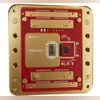 "Majorana 1 chip")
Majorana 1 chip | Photo: X
Listen to This Article
Microsoft introduced its first quantum computing chip on Wednesday, suggesting that quantum computing could be realised in “years, not decades”. This aligns with similar projections from Google and IBM, indicating that a transformative shift in computing technology may be closer than previously expected.
The company’s Majorana 1 chip integrates eight qubits — the essential units of quantum computing — onto a compact, sticky-note-sized piece of hardware. Microsoft envisions this chip as a stepping stone toward systems capable of supporting a million qubits. While its current functionality is limited to solving mathematical problems that confirm its operability, engineers believe it lays the groundwork for future quantum advancements.
A couple reflections on the quantum computing breakthrough we just announced... Most of us grew up learning there are three main types of matter that matter: solid, liquid, and gas. Today, that changed. After a nearly 20 year pursuit, we’ve created an entirely new state of… pic.twitter.com/Vp4sxMHNjc
— Satya Nadella (@satyanadella) February 19, 2025
Microsoft’s breakthrough signals progress in utilising the unique particles that enable quantum computing, potentially leading to data centre applications and innovations in fields such as chemistry and healthcare. The company stated that the Majorana 1 chip is more resistant to errors compared to competing technologies and cites a forthcoming research paper in Nature as supporting evidence.
Notably, Majorana 1 is the first Quantum Processing Unit (QPU) based on a Topological Core, specifically designed to scale up to a million qubits within a single chip.
What is a Majorana zero mode?
To understand Microsoft’s research, think of Majorana zero modes (MZMs) as special quantum states that appear at the ends of certain superconducting wires. Unlike normal particles, which have separate matter and antimatter versions, Majorana particles are their own antiparticles.
Also Read

 "Majorana 1 chip")
 "Microsoft video game")
 "Microsoft")
 "Microsoft")
 "Artificial Intelligence, AI")
In quantum computing, multiple MZMs can work together to store information. Scientists can perform calculations by carefully moving these particles around each other in a process called ‘braiding’. This method is highly stable and resistant to errors, making it a promising approach for building powerful quantum computers.
Microsoft’s experiment: Measuring fermion parity
To create a quantum computer using Majorana particles, scientists need a way to measure their state reliably. Microsoft’s latest experiment focuses on doing just that.
The researchers built a special device using two materials — indium arsenide (a semiconductor) and aluminium (a superconductor). This setup allows them to measure an important property called ‘fermion parity’, which tells whether the system has an even or odd number of electrons.
To detect this, they connected the superconducting wire to quantum dots — tiny regions that trap and control electrons. By observing changes in the quantum dots, scientists could measure shifts in fermion parity with great accuracy. Their results showed a very low error rate of just 1 per cent, proving that this method is effective for studying Majorana particles and advancing quantum computing.
More From This Section
 "Google, Ananta")
 "apple, apple logo")
 "iPhone 16e")
 "OnePlus Watch 3")
 "Apple iPhone SE")
Don't miss the most important news and views of the day. Get them on our Telegram channel
First Published: Feb 20 2025 | 10:47 AM IST